
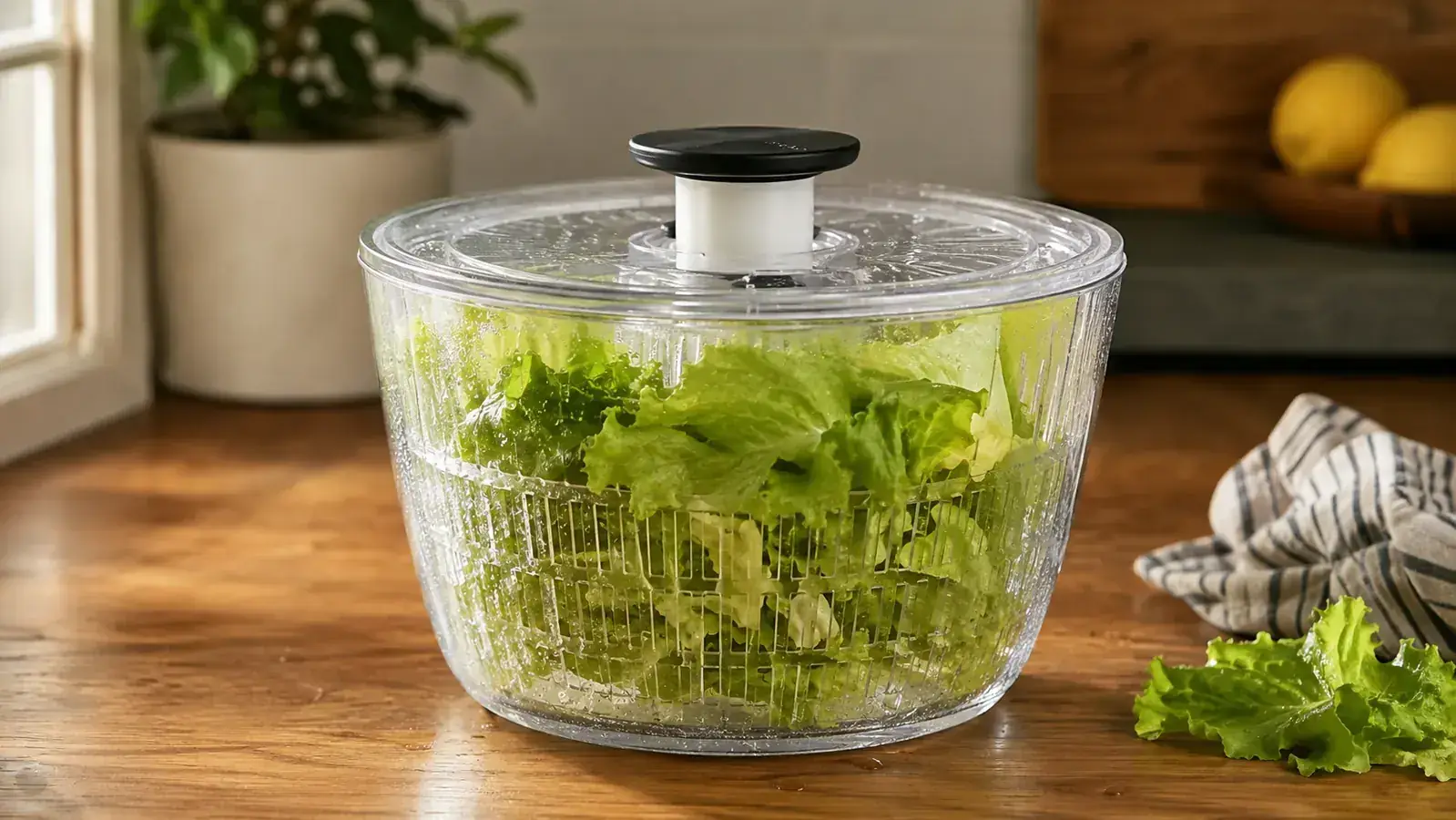
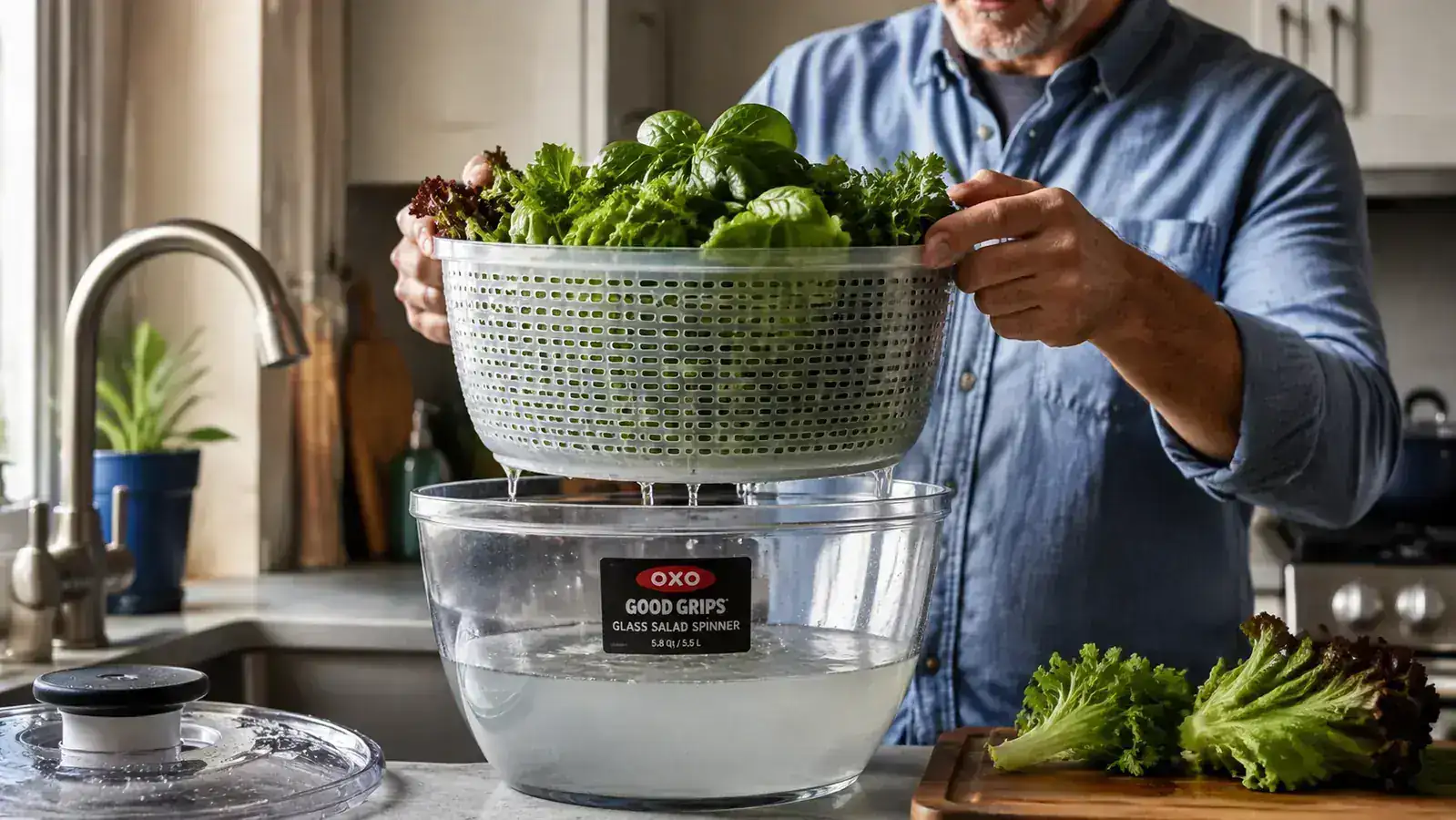
For a long time my routine for washing lettuce was rinse it, shake it over the sink, then blot it with a stack of paper towels that never quite finished the job. Salads made from that lettuce were always a little watery, and dressing slid right off instead of clinging to the leaves. Switching to a glass salad spinner, the OXO Good Grips model with the 6.22-quart bowl, changed that in one step. Washing and drying greens now happens in the same container, and the difference shows up in almost every salad since.
Here are ten specific ways a salad spinner like this one has quietly upgraded the salads, herbs, and washed produce coming out of the kitchen, not because it's a flashy gadget, but because it fixes one problem that used to undercut every salad: greens that were never actually dry.
Stop Serving Watery, Underdressed Salads
If lettuce has ever gone soggy in the crisper or dressing has ever pooled at the bottom of the bowl instead of coating the leaves, a salad spinner fixes both. See the OXO glass salad spinner's current price and availability on Amazon.
Amazon Check Today's Price on Amazon →Greens Actually Come Out Dry, Not Just Less Wet
Shaking lettuce over the sink or rolling it in a towel gets it damp instead of dry, and damp lettuce waters down every salad it goes into. The spin basket in this salad spinner uses a pump-driven spin cycle that flings water off the leaves far more thoroughly than shaking or blotting ever could. The rinse water collects in the glass bowl underneath while the basket keeps spinning, and what comes out is genuinely dry lettuce, not just lettuce that looks dry on the surface. I get into exactly how dry in the long-term review of this OXO spinner.
Dressing Finally Sticks to the Leaves
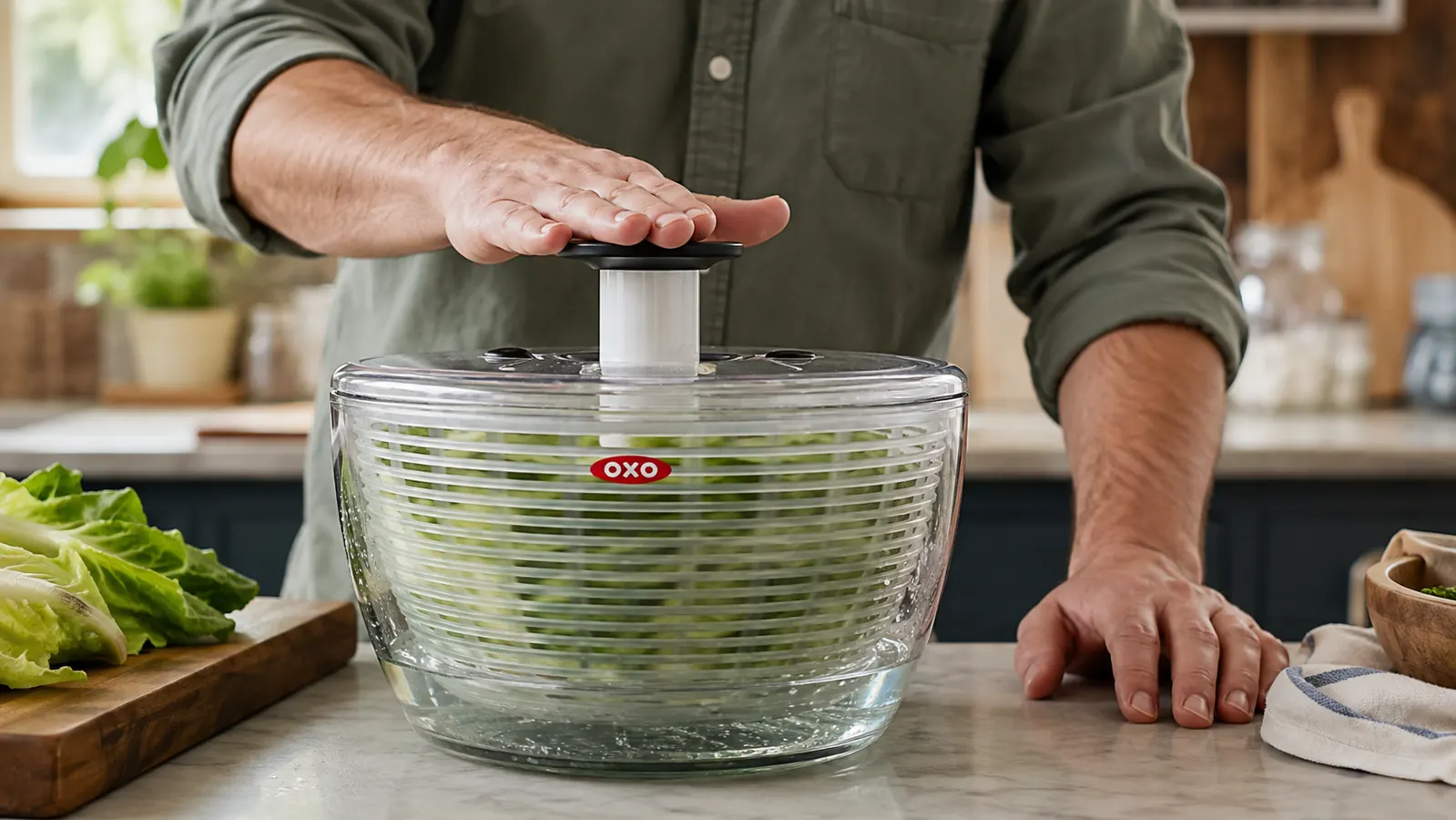
Dressing beads up and slides off wet lettuce instead of coating it, which is why a salad made with damp greens always tastes underdressed even when you've poured on plenty. Once the greens come out of the OXO spinner properly dry, dressing clings to the leaf surface the way it's supposed to, and a lot less of it ends up pooled at the bottom of the bowl. It's the single biggest reason salads have tasted better since this became part of the routine, and it has nothing to do with the recipe or the dressing itself.
Washing and Drying Happen in One Container
Rinsing lettuce in a colander and then drying it a separate way means dirtying two tools and moving wet greens between them, which is where a lot of water ends up on the counter instead of off the leaves. The perforated basket sits inside the glass bowl, so rinsing under the tap, draining, and spinning all happen in the same piece. Fewer steps means the whole process from dirty lettuce to salad-ready greens takes a couple of minutes instead of turning into a production.
A Pump Lid Beats a Pull Cord or Crank
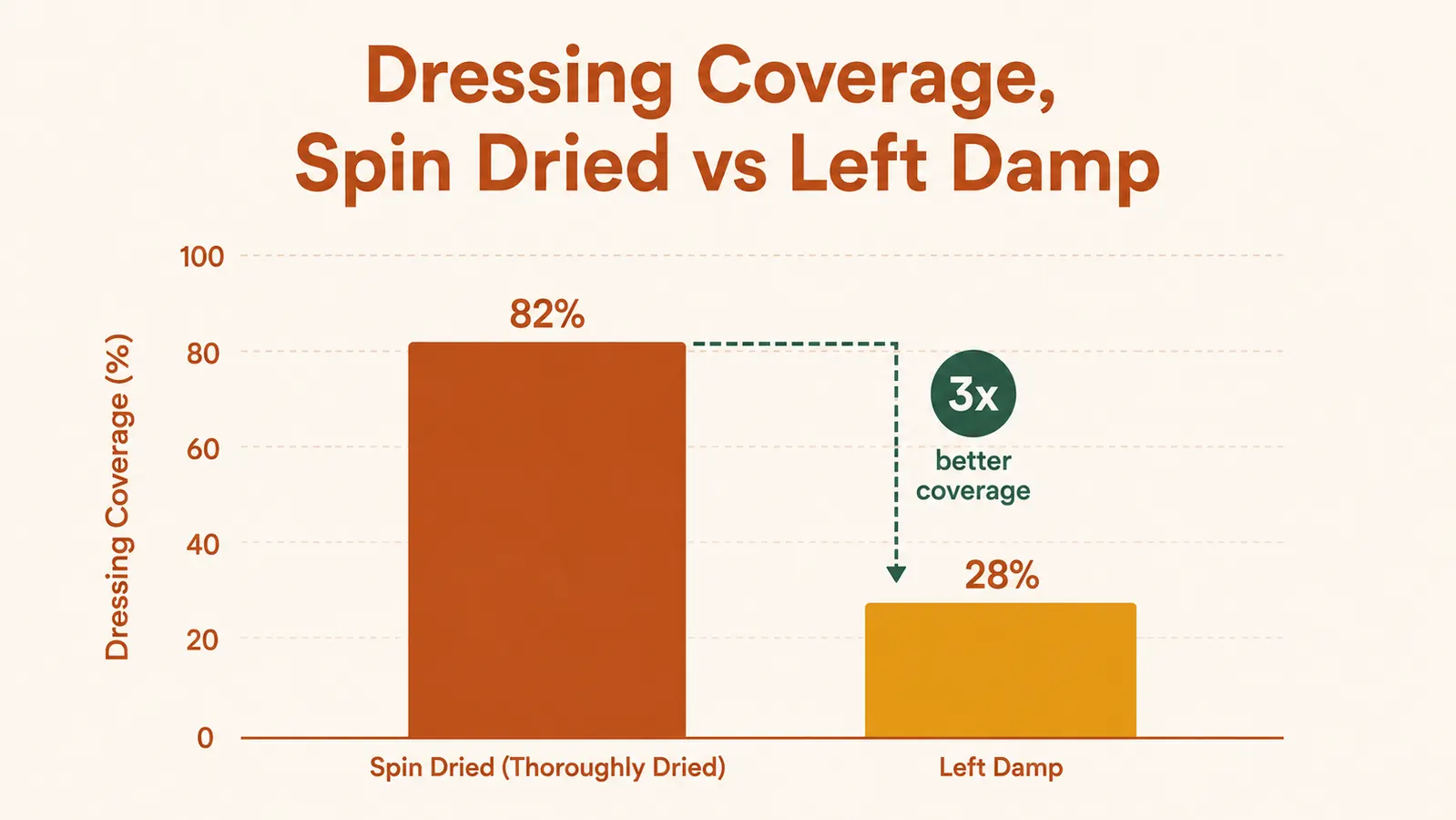
Older salad spinners I've owned used a pull cord or a hand crank on the side, and both got tiring fast on a big batch of greens and were awkward to operate one-handed while holding the bowl steady. This one spins from a top-mounted pump, so pressing down with one hand gets the basket moving without wrestling the whole bowl across the counter. It sounds like a small design choice, but it's the difference between a gadget that gets used daily and one that gets pushed to the back of a cabinet.
The 6.22-Quart Bowl Handles a Full Head of Lettuce in One Go
A lot of smaller salad spinners only hold a handful of leaves at a time, which means washing a whole head of romaine or a full bag of spinach turns into two or three batches. The 6.22-quart bowl on this one is large enough to wash and spin a full head of lettuce or a big mix of salad greens in a single load, which matters most on nights making a salad for a family dinner instead of a single lunch portion.
Herbs Stop Wilting Before You Get to Use Them
Wet, bruised herbs turn brown and go slimy in the fridge a lot faster than herbs that were properly dried after washing. Running a bunch of parsley, cilantro, or basil through the salad spinner gets the excess water off the leaves gently, since the spinning motion is a lot softer on delicate herbs than pressing them in a towel. Herbs that go into the fridge dry tend to last noticeably longer than herbs that go in still damp from the rinse.
Greens Keep Longer in the Fridge After Spinning
Excess moisture is one of the main reasons washed lettuce turns slimy in the crisper drawer within a couple of days. Spinning greens dry before storing them in a container or a bag with a paper towel noticeably slows that down, since there's a lot less trapped water sitting against the leaves. Prepping a big batch of salad greens for the week on a Sunday and having them still look decent by Thursday only started happening once drying became part of the routine instead of an afterthought.
It Replaces a Whole Stack of Paper Towels
Before this, drying lettuce meant going through several paper towels per salad, laying leaves out, patting them down, and still ending up with damp spots. The spinner does that job in about thirty seconds with zero paper towels involved, which adds up over months of regular salad-making into a real dent in how much gets thrown away. It's one of those changes that's easy to undersell until you actually stop buying paper towels as often.
The Brake Button Stops It From Sliding Across the Counter
A spinner that skids around the counter mid-spin is annoying enough to make you avoid using it, and I've owned plastic ones that did exactly that. This one has a brake button built into the pump lid that stops the basket quickly once you let go, instead of letting it coast and wobble the whole bowl. It stays put on the counter through a full spin cycle, which matters more than it sounds like the first time you're washing greens one-handed while something else is cooking.
The Glass Bowl Pulls Double Duty as a Serving Bowl
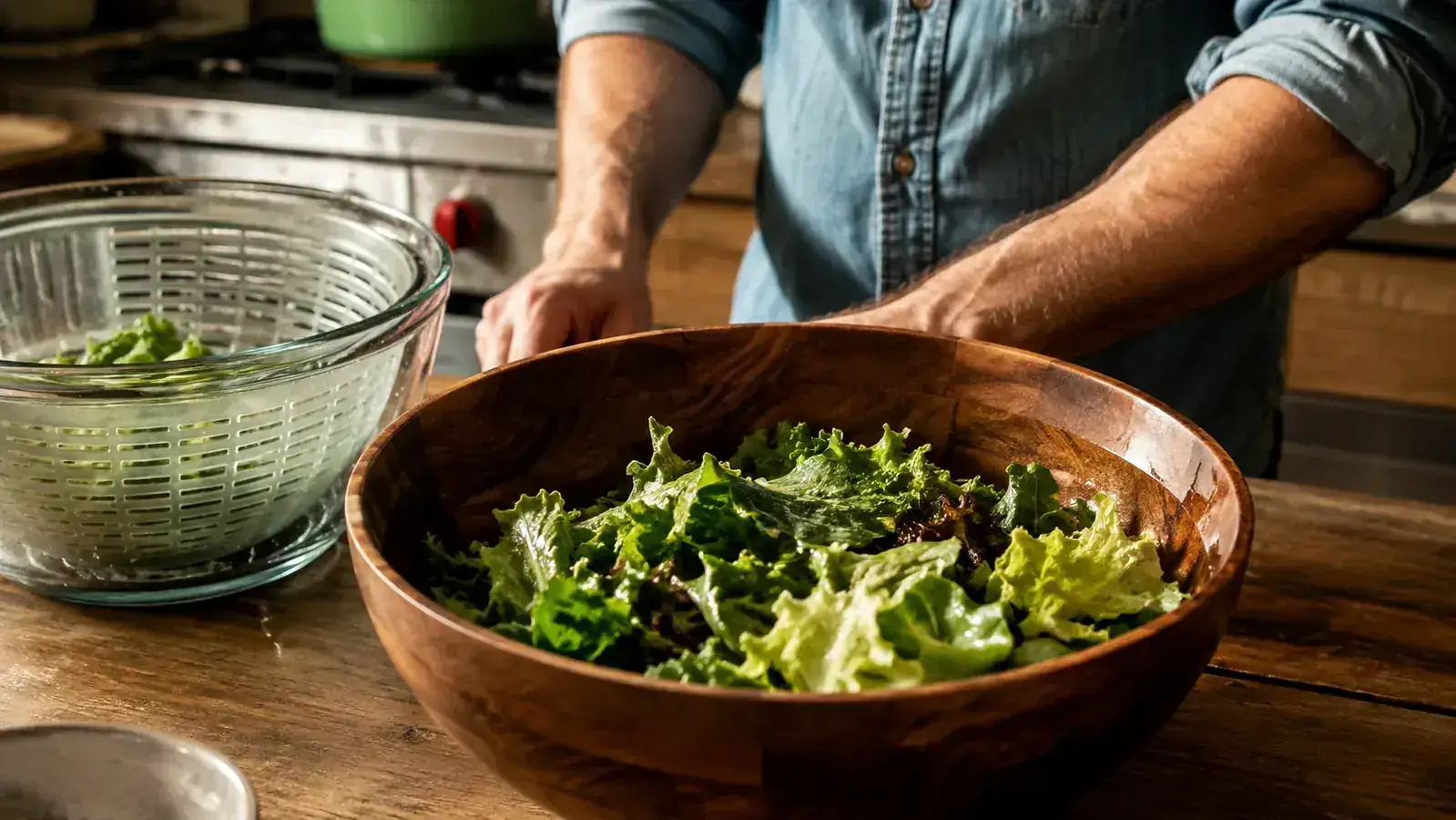
The borosilicate glass bowl underneath the spinning basket looks like something you'd actually set on the table, not a piece of plastic kitchen equipment. Once the greens are washed and dry, the basket lifts out and the same bowl can go straight to the table with the salad tossed and dressed inside it. That's one less serving bowl to pull out of the cabinet and one less dish to wash afterward, and it's part of why this thing earns its space on the counter instead of getting stored away. There's more on how that plays out day to day in the story behind why this replaced my old plastic spinner.
What I'd Skip
I'd skip a salad spinner with a flimsy plastic bowl that cracks or clouds up after a year of dishwasher trips, and I'd skip anything with a pull cord that wears out fast with daily use. A basket that's too small to wash more than a couple of handfuls of greens at a time isn't worth the cabinet space either, since it turns a one-load job into three. Past that, the details that matter most are whether the lid seals well enough to keep water from splashing out and whether the bowl is big enough to actually be useful for a real dinner, not just a side salad for one.
A salad only tastes as good as how dry the greens were before the dressing hit them.
Give Every Salad a Better Starting Point
Dry greens make every salad better, and a salad spinner is the fastest way to get there. See the current price and availability of the OXO glass salad spinner on Amazon.
Amazon Check Today's Price on Amazon →