
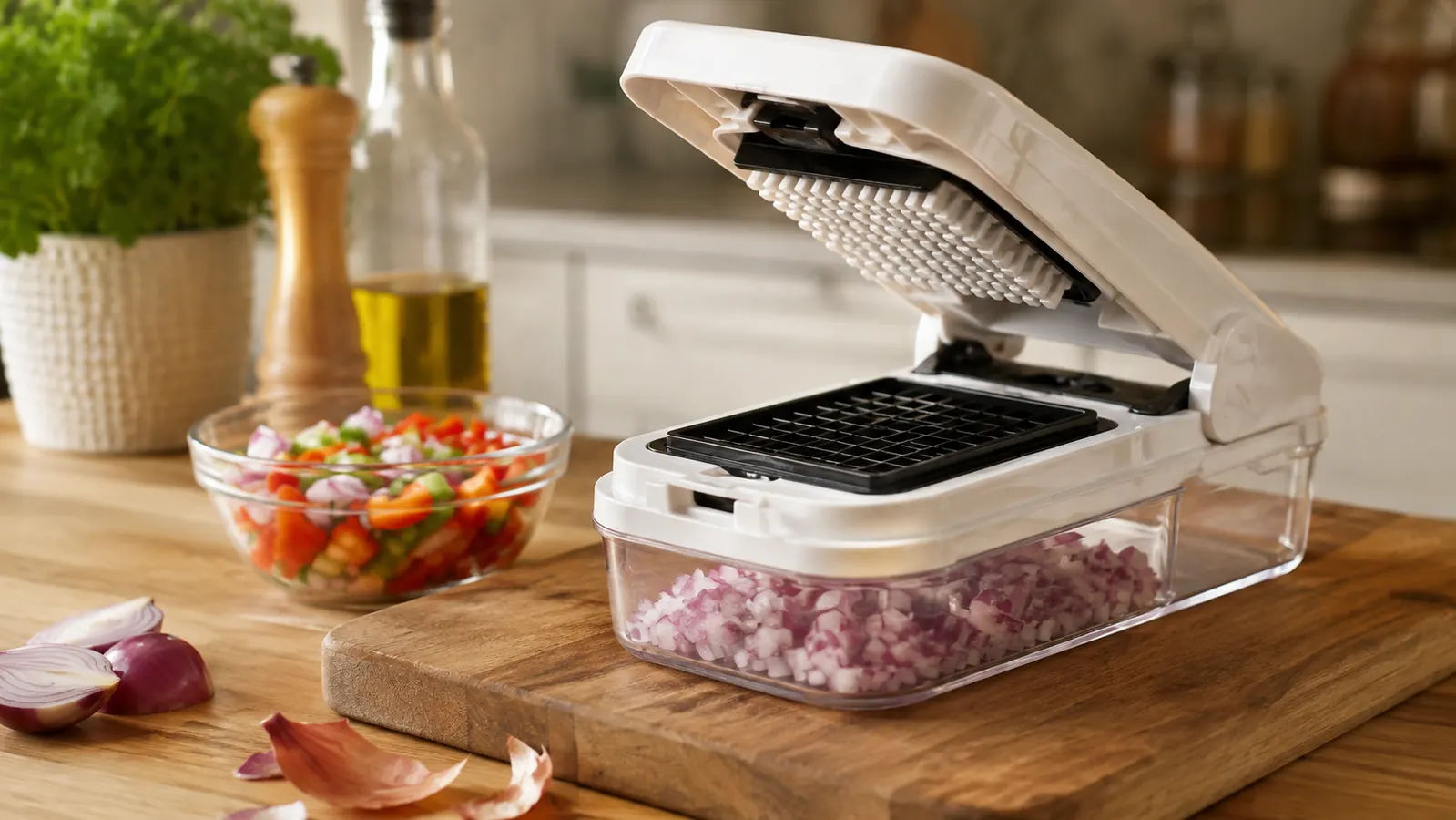
I bought my Fullstar vegetable chopper on a Tuesday night after dicing a five-pound bag of onions for a big pot of chili and standing at the sink afterward wondering why my eyes were still stinging twenty minutes later. That was six months ago. The chopper has been through more pounds of onions, peppers, potatoes, and cucumbers than I could count since, and it's still the tool I reach for on any night I need volume prep done fast.
This isn't a first-impressions review. I've had six months to figure out where the Fullstar earns its spot on the counter and where it falls short, because plenty of gadgets look great in the box and end up in a drawer by week three. This one didn't, and I want to walk through exactly why.
I should say upfront that I'm not a professional cook. I'm someone who makes most meals from scratch for a family in a normal-sized kitchen with limited drawer space, which means every gadget I keep has to actually earn its spot. That's the lens this whole review runs through, not restaurant efficiency, just whether a tool makes an ordinary Tuesday dinner easier.
The Quick Verdict
A genuinely useful dicing tool for onions, peppers, and firm vegetables that earned permanent counter space in my kitchen, though it's not a knife replacement for everything.
Amazon Check Today's Price →Tired of Onion Tears Before Dinner Even Starts?
The Fullstar chopper handles a whole onion in one press, no crying required. See today's price and current availability on Amazon.
Amazon Check Today's Price on Amazon →How I've Used It
I didn't buy this to replace my knives. I bought it because I cook dinner for four people most nights of the week, and prep time is the part of cooking I like least. The Fullstar has been my go-to for onions, bell peppers, cucumbers, zucchini, and potatoes since the day it arrived. It comes with two interchangeable blade containers, a spiralizer attachment, and a handful of small blades for garlic and herbs.
My routine is simple. Sunday afternoons I do a big batch of prep for the week ahead, dicing onions and peppers to freeze in portions, and on weeknights I use it for whatever that night's recipe needs. That's the test that actually matters to me, not one impressive meal prep session, but repeated, boring, everyday use over months.
Six months in, the blades are still sharp enough to get through a whole onion in three or four presses. I haven't sharpened or replaced anything, and it lives in a cabinet within arm's reach of my main cutting board because I use it that often.
Build Quality and What's Actually in the Box
The container is BPA-free plastic, not glass, which matters if you're used to sturdier gadgets. It's held up fine to daily use and dishwasher cycles, but I did once catch it in a bottom rack next to a heavy pot and the lid cracked at the hinge. That was on me, not really a defect in the tool itself.
The blades are stainless steel and stayed sharp far longer than I expected from a tool at this price. The dicing blade has a crosshatch pattern that produces a medium dice, closer to a half-inch than the fine quarter-inch dice you'd get from a mandoline attachment.
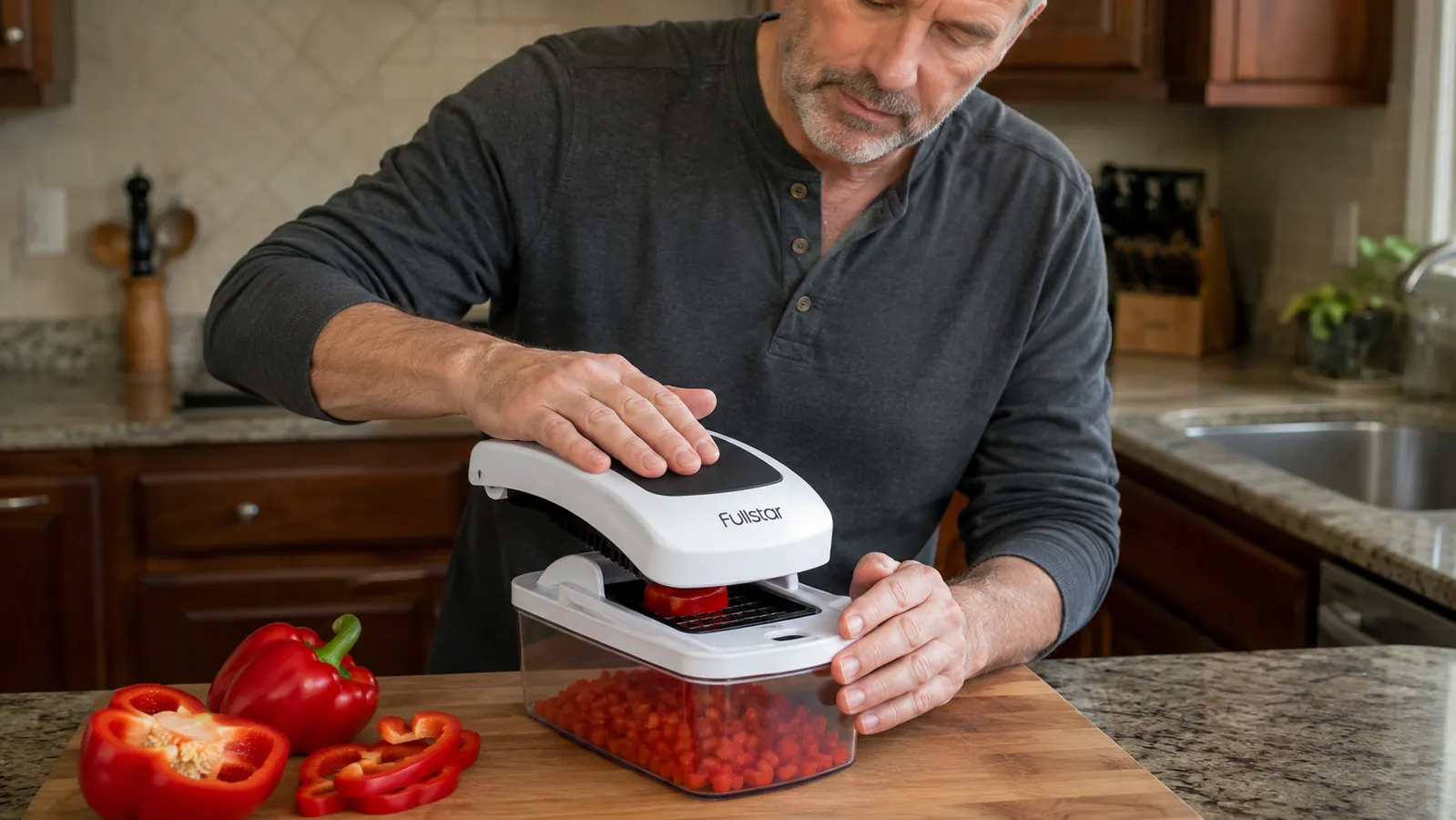
There's a handle on top you press down to force the vegetable through the blades, and a plunger that helps clear stuck pieces afterward. The whole set nests together for storage, which was a real selling point for me since I don't have much drawer space to spare in an ordinary-sized kitchen.
The Spiralizer and Extra Blades: Do They Actually Get Used?
The kit includes a spiralizer attachment for zucchini noodles and curly fries, plus smaller blades meant for garlic and herbs. I want to be honest here because a lot of reviews gloss over the extras and only talk about the main dicing container. The spiralizer works, but it's more finicky than the main chopper. It needs a firm, straight vegetable to feed through cleanly, and zucchini with any curve to it jams more than I'd like.
I use the spiralizer maybe once a month, usually for zucchini noodles when I want a lighter dinner. It's not a core part of my routine, but it's a nice option to have without buying a separate spiralizer that would take up even more drawer space.
The small garlic and herb blades get less use than I expected going in. Mincing garlic by hand with the flat of a knife is still faster for the one or two cloves most recipes call for, so those inserts mostly sit unused. If you're weighing whether the full kit is worth it over a single-blade version, the main dicing container is doing almost all the work in my kitchen.
What Six Months of Weeknight Cooking Actually Looks Like
The honest measure of a gadget like this isn't the first onion, it's the fiftieth. By month two I'd stopped thinking of it as a novelty and started reaching for it the way I reach for a cutting board without thinking twice. Onions, the classic use case, take me under twenty seconds from whole to diced, including pulling the container apart to dump it into the pan.
Peppers and cucumbers work almost as well, though cucumbers with a lot of seed cavity sometimes need a second pass to catch pieces that slide past the blade on the first press. Potatoes are hit or miss. Russets with some size to them go through fine, but small new potatoes tend to roll instead of catching cleanly.
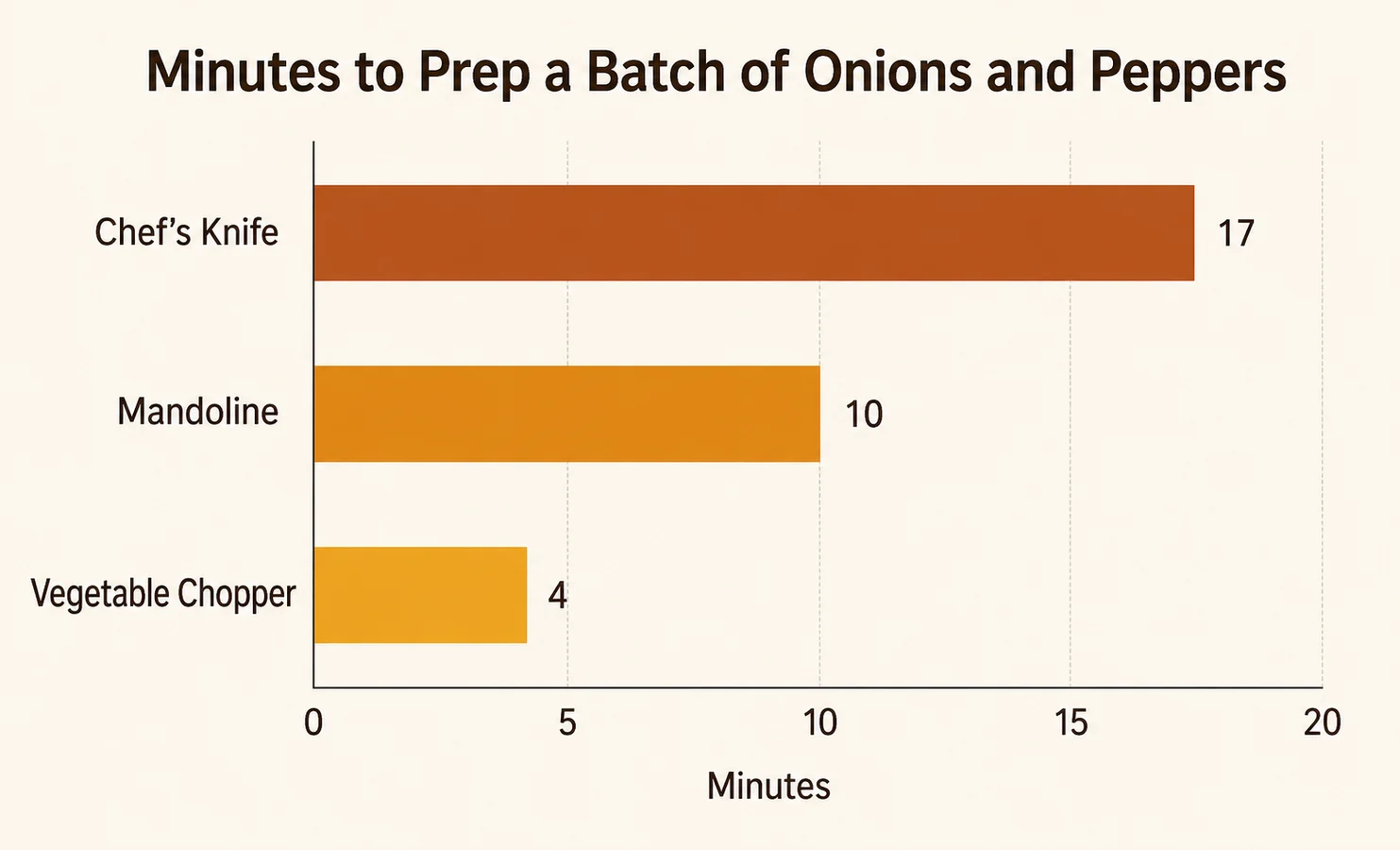
The thing that changed my mind about this tool being a gimmick was meal prep Sundays. Dicing four onions and six peppers by hand used to take me close to fifteen minutes and leave my eyes watering the whole time. With the chopper it's closer to four minutes, and I broke down the actual time savings in more detail in this rundown of where a vegetable chopper actually saves you minutes.
Stir-fry nights are where it earns the most goodwill from my family, honestly. I can dice onion, pepper, and zucchini for a stir-fry in under three minutes total, which means the gap between deciding to cook and actually having food in the pan shrinks a lot on busy weeknights.
The Meals It's Actually Changed
Chili and soup are the two dishes where I notice the difference the most, because both start with a mountain of diced onion, pepper, and sometimes celery before anything else happens. What used to be a fifteen-minute stall before I even turned on the stove is now a few minutes of pressing and dumping, and that alone made me start cooking a pot of soup on weeknights I would have skipped it before.
Taco night is another one. Diced onion, diced pepper for fajita-style filling, and I can have both done before the meat is even browned. Salsa comes together faster too, though I still finish it with a knife for anything I want left chunky rather than uniformly diced.
It's changed my grocery habits a little as well. I buy whole onions and peppers in bulk more often now instead of grabbing pre-chopped bags at a markup, because the chopper closes most of the time gap that used to make pre-cut produce tempting.
Where It Struggles
Soft produce is where the Fullstar loses me. Tomatoes turn to mush more often than not, especially anything past medium ripeness. I've given up using it for tomatoes entirely and go back to a knife for those.
Cleanup is a mixed bag. The container and lid go in the dishwasher fine, but the blade insert has enough small crevices that I hand-wash it most of the time just to be sure nothing's stuck between the blades. It takes maybe ninety seconds, not a dealbreaker, but it's not the zero-effort cleanup the packaging implies.
It also isn't a mandoline replacement for thin, even slices. If you want paper-thin cucumber for a salad or uniform potato slices for a gratin, this tool won't get you there. It dices, it doesn't slice thin, and no amount of pressing harder changes that.
Pressure required is worth mentioning too. Firm vegetables like sweet potatoes take a real push, enough that my youngest can't use it unsupervised. If you have limited hand strength or a wrist issue, this is worth testing in person before you commit to it as your main prep tool.
Noise is worth a quick mention too, since nobody talks about it. It's completely silent compared to any electric chopper or food processor, which matters more than I expected on early mornings or once the kids are asleep and I'm prepping for the next day.

Alternatives I Considered Before and During These Six Months
Before buying this I did everything by hand with a chef's knife, which is still the more versatile option and the one I still use for anything delicate, like herbs or tomatoes. I also tried a basic mandoline for a while, but the learning curve and the very real risk of slicing a knuckle kept it in the drawer more than on the counter.
I keep both a knife and the chopper in regular rotation now. The knife for precision and delicate produce, the chopper for volume dicing of onions, peppers, and firm vegetables. I put together a fuller pros and cons list separately in this longer honest review after heavy weekly use, since six months of daily prep surfaced a few more quirks than I expected going in.
I also looked at electric food choppers before settling on this. They're faster for some things, but I found the pulse-and-check process on most electric models actually took about as long overall, plus they added another cord and another bulky base to store. The manual chopper's small footprint won out for my kitchen.
What I Liked
- Dices a whole onion in seconds with zero tears
- Blades still sharp after six months of regular use
- Nests together for compact drawer storage
- Handles peppers, cucumbers, and firm vegetables well
- Dishwasher-safe container and lid
Where It Falls Short
- Struggles with soft produce like ripe tomatoes
- Blade insert needs hand-washing to stay fully clean
- Plastic container isn't as sturdy as glass
- Produces a medium dice, not a fine or uniform slice
- Small potatoes tend to roll instead of catching
It's not a knife replacement. It's the tool I reach for when I need six onions diced before the rest of dinner falls apart.
Who This Is For
If you cook from scratch most nights and dread the volume prep, onions especially, this is worth the drawer space. It's also a solid pick for anyone doing weekly meal prep in batches, since the time savings compound fast when you're dicing for five days of meals at once instead of one dinner.
It's also a good fit if you're cooking for a household of more than two, where the amount of vegetables you're prepping on a normal night is enough to make hand-dicing feel like a real chore instead of a quick five minutes.
My kids have started helping with dinner prep now that onions aren't a two-person, tears-and-tissues production. It's an easy first kitchen task to hand off, since there's no blade they're holding directly, just a handle they press down with both hands.
Who Should Skip It
If most of your cooking involves delicate produce like herbs, tomatoes, or soft fruit, or if you want thin, uniform slices for things like gratins, you'll be happier with a good knife and a mandoline. This tool earns its keep on volume dicing of firm vegetables, not precision work.
It's also probably not worth it if you cook mostly single-serving meals. The time savings really show up when you're prepping in volume, and a lot of the appeal disappears when you're only dicing half an onion at a time.
Six Months In, It's Still Earning Its Counter Space
If dicing onions and peppers is the part of cooking you'd cut out if you could, this is the closest thing I've found to actually doing that. Check today's price on Amazon.
Amazon Check Today's Price on Amazon →