

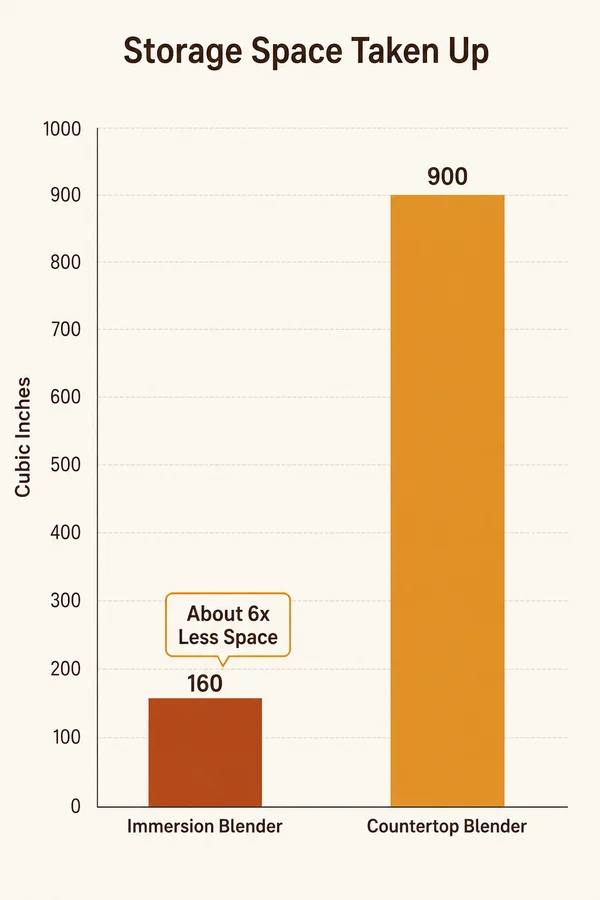
For close to four years, I had a full-size countertop blender living in the bottom cabinet next to my stove. It was a decent machine, the kind with a big plastic pitcher and a base heavy enough that I had to use both hands to pull it out. I used it for exactly two things, blending soup a few times a month and the occasional smoothie on a Saturday morning. The rest of the time it just sat there, taking up the same amount of room as my stockpot and my roasting pan combined. What eventually replaced it was a Cuisinart immersion blender, and I did not expect a hand blender to make the big machine redundant.
The part that actually bothered me wasn't the storage, though. It was the process. Blending a pot of soup meant ladling it, hot, into the pitcher in two or three batches, because filling it all the way up was asking for a lid to blow off and soup to end up on the ceiling, which happened to me once and I never fully trusted the machine after that. Then I'd blend, pour it back into the pot, wash the pitcher, wash the blade assembly, and dry everything before it went back in the cabinet.
One evening making butternut squash soup, I burned two knuckles ladling a batch into the pitcher because my hand slipped on the handle. It wasn't serious, just annoying, but it was the kind of small moment that makes you finally ask why you're doing something the hard way when you've been doing it the hard way for years without stopping to question it.
A coworker mentioned, almost in passing, that she blends her soups right in the pot with a hand blender and hasn't dragged out her countertop machine in ages. I'd seen hand blenders in stores before and always assumed they were a lesser version of a real blender, something you'd use for a single milkshake and not much else. I looked into it more that weekend and it turned out most people who use them regularly aren't using them instead of a blender for everything, just for the jobs a big pitcher was always awkward for anyway.
I ended up with the Cuisinart Smart Stick Two-Speed Hand Blender, the white one with the 300-watt motor, mostly because it kept coming up in searches and had a long track record of reviews behind it. It's a slim wand with a blending shaft on one end, a two-speed switch on the handle, and it plugs into a regular outlet like anything else in the kitchen.
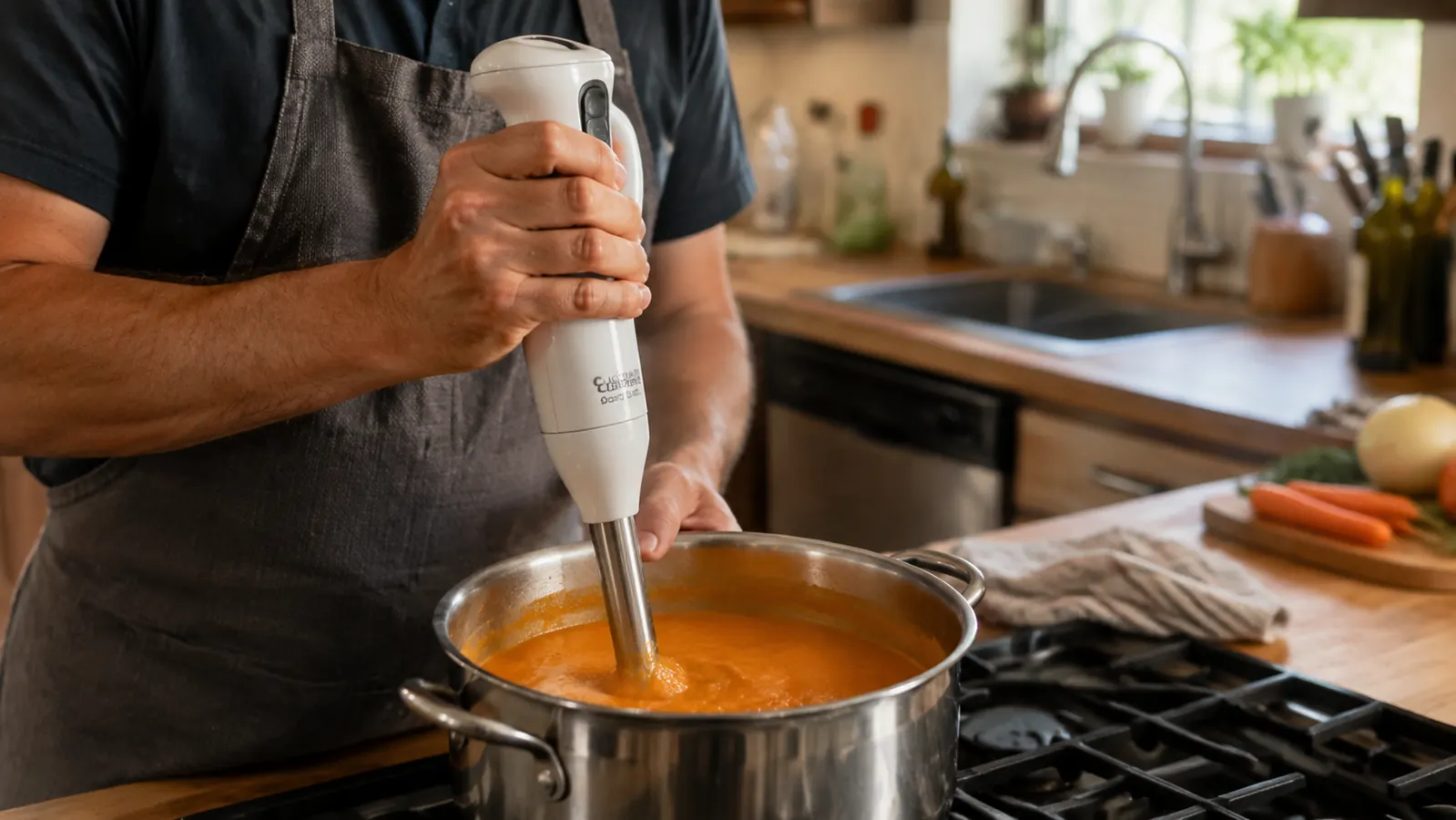
I blended a full pot of squash soup without moving it off the stove, and the only thing I had to wash afterward was the shaft.
Tired of hauling out a full-size blender for a pot of soup?
The Cuisinart hand blender lets you puree directly in the pot, no ladling batches into a pitcher and no extra parts to wash afterward.
Amazon Check Today's Price on Amazon →The first time I used it, I lowered the shaft straight into the pot of soup, still on the stove with the burner off, hit the low speed, and moved it around slowly the way you'd stir with a spoon. No transferring, no splatter beyond a little at the surface, and it came out just as smooth as the countertop blender ever managed. The whole thing took maybe two minutes longer than the actual blending step used to take, mostly because I wasn't hauling anything out of a cabinet or scrubbing a pitcher afterward.
I've used it for more than soup since then. Smoothies work fine in a tall cup, though I noticed the motor works harder on a lot of ice than my old machine did, and I've learned to add a bit more liquid than I used to. I've also used it to smooth out a lumpy gravy and to puree a batch of tomato sauce right in the saucepan, which is where it's genuinely saved the most time and cleanup. I wrote up the full week-by-week details, including how it holds up after regular use, in a longer review after living with it for several months.
It's not a full replacement for a countertop blender in every situation. If you're making a big batch of frozen margaritas or need something to crush a lot of ice fast, a real pitcher blender still does that job better. And on the high speed setting, it does splatter more than I expected the first couple times, so I keep the pot on the shorter side and don't fill it all the way. Those are the honest tradeoffs, not dealbreakers for how I actually cook, but worth knowing before you decide whether it fits your routine. I got into more of the everyday cases in a separate piece on where it earns its keep beyond soup.
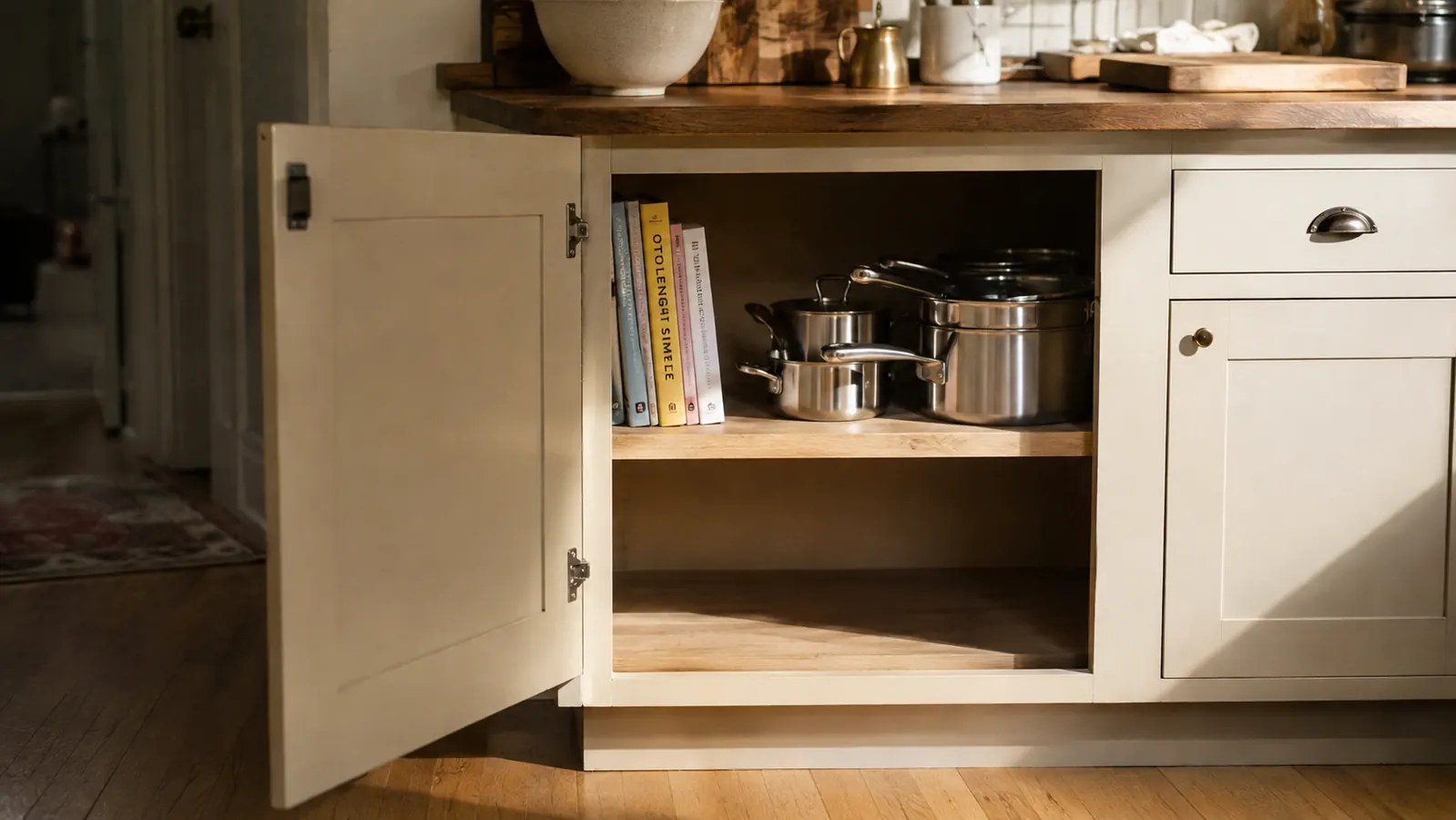
The countertop blender is gone now. I gave it to a neighbor who bakes more than I do and actually blends big batches often enough to justify the space it takes. My cabinet has an open shelf again for the first time in years, and the Cuisinart hand blender lives in a drawer next to my spatulas, out in under three seconds when I need it.
What I'd Tell You If We Were Sitting at My Kitchen Table
If most of your blending is soups, sauces, gravies, or the occasional smoothie for one or two people, I'd tell you to try a hand blender before you replace a broken countertop machine with another one just like it. It's not going to out-crush ice for a party of ten, and I wouldn't pretend otherwise. But for the ordinary, almost daily stuff, the kind of blending that used to mean dragging out a heavy pitcher for a five-minute job, it's the tool that actually gets used instead of the one that sits in the cabinet looking capable. That was the real difference for me, not power or speed, just whether I reached for it without thinking twice.
Stop hauling out a full-size blender for a small job.
The Cuisinart hand blender blends right in the pot, cleans up fast, and stores in a drawer instead of a cabinet.
Amazon Check Today's Price on Amazon →