
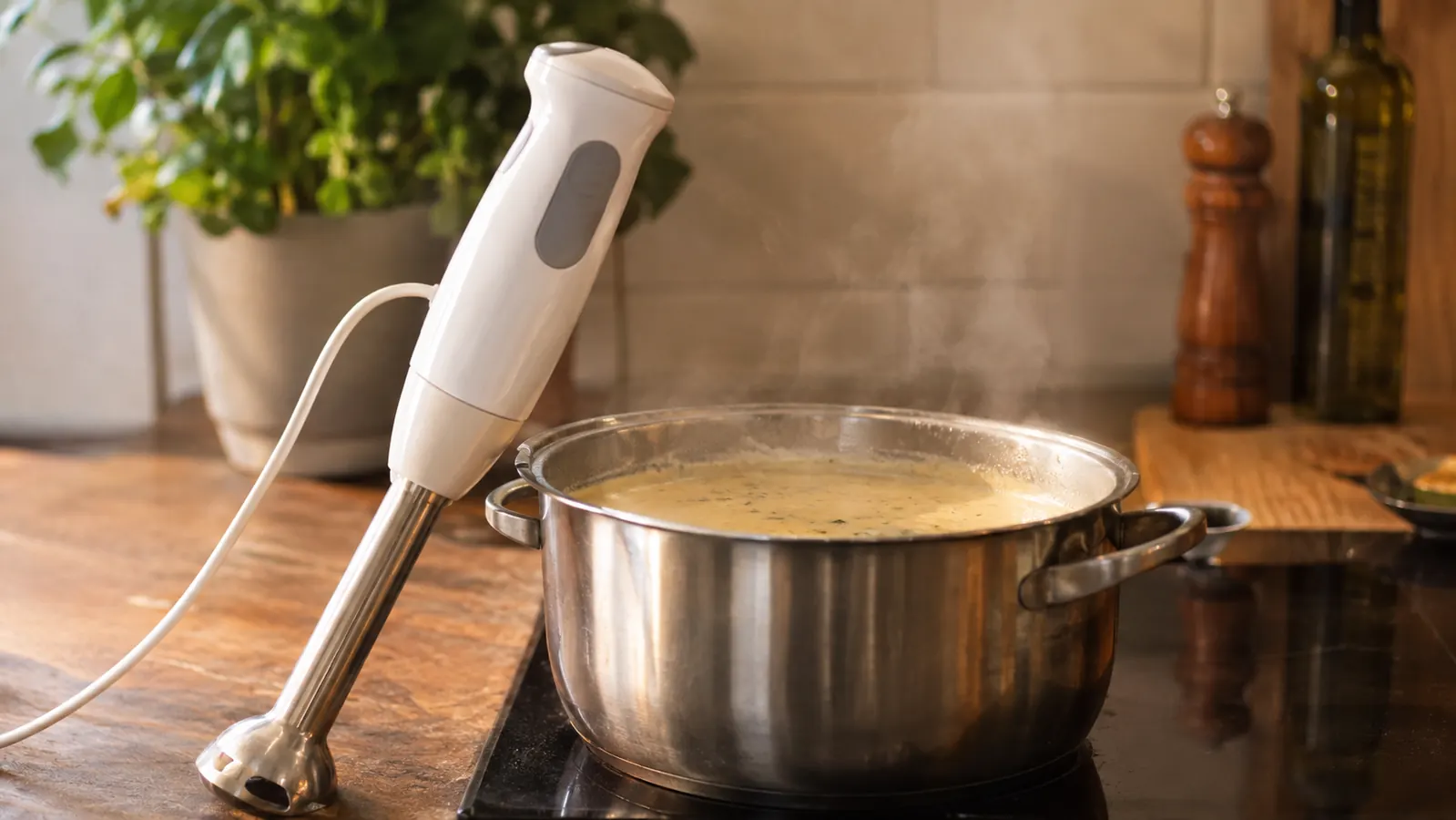
I bought the Cuisinart Smart Stick after the third time I dragged my countertop blender out of the cabinet, filled it with hot soup, and watched the lid pop loose enough to splatter the backsplash. That was a little over a year ago. Since then this Cuisinart immersion blender has gone through every batch of butternut squash soup, tomato soup, homemade mayo, and smoothie I've made, straight in the pot, and it's the tool that quietly took over jobs I used to dread.
This isn't a first-week impression. I've had more than a year to find out where the Cuisinart earns its spot on the hook by the stove and where it comes up short, because plenty of gadgets look great for the first month and end up buried in a drawer by the second. This one didn't, and I want to walk through exactly why, warts included.
I should say upfront that I'm not a professional cook. I'm someone who makes most meals from scratch for a family in an ordinary-sized kitchen with limited counter space, so every gadget I keep has to actually earn its spot. That's the lens this whole review runs through, not restaurant output, just whether a tool makes a normal Tuesday dinner easier.
The Quick Verdict
A genuinely useful two-speed immersion blender that handles soups, sauces, and smoothies well and has stayed sharp and reliable through more than a year of weekly use, though it's not built for ice or truly heavy-duty jobs.
Amazon Check Today's Price →Tired of Transferring Hot Soup Into a Blender in Batches?
The Cuisinart Smart Stick blends straight in the pot, no ladling hot liquid across the kitchen required. See today's price and current availability on Amazon.
Amazon Check Today's Price on Amazon →How I've Used It
I didn't buy this to replace my countertop blender entirely. I bought it because I make soup most weeks from fall through spring, and I was done ladling hot liquid into a blender jar in careful batches, then wiping splatters off the counter afterward. The Smart Stick has been my go-to for pureeing soups, blending sauces, whisking up mayo, and making the occasional single-serving smoothie since the day it arrived.
My routine is simple. On soup nights I build the base in the pot, simmer everything until it's soft, then blend it right there off the heat. For sauces, mostly a quick tomato sauce or a pan gravy, I use it directly in the pan. That's the test that actually matters to me, not one impressive demo, but repeated, ordinary use across more than a year.
A year in, the motor still spins up the same way it did on day one, and the blade guard hasn't loosened or rattled. It hangs on a small hook next to the stove because I use it that often, close enough to grab mid-recipe without digging through a cabinet.
Build Quality and What's Actually in the Box
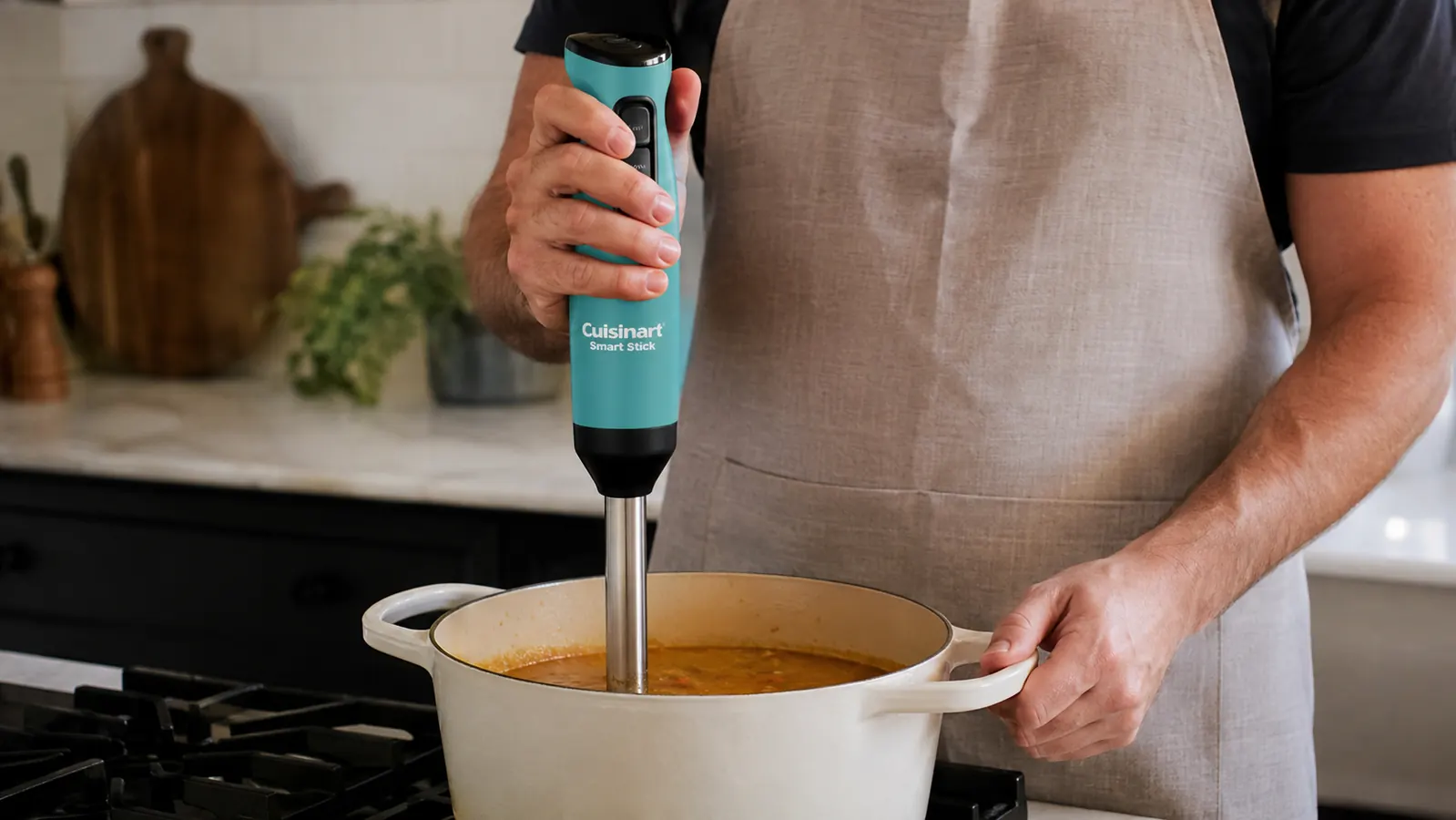
The blending shaft is stainless steel, and the blade sits inside a rounded plastic guard that keeps it from scraping the bottom of a pot or nonstick pan. The motor housing is a lightweight white plastic that's held up fine to a year of handling, though I'm careful never to submerge the housing itself, only the shaft, when I rinse it under the tap between uses.
It's a two-speed blender, a low setting for gentler blending and getting started without splattering, and a high setting for actually pureeing through fibrous vegetables or getting a sauce fully smooth. I use the low speed to break things up initially, then switch to high to finish, which keeps hot liquid from jumping the sides of the pot.
The whole unit is a single stick with a soft-grip handle, no separate base or cord-wrapped charging stand to store. It hangs on a hook or lies flat in a drawer, which was a real selling point in a kitchen where I don't have spare counter real estate for another appliance.
Two Speeds, Real Difference: What They're Actually For
I want to be specific here because a lot of reviews just say it's got two speeds without explaining when each one matters. The low speed is what I reach for first every time, whether it's soup, sauce, or smoothie, because it lets me get the blade fully submerged and moving before liquid has any chance to splash up the sides.
High speed is where the actual pureeing happens. Once everything's roughly broken down on low, switching to high is what takes a chunky butternut squash soup from lumpy to genuinely silky in about thirty seconds of steady, slow up-and-down movement through the pot. I compared this more directly against a full-size countertop blender in this side-by-side breakdown, since the speed and texture tradeoffs surprised me a little.
Where I still reach for something else is ice. This isn't built for crushing ice or frozen fruit straight from the freezer, and pushing it that hard feels like it's working against the motor rather than with it. For smoothies I let frozen fruit thaw for a few minutes first, or use fresh fruit, and it handles that without complaint.
What a Year-Plus of Weeknight Cooking Actually Looks Like
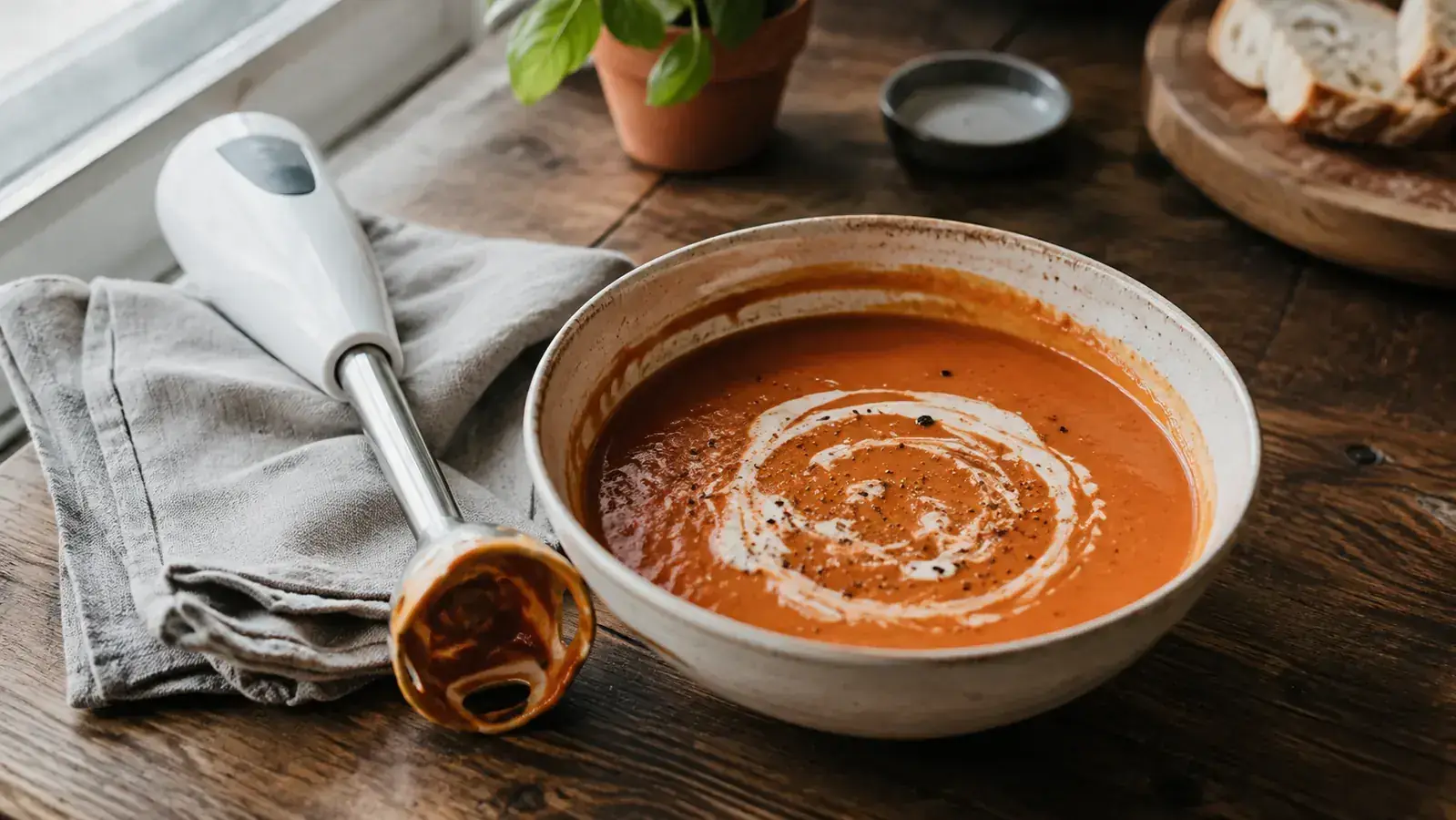
The honest measure of a gadget like this isn't the first pot of soup, it's the fiftieth. By month two I'd stopped thinking of it as a novelty and started reaching for it the way I reach for a wooden spoon without thinking twice. A pot of tomato soup, my most common use case, goes from simmered vegetables to smooth in under a minute, and there's no pot-to-blender-and-back transfer at all.
Sauces and gravies work almost as well, though anything with a lot of solid chunks, like a thick chili I'm trying to partially blend for body, needs a bit more patience since the shaft is narrower than a full blender jar. Homemade mayo and vinaigrettes are where it's genuinely changed my habits. I make mayo from scratch now more often than I ever did before, because the whole process, oil slowly emulsifying into egg, takes about ninety seconds standing at the counter instead of a slow hand-whisking arm workout.
The thing that changed my mind about this being a one-trick soup tool was baby food, of all things, back when my youngest was starting solids. Steamed carrots, sweet potato, and peas pureed down smooth in the same small measuring cup I used to steam them in, no extra dishes and no batches split across a blender jar.
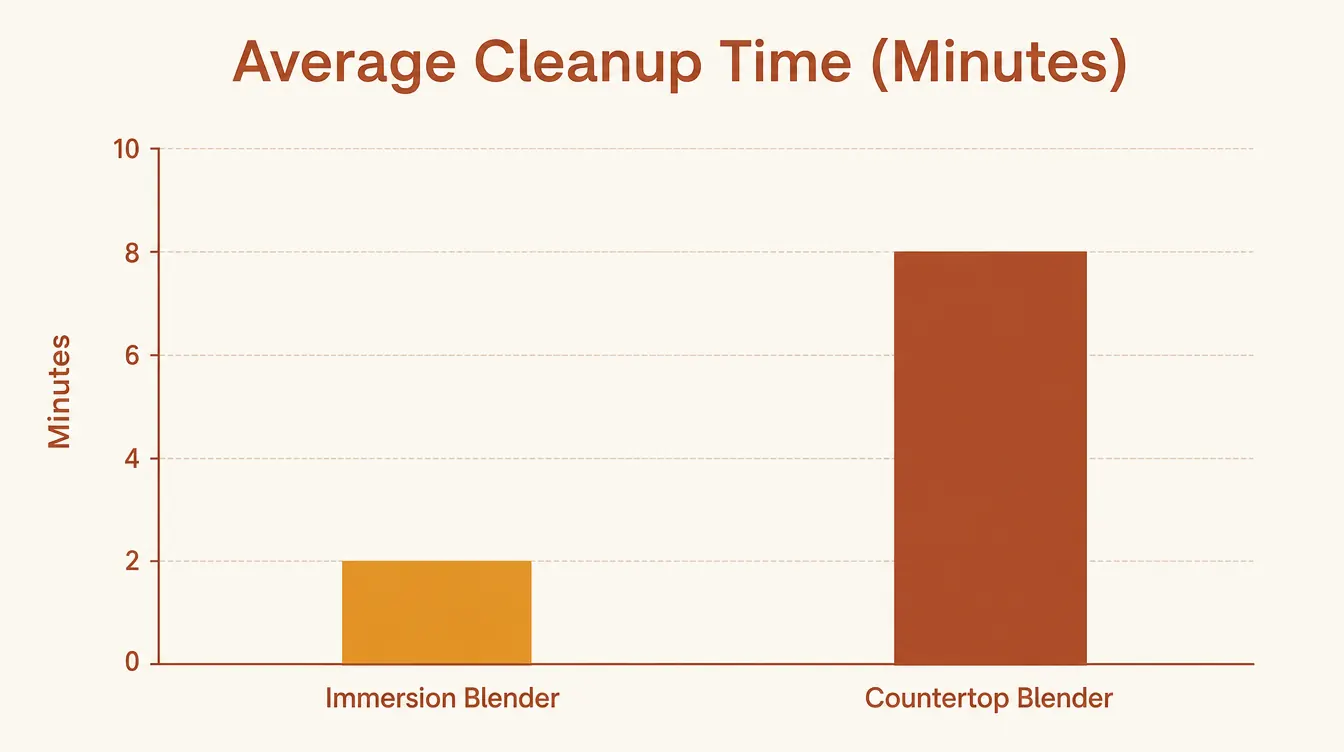
Cleanup is where this thing really separates itself from a countertop blender, and I broke down exactly how in this step-by-step guide to getting soup fully smooth. There's no jar, no lid, no gasket to hunt down in the dish rack, just the shaft to rinse under hot water and wipe down.
The Meals It's Actually Changed
Soup is the obvious one, but it's changed which soups I bother making, not just how I make them. Butternut squash soup used to feel like a weekend project because of the batch-blending and cleanup. Now it's a weeknight option, since the whole process from simmered vegetables to bowl takes maybe five extra minutes over just eating the vegetables chunky.
Pan sauces are another one. I make a quick blended tomato sauce for pasta more often now, blending canned tomatoes with sauteed garlic and onion right in the saucepan instead of dirtying the countertop blender for what's really a two-minute job. Smoothies happen more on mornings when I'm rushing, since I can blend one serving directly in a tall cup and drink out of the same container.
It's changed my grocery habits a little too. I buy whole vegetables for soup more often instead of pre-pureed cartons at a markup, because the blending step stopped being the bottleneck that made the shortcut tempting in the first place.
Where It Struggles
Ice and frozen fruit are where the Smart Stick loses me. I tried pushing through frozen berries straight from the freezer a handful of times early on, and the motor labors in a way that made me nervous about burning it out, so I stopped. If smoothies with hard frozen ingredients are your daily habit, this isn't built to be your primary blender for that.
Large batches are a mixed bag too. A full pot of soup for a dinner party, more than the usual weeknight amount, takes noticeably longer to fully smooth out than it would in a high-powered countertop blender, since you're working with a narrower blending zone around the shaft rather than a wide jar full of moving blades.
Splatter is still a real risk if you skip the low-speed start. I learned this the hard way blending a thin soup on high speed right out of the gate, and hot liquid jumped the rim of the pot before I could react. Starting low and building up isn't optional advice, it's the actual technique that keeps your stovetop clean.
One more thing worth flagging plainly for safety. The blade guard should always stay on during use, the unit needs to be unplugged before you clean it or swap any attachment, and your hand should never be anywhere near the shaft while it's still plugged in, even if the motor's off. Hot liquid can also splash back at you if you blend too close to the surface, so keeping the shaft fully submerged before switching it on matters more than it sounds like it would.
Alternatives I Considered Before and During This Year
Before this I relied entirely on my countertop blender for anything that needed pureeing, transferring hot soup in careful batches and dealing with a bulky jar in the dish rack afterward. I still keep that blender for smoothies with ice and for genuinely large batches, but it doesn't come out nearly as often now.
I also thought about a food processor for a while, since I already had one for chopping. It technically purees, but transferring hot liquid into a food processor bowl has the exact same splatter risk I was trying to get away from, plus a wider bowl and more parts to wash. I put together a fuller pros and cons list separately in this longer honest review after a full year of weekly use, since the extra months surfaced a few quirks I didn't expect going in.
A cheaper single-speed hand blender was on my list too, but after using this two-speed version I don't think I'd go back. The low-speed start for splatter control alone is worth the small price difference, at least based on what a full year of soup season taught me.
What I Liked
- Blends soup and sauce straight in the pot, no transferring hot liquid
- Two speeds actually matter, low for splatter control, high for smooth puree
- Cleanup is just the shaft, no jar or gasket to wash
- Motor has held up through more than a year of weekly use
- Compact enough to hang on a hook, no counter space taken up
Where It Falls Short
- Not built for ice or frozen fruit straight from the freezer
- Large batches take longer than a full-size countertop blender
- Splatters if you skip starting on low speed
- Narrower blending zone struggles with very chunky mixtures
- Motor housing can't be submerged, only the shaft rinses under the tap
It's not trying to replace my countertop blender. It's the tool I reach for when the job is soup in a pot, not a smoothie full of ice.
Who This Is For
If you make soup, pan sauces, or homemade dressings from scratch with any regularity, this is worth the small drawer or hook space. It's also a solid pick for anyone who's tired of the batch-and-transfer routine with a countertop blender for hot liquids, since blending in the pot removes that step entirely.
It's also a good fit for parents making their own baby food, or for anyone cooking mostly single servings, a smoothie, a small sauce, a single bowl of soup, where hauling out a full-size blender for one portion has always felt like overkill. I go through more of these use cases in this list of reasons an immersion blender earns its spot in a home kitchen.
My older kid has started helping with soup night now that the blending step doesn't involve a hot pot getting carried across the kitchen. It's an easy task to supervise closely, since the whole process happens right at the stove instead of moving liquid between containers.
Who Should Skip It
If your main use case is daily smoothies with a lot of ice, or you regularly blend big batches for a crowd, you'll be happier with a high-powered countertop blender built for that job. This tool earns its keep on pot-side blending of soups, sauces, and smaller portions, not heavy-duty ice crushing.
It's also probably not worth adding to your kitchen if you already have a countertop blender you're happy hauling out and washing every time, and hot-liquid transfer has never bothered you. The appeal here is specifically about skipping that step, and if that's never been a problem for you, this solves something you don't actually have.
A Year-Plus In, It's Still the First Thing I Grab for Soup
If ladling hot soup into a blender in careful batches is the part of cooking you'd cut out if you could, this is the closest thing I've found to actually doing that. Check today's price on Amazon.
Amazon Check Today's Price on Amazon →