
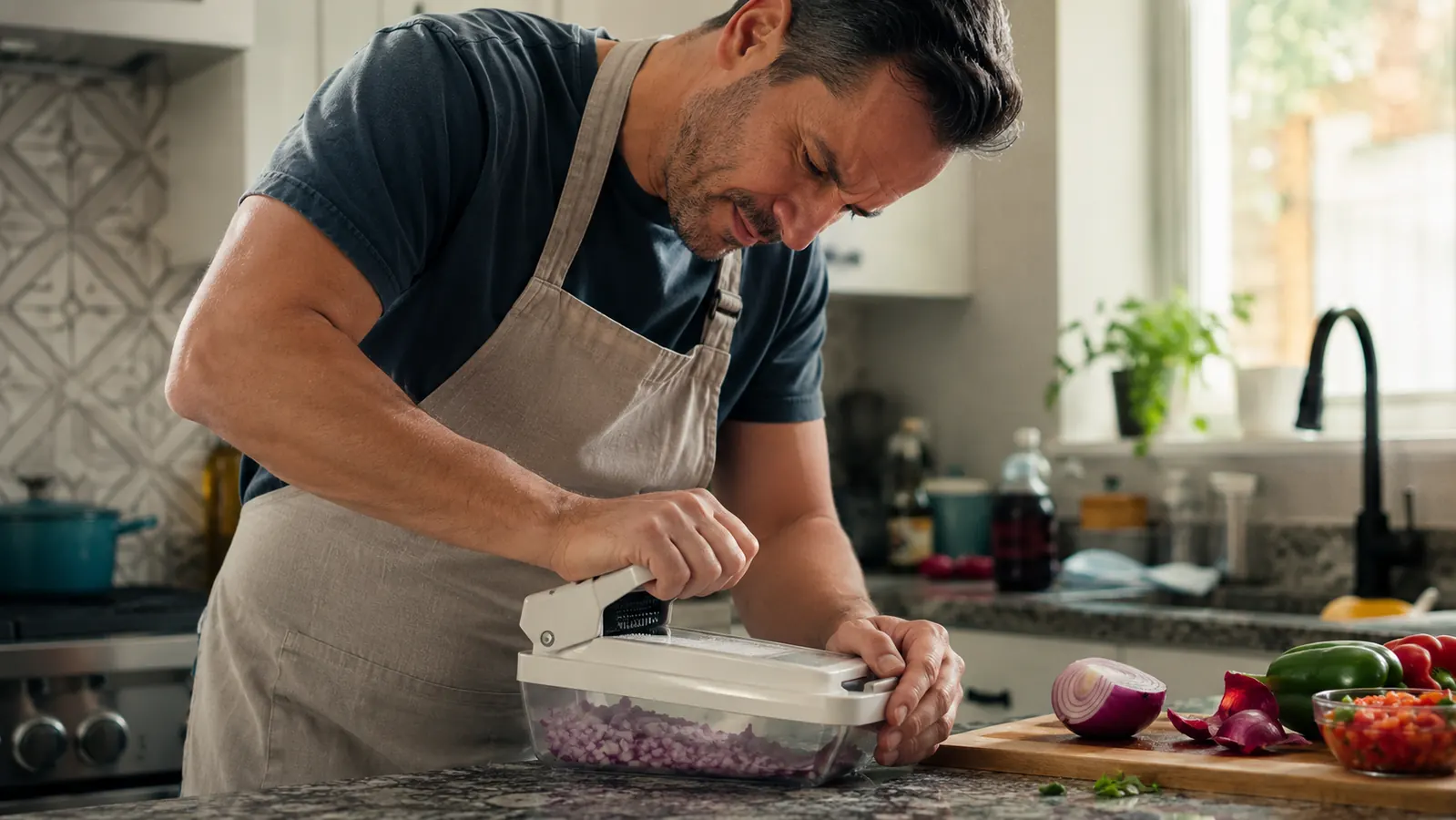
I want to start with the stuff most reviews skip, because I read six or seven glowing write-ups of the Fullstar vegetable chopper before I bought mine, and not one of them mentioned that you need real hand pressure to get through a firm vegetable, or that the lid can pop loose mid-press if you don't seat it exactly right. I've used mine weekly since last spring, close to nine months now, mostly for Sunday batch prep and weeknight dinners, and I think it earns its spot in my kitchen. But I'm not going to pretend it's flawless just because the product photos make it look effortless.
This is the version of the review I wish I'd read before buying, the one that leads with what nobody tells you instead of the highlight reel. If you already know the basics, the Fullstar chopper dices onions, peppers, and firm vegetables in one or two presses using a grid of stainless blades set inside a catch container. Skip ahead to the sections on where it actually struggles, because that's the part that decides whether it belongs in your kitchen or not.
The Quick Verdict
A genuinely useful weekly prep tool once you learn its quirks, though it takes real pressure, a short learning curve, and it's picky about which vegetables actually work.
Amazon Check Today's Price →Before You Buy, Know What the Five-Star Reviews Leave Out
The Fullstar chopper dices a whole onion in one press once you've got the technique down. Here's what that actually looks like in practice, plus today's price and availability on Amazon.
Amazon Check Today's Price on Amazon →How I've Tested It
I didn't do a single dramatic unboxing with one perfect onion and call it a review. My testing has been close to nine months of ordinary use, Sunday batch prep for the week ahead, weeknight dicing for whatever's on the stove, and a handful of bigger cook-ahead sessions before busy weeks. I'm not a professional cook, just someone who makes most meals from scratch in an ordinary-sized kitchen where drawer space is tight and every gadget has to prove it belongs before it earns a permanent spot.
That means I've run it through onions, bell peppers, cucumbers, carrots, zucchini, celery, cabbage, hard-boiled eggs, and more sweet potatoes than I'd like to admit I ruined along the way. Some of that produce worked exactly as advertised. A lot of it didn't, and figuring out which was which took longer than any review I read beforehand suggested it would.
I timed things too, not with a stopwatch obsessively, but roughly, because I wanted to know if this was actually saving me time or just felt like it was. Onion prep dropped from close to ninety seconds a piece by hand to under twenty seconds with the Fullstar chopper, including the extra step of clearing the container into a bowl afterward. That gap is real, and it's the main reason I kept using it past the frustrating first week.
My unit is the standard container and blade set that comes with the spiralizer attachment and the smaller inserts, the same kit most people buying this on Amazon end up with. If you're weighing this against the mandoline route instead, I compared the two more directly in this side-by-side breakdown of the chopper versus a mandoline slicer.
The Parts Nobody Mentions in the Five-Star Reviews
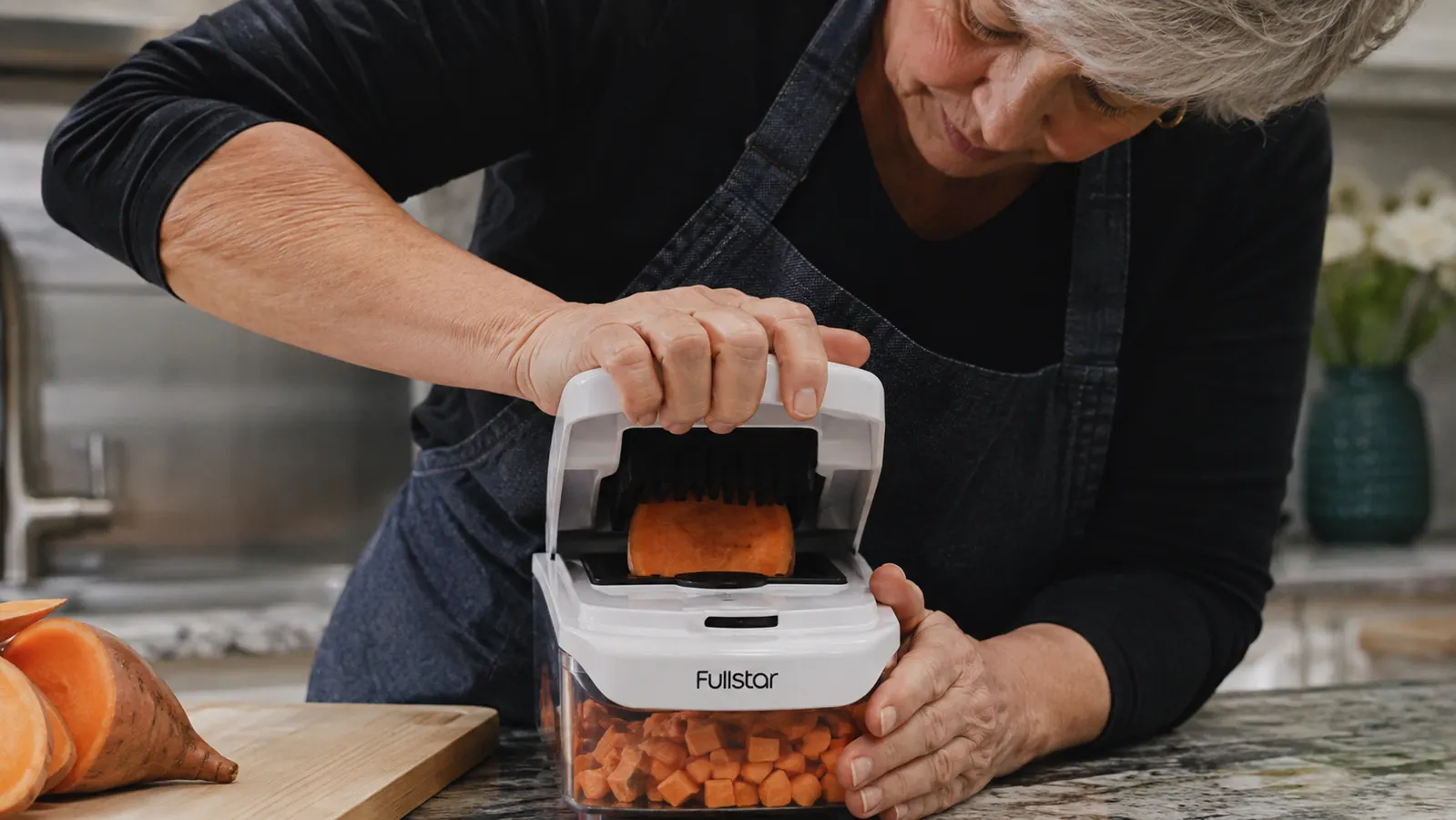
The single biggest thing left out of most reviews is how much force the first few uses actually take. Onions are the easy case, soft enough that the handle drops with moderate pressure. Sweet potatoes and firm carrots are a different story entirely. You're leaning real weight into the handle, and if you're not braced against the counter, the whole unit can slide across the surface mid-press.
The lid doesn't always seat as cleanly as it should either. Twice in my first month I pressed down before the container had fully clicked into place, and the top popped loose enough that diced onion sprayed across the counter instead of landing where it belonged. It's user error more than a design flaw, but nobody warns you it happens, and it happened to me more than once before I learned to always check for the click first.
There's also more splatter than I expected, especially with juicier vegetables like cucumber and celery. Liquid pools in the bottom of the catch container and occasionally sprays a little at the seams when you press down hard on a firm piece. I keep a kitchen towel nearby specifically for this now, a small detail, but exactly the kind that never shows up in a five-star Amazon review written after one good session.
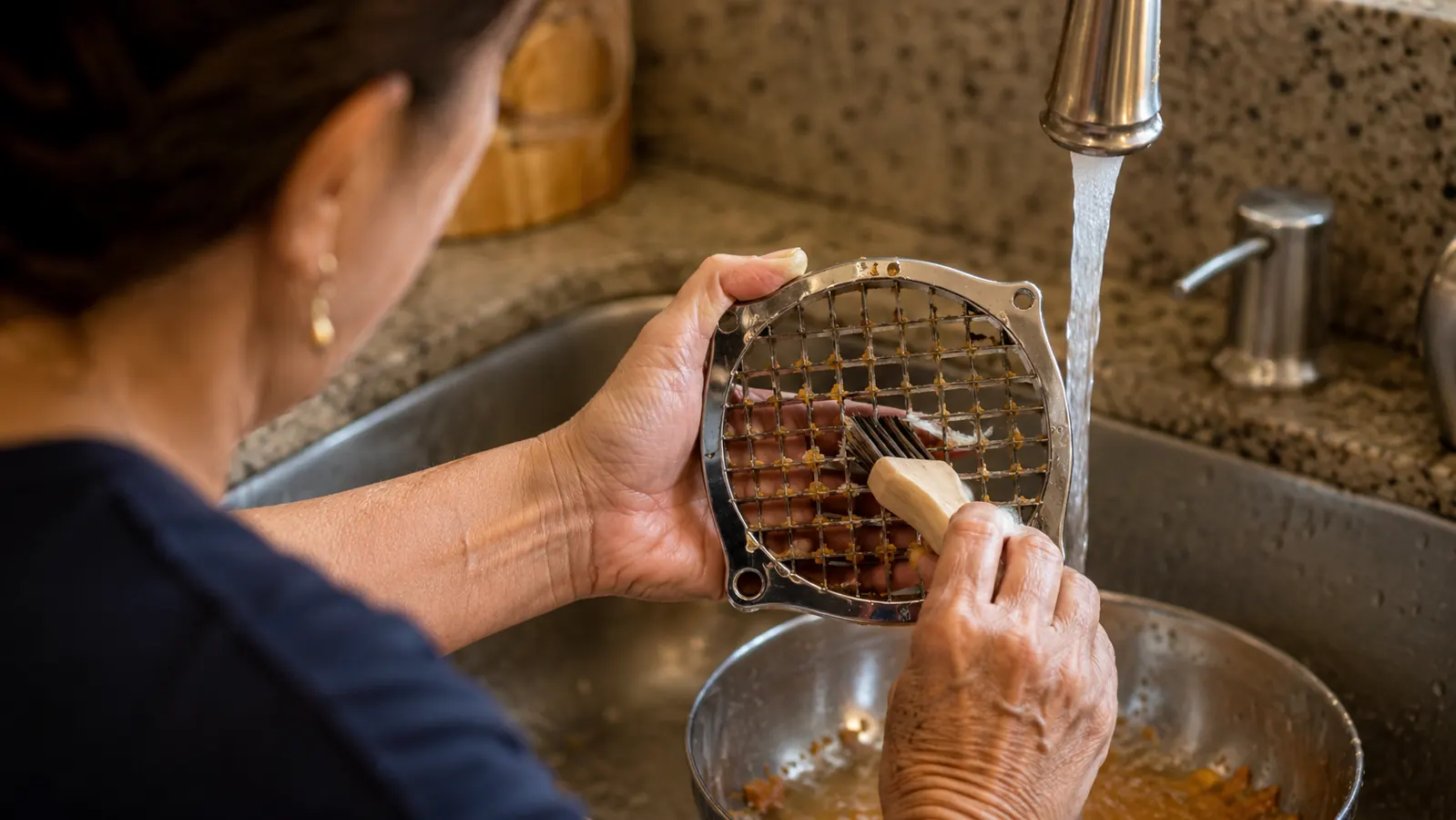
Cleanup is also not the rinse-and-done process the marketing implies. The blade grid has enough small gaps that bits of onion skin and pepper get wedged between the blades, and running it under water alone doesn't clear all of it out. I keep an old toothbrush next to the sink now specifically for this, which nobody warned me I'd need when I bought it.
Where It Genuinely Struggles
Cabbage was the biggest surprise for me. A quartered head is often too large to fit through the hopper opening without trimming it down first, which cuts into the time savings on slaw night more than I expected. I now pre-cut cabbage into smaller wedges before it goes anywhere near the chopper, an extra step the packaging never mentions.
Celery gave me more trouble than I expected going in, too. The stringy fibers tend to catch on the blade edges rather than cutting clean through, and I've had to pull stuck strings out of the grid with my fingers more than once. It still works, but it's slower and messier than onions or peppers, and I've gone back to a knife for celery more often than not.
Hard-boiled eggs are a mixed bag with the small insert included in the kit. It works fine on eggs that are cold and fully set, but anything slightly underdone or still a bit warm turns to mush instead of clean slices. I've had noticeably better luck with a dedicated egg slicer for that specific job and don't reach for this one anymore when eggs are on the menu.
The spiralizer attachment, which ships in the same kit, clogs on anything but a straight, firm zucchini or cucumber. Curved produce jams the mechanism almost every time, and I've had to stop mid-recipe more than once to disassemble it and clear a stuck piece. It works, but it's the least reliable part of the whole set by a wide margin.
Small potatoes and cherry tomatoes both roll instead of catching cleanly, which means you end up chasing them around the hopper more than actually dicing them. Larger, firmer produce with some flat surface to grip goes through far more predictably than anything small and round.
The Learning Curve Nobody Warns You About
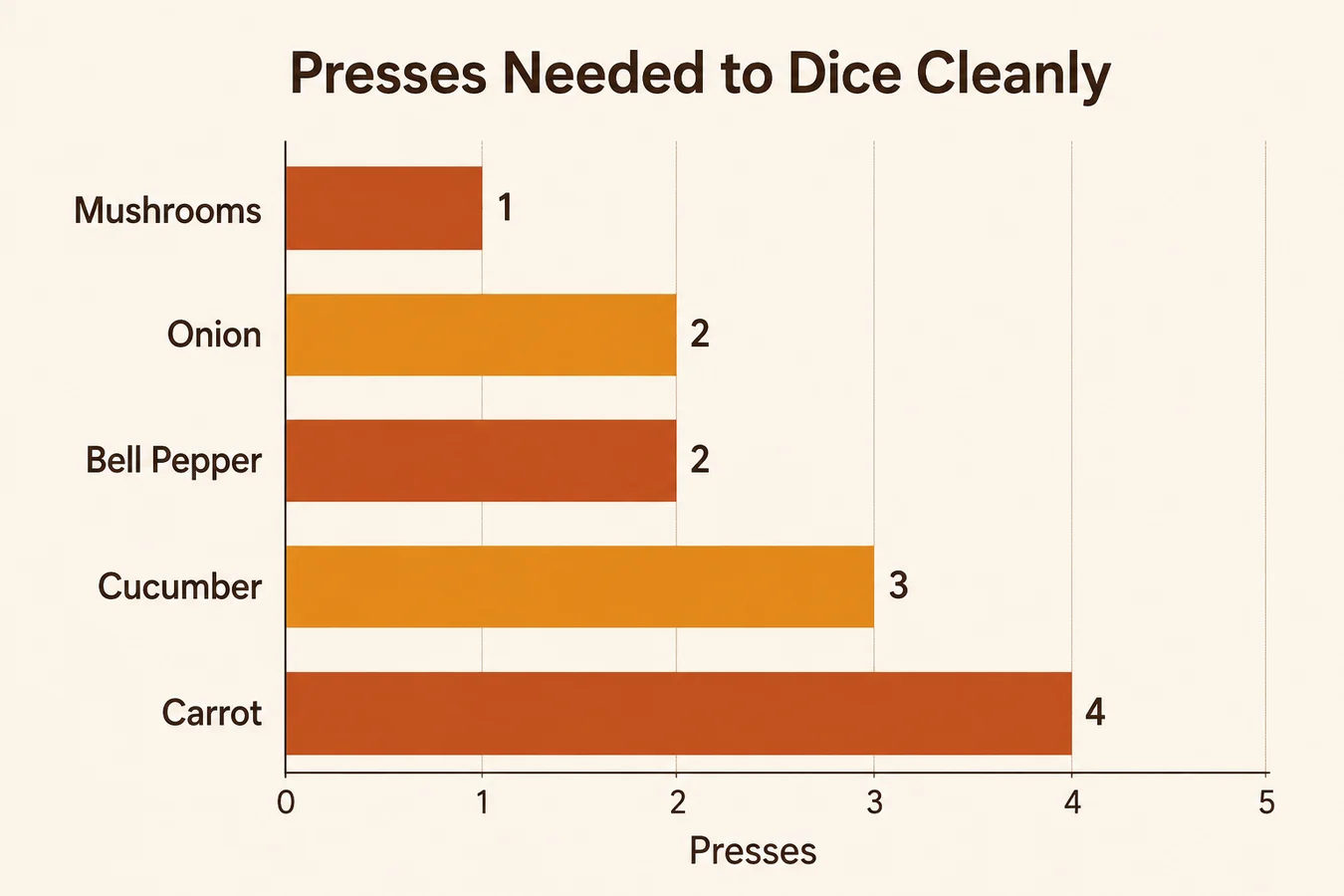
It took roughly two weeks of regular use before dicing felt automatic instead of like a small project. My first attempts were slow, I second-guessed how much force to use, I loaded vegetables at the wrong angle, and I fought the lid more than once. If you go in expecting instant mastery because a glowing review made it look effortless, that early frustration might have you shelving it before it actually gets good.
One thing that helped speed up the learning curve was paying attention to where I positioned the produce inside the hopper before pressing. Centering firm vegetables directly over the blade grid, rather than letting them sit toward one edge, cut down on uneven pieces and made the whole motion smoother. It sounds obvious written out, but nothing in the instructions actually walks you through it.
I also learned to stop forcing anything that wasn't going through cleanly after two presses. Early on I kept pushing harder on stuck cabbage or small potatoes, which either jammed the blades further or sent pieces flying sideways. Now if something doesn't catch within a press or two, I pull it back out and finish it with a knife instead of fighting the tool.
What changed things most for me was prepping produce to a size that actually fits the hopper cleanly, roughly quartered for onions and peppers rather than jamming whole pieces in and forcing them through. Once I adjusted my own prep habits to match the tool, instead of expecting the tool to handle anything I threw at it, the whole process got noticeably faster and a lot less messy.
What It's Genuinely Good At, Once You Get Past the Learning Curve
None of this means it's a bad tool, and I don't want the drawbacks above to read like a case against buying it. Onions, bell peppers, cucumbers, celery, and firm zucchini go through cleanly and fast once you've got the technique down, and that covers the bulk of what I actually cook on a normal week. A batch that used to take me ten or twelve minutes of hand-dicing for a week of meal prep now takes closer to four.
Compared to what I used before, mostly a chef's knife and, for a short stretch, a basic hand-crank chopper that jammed constantly, this is a real step up for the vegetables it actually handles well. It's not a full replacement for a knife, and I still use one for anything delicate, but for the specific job of dicing a pile of onions and peppers before dinner, it's become the tool I default to without thinking about it anymore.
Taco nights and stir-fry dinners are where I notice it most, since both start with diced onion and pepper before anything else happens. Getting that part done in under three minutes instead of closer to ten means dinner actually starts on time on the nights I'm least motivated to cook, which matters more on an ordinary Tuesday than any spec sheet ever will.
The catch container also means less cutting board cleanup and fewer stray pieces scattered across the counter afterward. For weekly batch cooking specifically, where I'm dicing the same handful of vegetables in volume every Sunday, it's cut real time off my routine. I get into exactly how that adds up week over week in this longer look at what months of regular use actually looked like, if you want the fuller picture beyond just the drawbacks.
None of the drawbacks above are dealbreakers on their own, they're just true, and after nine months of weekly use I still reach for it more often than not despite the quirks. That's the trade-off this whole review is trying to hand you before you buy it, not after you've already unpacked it and started figuring it out yourself.
What I Liked
- Cuts real time off weekly batch prep once you know the technique
- Onions, peppers, and firm vegetables go through cleanly
- Catch container means less cutting board cleanup
- Nests together for compact storage
- No tears chopping onions
Where It Falls Short
- Takes real hand pressure on firm vegetables like sweet potatoes
- Lid can pop open if not seated correctly, first few uses especially
- Cabbage often needs pre-trimming to fit the hopper
- Spiralizer attachment clogs on anything but straight produce
- Blade grid needs a small brush to clean fully
- Roughly two weeks before the technique feels automatic
The five-star reviews sell you the tenth use. Nobody tells you about the first.
Who This Is For
This makes the most sense for anyone doing regular batch prep, weekly meal prep especially, where you're dicing the same core vegetables in volume more than once a week. It's also a solid fit if onion tears are genuinely a barrier that keeps you from cooking from scratch as often as you'd like, since that specific problem it solves completely and consistently once you know how to use it.
It's also worth it if you cook for more than two people on a regular basis, since the amount of vegetables you're prepping on a normal night is enough to make hand-dicing feel like a real chore rather than a quick five minutes. The busier the week, the more the time savings actually matter.
Who Should Skip It
If most of your cooking is single servings or delicate produce like herbs, ripe tomatoes, or soft fruit, the learning curve and the force required probably aren't worth it for how often you'd realistically reach for it. The same goes if you have limited hand strength or a wrist issue, since firm vegetables genuinely require real pressure to push all the way through. A knife and a light touch will serve you better in both of those situations.
It's also probably not the right buy if you're expecting zero learning curve or a tool that handles literally anything you hand it. Cabbage, celery, small potatoes, and soft produce all need workarounds or a backup knife nearby, and if that trade-off sounds annoying rather than manageable, you'll likely end up frustrated with it in the first few weeks instead of settling in with it.
Know the Quirks, Still Worth the Counter Space
It's not effortless straight out of the box, but once the technique clicks, it earns its spot for anyone doing regular batch prep. See today's price and current availability on Amazon.
Amazon Check Today's Price on Amazon →