
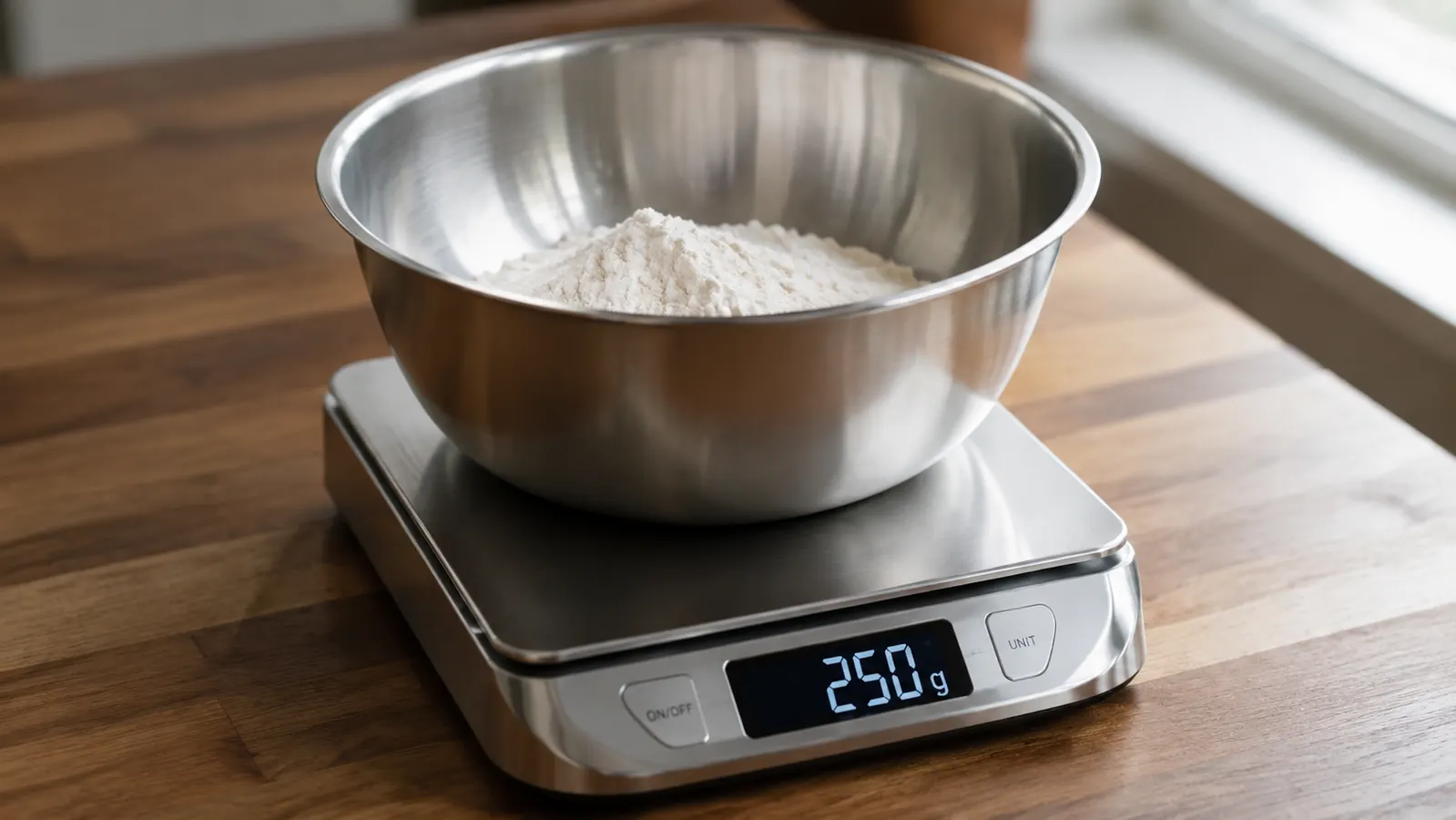
I bought my Etekcity kitchen scale after a loaf of sourdough came out of the oven dense as a brick for the third weekend in a row, and I finally admitted the problem wasn't my technique, it was that a cup of flour scooped straight from the bag can weigh anywhere from four to six ounces depending on how packed it is. That was about six months ago. Since then the Etekcity scale has weighed everything from bread flour to coffee beans to dinner portions, and it's still sitting out on my counter instead of buried in a cabinet, which is more than I can say for most gadgets I've bought over the years.
This isn't a first-week review written after unboxing and one test run. I've had six months of ordinary weeknight cooking and weekend baking to find out where the Etekcity earns its keep and where it doesn't, because plenty of kitchen gadgets look sharp on day one and quietly disappear by month two. This one hasn't, and I want to lay out exactly why, along with the parts that annoyed me.
I should say upfront that I'm not a professional cook. I'm someone who makes most meals from scratch for a household in a normal-sized kitchen with limited counter space, so a gadget only stays out if it earns that spot every single week. That's the standard this whole review is measured against, not restaurant precision, just whether it makes an ordinary night of cooking or baking easier.
The Quick Verdict
A stainless steel food scale that made my baking consistent and my portions honest, with a simple enough interface that I actually use it every day instead of just when I remember.
Amazon Check Today's Price →Tired of Bread That Comes Out Different Every Time?
A cup of flour isn't a fixed amount, but a gram is. The Etekcity scale turns fuzzy scoop-and-level measuring into something repeatable. See today's price and current availability on Amazon.
Amazon Check Today's Price on Amazon →How I've Used It
I didn't buy this expecting to use it every day. I bought it for baking, specifically to stop guessing at flour weight, and figured it would come out for the occasional bread project and otherwise sit in a drawer. Instead it's been out on the counter since the day it arrived, because once I started weighing ingredients I kept finding new reasons to keep using it.
The routine settled fast. Weekend baking days it's weighing flour, sugar, and butter straight into the mixing bowl. Weeknights it's weighing coffee beans in the morning and portioning dinner in the evening, mostly protein, since that's the ingredient where eyeballing costs the most money at the grocery store. It sits on a stainless platform with a low profile, so it fits under most of my mixing bowls without me having to hold anything at an angle.
Six months in, the display still reads clearly, the buttons still respond the first press instead of needing two or three tries, and I haven't had to replace the batteries yet. It lives on the counter next to my stand mixer because that's genuinely where it gets used most.
Build Quality and What's Actually in the Box
The platform is stainless steel, not the textured plastic top a lot of cheaper scales ship with, and it's held up to six months of flour dust, spilled batter, and the occasional splash without staining or scratching in any way I can see. It wipes clean with a damp cloth in a few seconds, which matters more than it sounds like it should when you're weighing ingredients three or four times a day.
The display sits low and flush with the base, tilted just enough that I can read it standing over the counter without crouching. Buttons are tactile rather than the flat touch-sensitive kind that some scales use, and I've had zero accidental button presses from a bowl brushing against the edge, which happened constantly with a cheaper scale I owned before this one.
In the box it's just the Etekcity scale itself plus batteries to get started. No extra bowls, no fancy stand, nothing to store beyond the scale. For a kitchen with limited drawer space that's a real point in its favor. It's one flat object, not a kit with pieces to keep track of.
The Nutrition App: Do I Actually Use It?
The scale is sold alongside a companion nutrition app, and I want to be honest about how much I actually rely on it rather than gloss over the extras the way a lot of reviews do. I downloaded the app in the first week, used it to log ingredient weights for a few dinners, and then stopped opening it within about a month. Not because it didn't work, but because logging every ingredient into a phone app while my hands are covered in flour or raw chicken isn't a habit that stuck for me.
What did stick was the scale itself, used entirely on its own without the phone anywhere nearby. If tracking nutrition data is genuinely part of your routine, the app is there and it works fine for what it does. But if you're buying this mainly for baking consistency and honest portioning the way I was, the scale earns its keep with the display alone. I'd rather someone go in expecting that than be disappointed the app isn't the centerpiece of daily use.
The tare function, on the other hand, is something I use constantly, probably more than any other single feature. Setting a bowl on the platform, zeroing it out, then adding ingredient after ingredient and zeroing between each one turned what used to be a pile of dirty measuring cups into one bowl and one scale for an entire recipe.
What Six Months of Regular Baking and Cooking Actually Looks Like
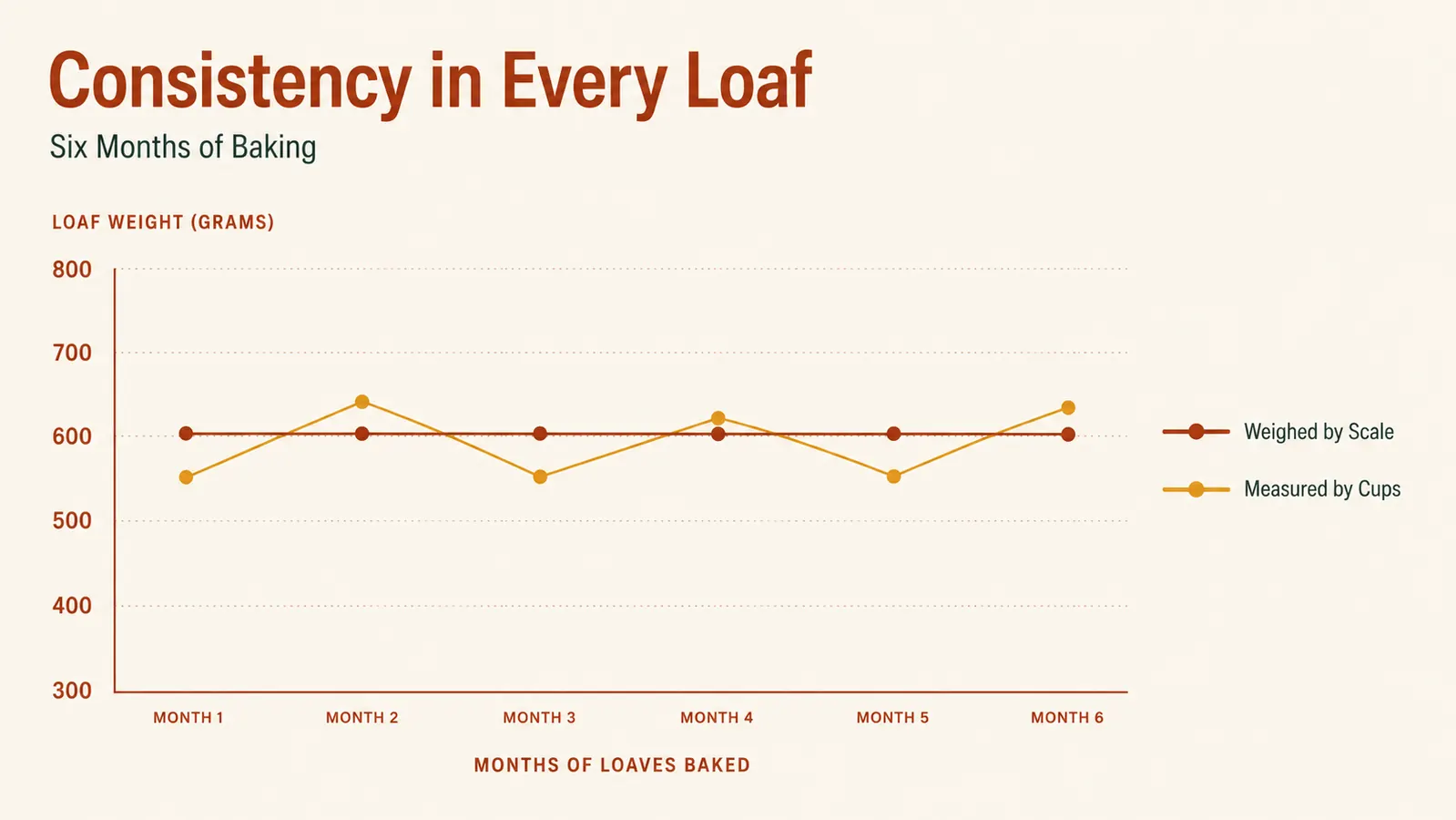
The real test of a tool like this isn't the first loaf of bread, it's the fifteenth. By the second month I'd stopped thinking of weighing ingredients as an extra step and started treating it the way I treat turning on the oven, just part of the process. Flour, sugar, and butter for a batch of cookies all go straight onto the scale now instead of through a set of measuring cups first.
Bread has been the clearest before and after. My loaves used to come out dense some weekends and fine other weekends, and I never fully understood why until I started weighing flour and realized how much a packed cup versus a loosely scooped cup actually varies. Once I switched to weighing, the loaves stopped being a gamble. I wrote up more of the specific ways a scale changes baking outcomes in this breakdown of what weighing actually fixes in everyday cooking, since bread was only the first thing that got more consistent.
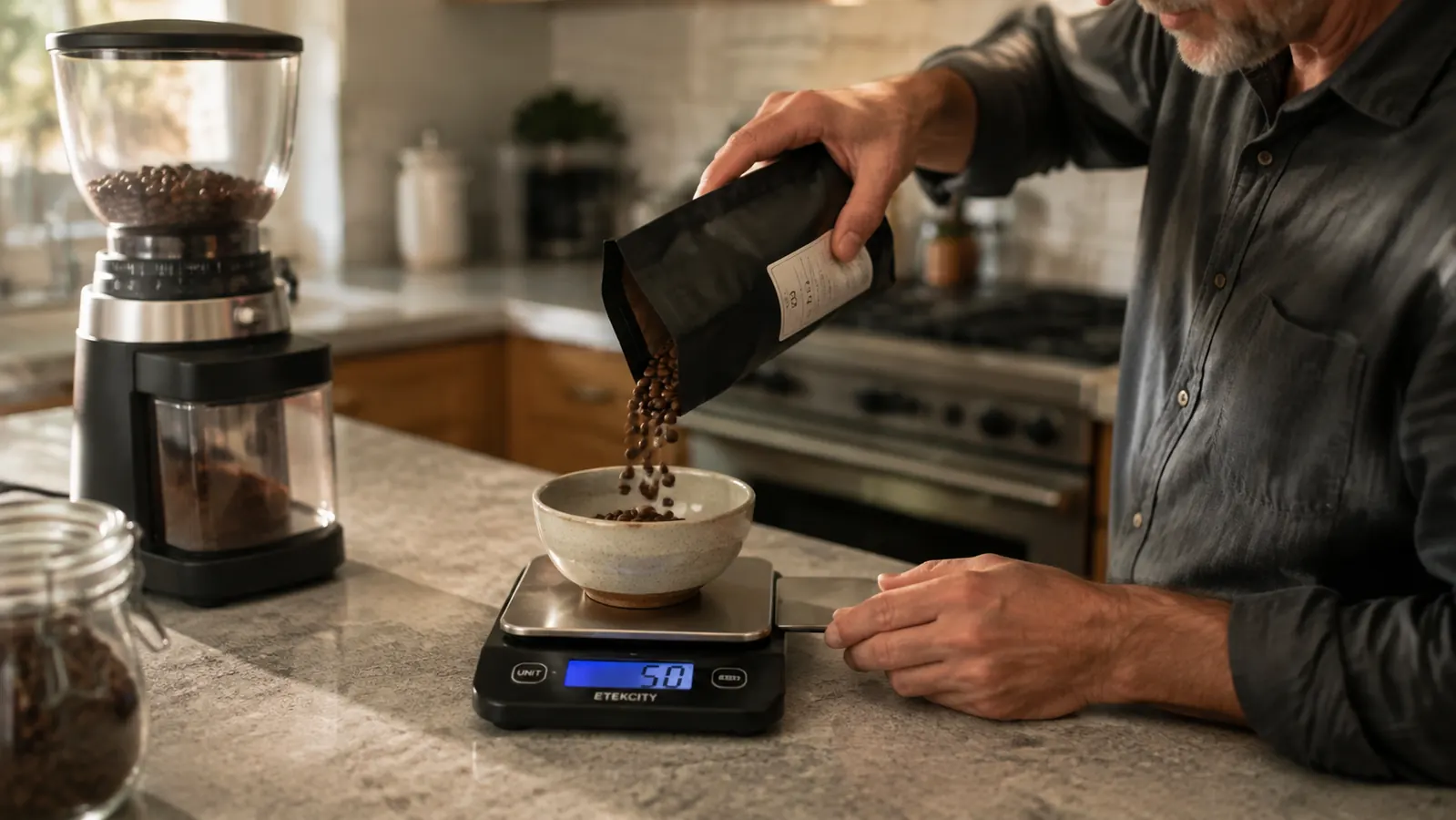
Coffee is the other daily habit it changed without me planning for that. I weigh beans every morning now instead of scooping, and the cup tastes the same every day instead of some mornings being weak and some being borderline undrinkable depending on how full the scoop happened to be.
The Meals and Habits It's Actually Changed
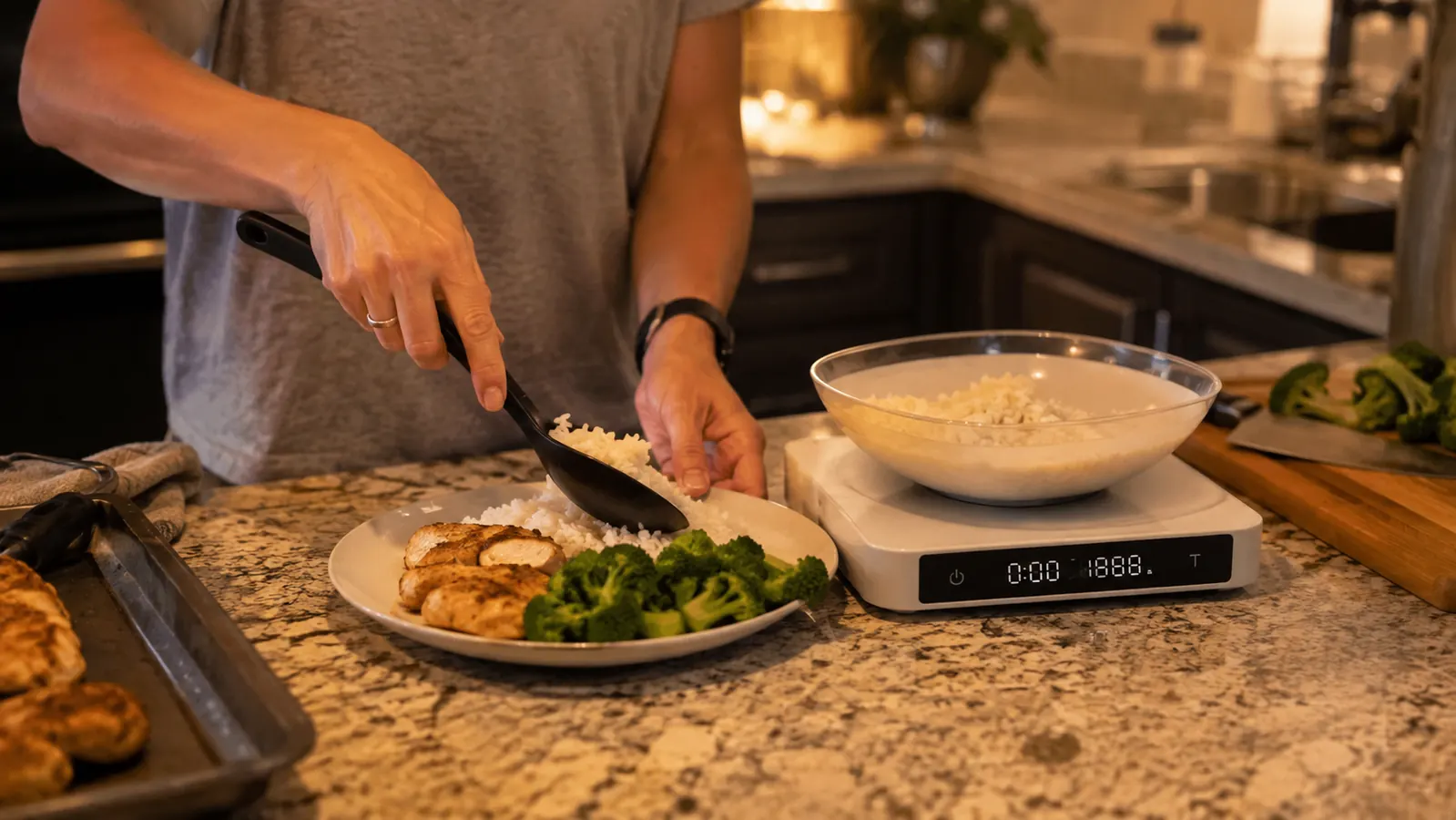
Portioning protein is where the scale has probably saved the most money over six months. Weighing chicken breasts or ground beef before cooking, instead of eyeballing a pile that looks about right, has made my grocery budget stretch further because I'm not accidentally cooking through a week's worth of protein in four days.
Meal prep on Sundays is faster too, since portioning five containers of the same dinner used to mean eyeballing each one and hoping they came out close to even. Now I weigh the first container, note the number, and hit the same number for the rest. It takes the guesswork out of an already repetitive task.
Baking has spread past bread. Pie crust, which is unforgiving about flour to fat ratios, has stopped falling apart on me the way it used to. Pancake batter is more consistent from one Saturday to the next. None of these are dramatic transformations on their own, but stacked over six months they've made cooking feel less like guessing and more like following a recipe the way it was actually written.
Where It Struggles
The platform is on the small side for anything bulky. A large mixing bowl full of bread dough covers most of the surface, and I've had a couple of moments where the bowl's base was wider than the platform and I had to balance it carefully to get a stable reading. It works, but it's not built for oversized cookware.
It also auto-shuts-off after a period of inactivity, which is a reasonable battery-saving feature but occasionally catches me mid-recipe when I've stepped away to check the oven and come back to a blank display. Not a dealbreaker, just something I've learned to work around by weighing ingredients in a steadier sequence rather than leaving gaps.
Liquid measurements take a small adjustment if you're used to measuring cups and tablespoons your whole life. Water and most liquids weigh out close to their volume in grams, but it's a different mental habit than pouring to a line, and it took me a couple of recipes to stop double checking myself.
Cleaning around the edges of the buttons has picked up a bit of flour residue over time that a quick wipe doesn't always fully clear. It's cosmetic, not functional, the scale still reads accurately, but it's worth knowing the seams aren't entirely flush.
Alternatives I Considered Before and During These Six Months
Before this I used a standard set of plastic measuring cups and spoons for everything, which is still fine for a lot of everyday cooking where precision doesn't matter much, a splash of milk or a rough handful of shredded cheese. I still use them for anything where being off by a little bit doesn't change the outcome.
I also tried a cheaper plastic-top scale for about a year before this one, and the difference in reliability was noticeable within the first couple of weeks. The buttons stuck, the reading drifted if you bumped the counter, and the platform stained from turmeric and tomato sauce within a few months. That experience is a lot of why I went with a stainless platform this time around, and I put together a fuller list of pros and cons after heavy daily use in this more detailed honest review, since six months surfaced a few more quirks than the first few weeks did.
I also thought about skipping a scale entirely and just trying to get better at scoop-and-level measuring. That works up to a point, but it puts the burden on your technique staying consistent every single time, and mine never did. The scale removes that variable instead of asking me to be more careful.
What I Liked
- Made bread and baking outcomes consistent from one loaf to the next
- Stainless platform wipes clean and hasn't stained after six months
- Tare function makes one-bowl recipes genuinely simple
- Tactile buttons, no accidental presses from bowl edges
- Small footprint that fits a kitchen with limited counter space
Where It Falls Short
- Platform is too small for large mixing bowls or big cookware
- Auto shut-off can catch you mid-recipe if you step away
- Companion nutrition app didn't become part of my routine
- Liquid weighing takes some adjustment if you're used to cups
- Flour residue builds up around the button seams over time
It's not a gadget I remember to use. It's the one I'd notice missing the next time I tried to bake anything.
Who This Is For
If you bake with any regularity, bread, pie crust, cookies, this is worth the counter space almost immediately, because flour weight is the single biggest reason home baking comes out inconsistent from one attempt to the next. It's also a strong fit for anyone doing weekly meal prep, since portioning by weight instead of by eye keeps every container close to even.
It's a good pick too if you're trying to make a grocery budget stretch further, since honest protein portioning is a quiet way to stop overcooking through a week's worth of meat by the middle of the week. Coffee drinkers who care about consistency from one morning to the next will get daily use out of it as well.
It's also just a nice tool for anyone who's tired of a recipe not turning out the same way twice despite following the same steps. A lot of that inconsistency traces back to volume measuring, and a scale takes that variable off the table.
Who Should Skip It
If your cooking is mostly quick weeknight meals where a splash of this and a handful of that is close enough, and you rarely bake, you may not get enough daily use out of this to justify the counter space. Measuring cups and spoons still handle a lot of everyday cooking just fine.
It's also probably not the right fit if you're specifically shopping for the nutrition tracking app as the main feature. The scale itself is excellent, but the app, at least in my experience, didn't become a habit, so if the app is the whole reason you're considering it, test that expectation before you commit.
Six Months In, It's Still the Tool I Reach for First
If your baking comes out different every time or your portions are more guesswork than plan, weighing instead of scooping is the fix that actually sticks. Check today's price on Amazon.
Amazon Check Today's Price on Amazon →