
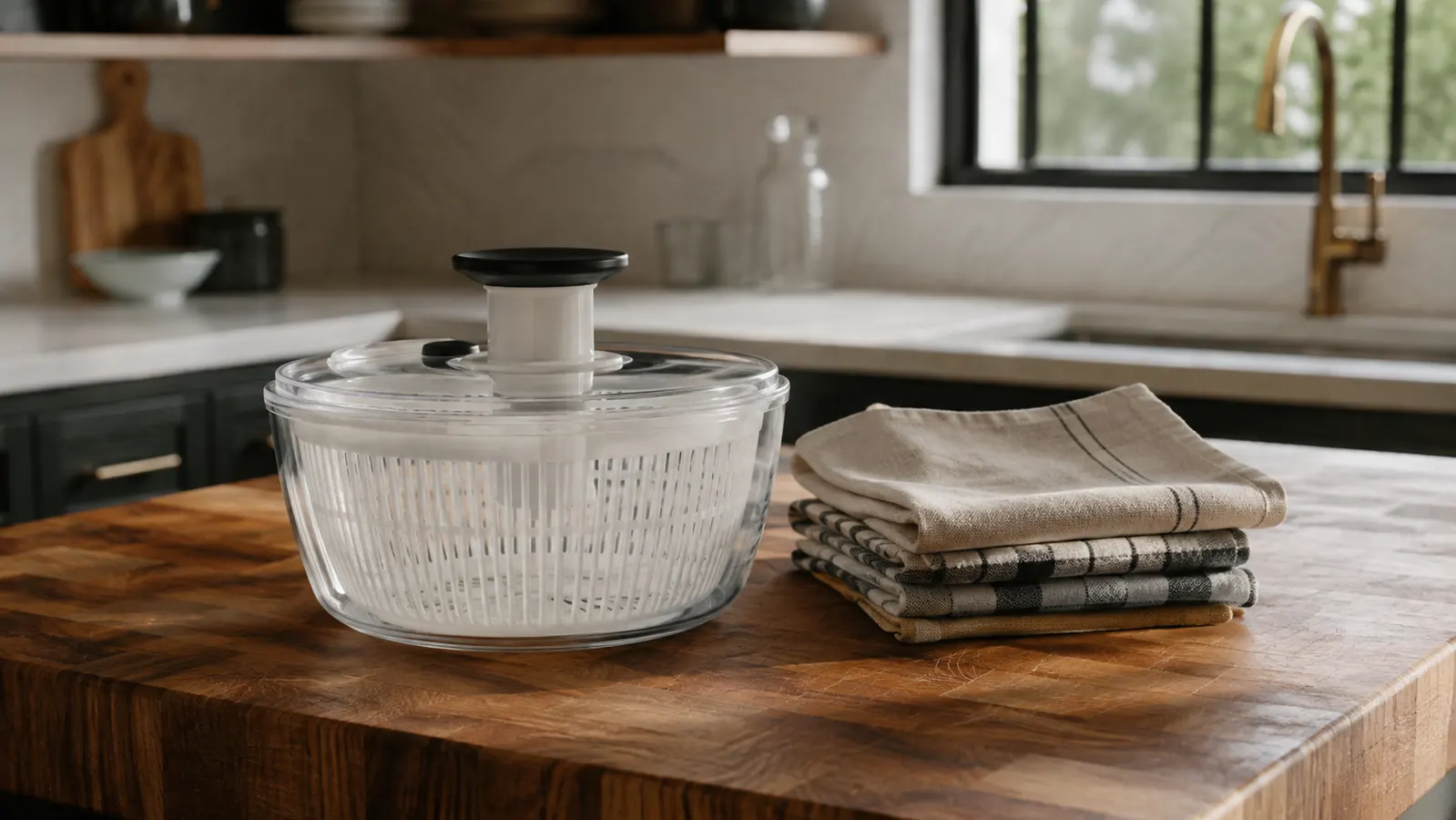
Before I bought the OXO Good Grips glass salad spinner, I read a stack of five-star reviews that talked about how well it dries lettuce and how nice the glass bowl looks on the table. None of them mentioned that the box would be heavier than I expected the second I picked it up at the door, or that I'd end up rearranging a cabinet shelf just to make room for it. Those are the two things that actually change your daily relationship with this tool, and they're the two things almost nobody brings up before you buy.
I want to lead with that, not bury it three sections down after a bunch of praise. This is a genuinely good salad spinner. It also costs several times what a basic plastic spinner runs, it's noticeably heavier than anything plastic, and it eats more cabinet space than its lid would suggest. If you already own a plastic spinner that works fine, you don't automatically need to replace it. If you're weighing whether the upgrade is worth the tradeoffs, this is the honest version of that conversation, drawbacks first, before I get into where it actually earns the difference.
The Quick Verdict
A well-made glass salad spinner that dries greens better than most plastic versions and doubles as a real serving bowl, but the weight, the cabinet footprint, and the cost relative to a basic spinner are real tradeoffs worth knowing before you buy, not after.
Amazon Check Today's Price →Know the Tradeoffs Before It's in Your Cart
The OXO glass salad spinner is heavier and pricier than a basic plastic one, and it earns that difference in daily use. See today's price and current availability on Amazon before deciding if the tradeoff is right for your kitchen.
Amazon Check Today's Price on Amazon →How I Actually Use It
I reach for this spinner a few times a week, mostly for kale and mixed spring greens, occasionally for shredded cabbage when I'm making slaw, and once in a while to rinse rice or quinoa when I don't feel like pulling out a fine mesh strainer. The pump top does the actual work. Press down, the inner basket spins, water flings out into the glass bowl around it, and I dump that water in the sink when the greens look dry enough to work with.
Kale is where I noticed the biggest difference from my old plastic spinner. Kale holds water in its ridges more than flat lettuce does, and a few pumps with this one gets it dry enough that it doesn't turn a pan of sauteed greens into a pot of steamed mush. My old spinner never quite managed that, no matter how many times I pumped it.
I've also started using it as a meal-prep step on Sundays, washing and spinning a big batch of mixed spring greens at once so lunches for the week are already dry and ready to bag into containers. That's a use case I never bothered with when drying greens meant laying out paper towels on the counter, since doing that for a whole week's worth of salads felt like too much effort to set up more than once.
Shredded cabbage for slaw is the other place it's become part of my routine. Wet cabbage waters down mayo-based dressing fast, and running it through the OXO spinner before mixing keeps the slaw from turning soupy by the time it hits the table. It's not a dramatic use case, but it's the kind of small fix that actually changes what ends up on the plate week to week.
The Weight Nobody Warns You About
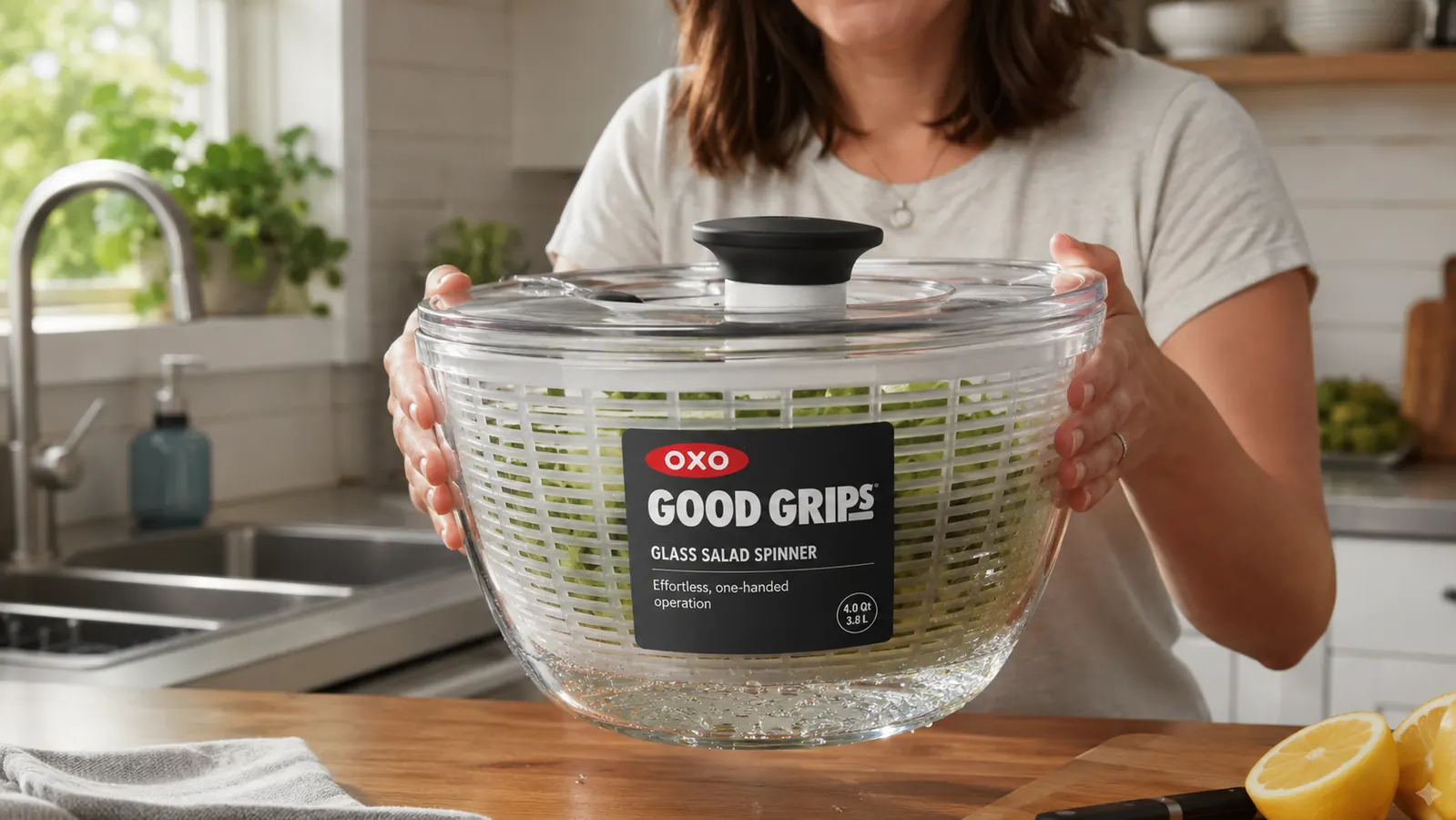
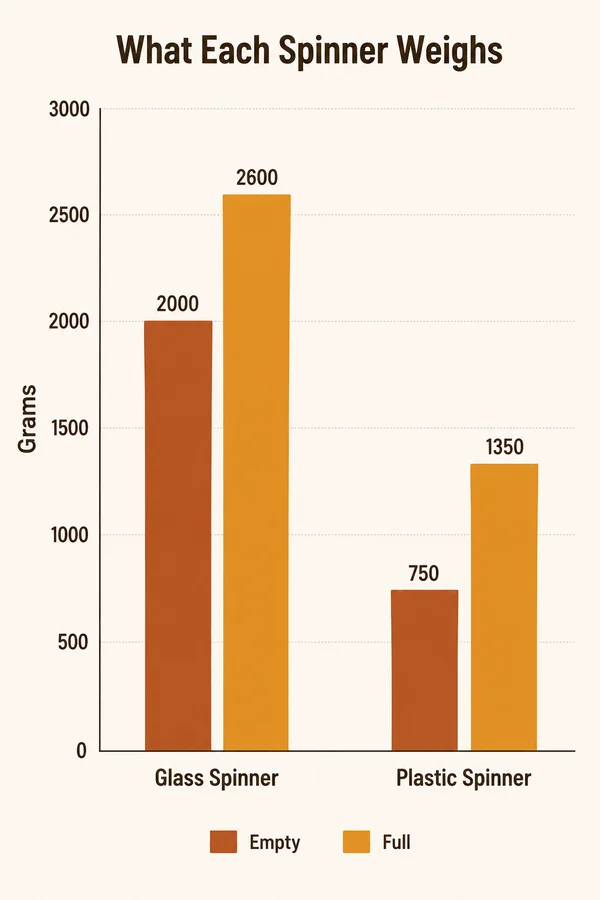
This is the drawback that surprised me the most, because reviews mention it in passing if at all. The glass bowl is genuinely heavy compared to a plastic spinner, even before you add water to it. Carrying it from the counter to the sink to dump out the water is a two-handed job for me, where my old plastic spinner I could grab one-handed without thinking about it.
Full of a big batch of greens and water, it gets heavy enough that I'm careful about how I lift it, especially with wet hands after washing it in the sink. I haven't dropped it in the time I've owned it, but I've come close enough to know that if it did slip onto tile, it would very likely crack or shatter, where a plastic bowl would just bounce and keep going. That's not a defect, it's just what glass does, and it's worth factoring in if you've got young kids underfoot or a kitchen floor that isn't forgiving.
None of this makes the OXO spinner unusable. It just means I handle it differently than I handle the rest of my kitchen gear, more deliberately, less one-handed multitasking while I'm also stirring a pot on the stove. If that kind of extra attentiveness sounds annoying rather than manageable, it's a real reason to think twice before buying.
The weight does have one upside I didn't expect going in. It sits solidly on the counter while I'm pumping it, no sliding around or walking across the counter the way my old lightweight plastic spinner sometimes did on a smooth surface. Heavy has a real cost in carrying it, but it buys some stability while it's actually spinning.
What It Actually Costs You in Cabinet Space
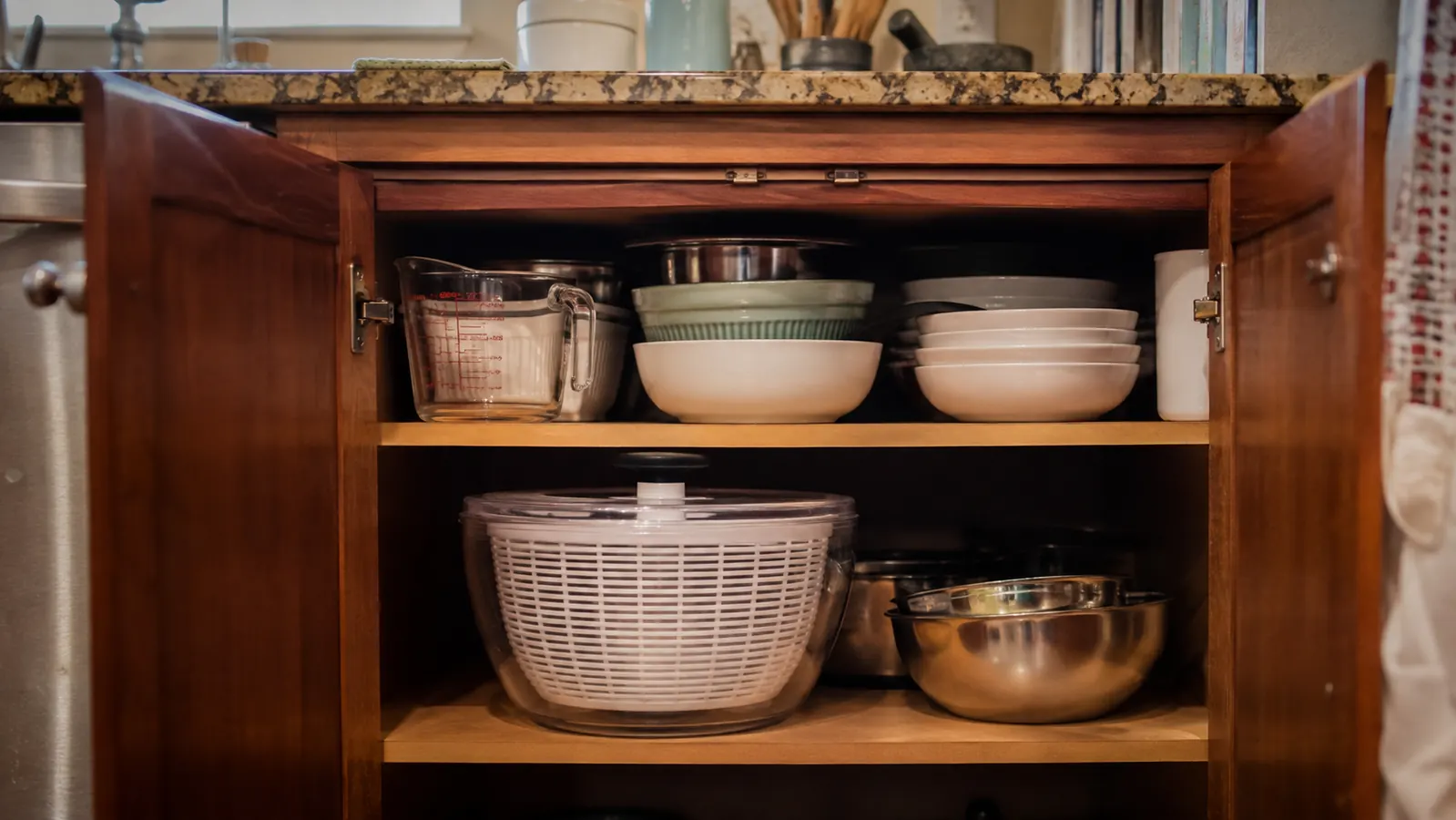
The second thing nobody mentioned in the reviews I read was storage. This is a wide, glass-bottomed bowl that doesn't nest inside anything else, doesn't collapse, and doesn't stack flat the way some plastic spinners do. In my cabinets, it claims a fixed chunk of shelf space whether I used it that day or not, and I ended up moving a stack of mixing bowls to a different shelf just to give it a permanent home.
If your kitchen already runs tight on cabinet room, this is worth sitting with before you order it. A basic plastic spinner can usually get wedged into a gap between other bowls, or nested inside a bigger one. This one asks for its own real estate, and depending on your kitchen, that might mean giving up space you were using for something else.
In practice I've solved this by leaving it out on the counter near the sink most of the time instead of putting it away after every use, since I reach for it often enough to justify that. But that's a workaround, not a feature, and it only works if your counter has room for one more thing sitting on it permanently. If your counters are as tight as your cabinets, that's a real consideration too.
The Parts I Don't Just Toss in the Dishwasher
I hand wash the pump lid and the basket rather than running them through the dishwasher, mostly out of caution around the mechanism inside the lid. It's a simple habit once it's part of the routine, rinse the basket under the tap, wipe the lid down, let both air dry on the rack, but it's an extra step compared to tools I can just load into the dishwasher and forget about.
The glass bowl itself I do wash in the sink too, just because it's the piece I'm handling most carefully anyway, and doing the whole set together keeps me from having half of it wet in the dishwasher and half of it drying on the counter. It adds maybe two extra minutes to cleanup compared to a fully dishwasher-tossed routine, which isn't a lot on its own, but it does add up over a few uses a week.
If you're the type of cook who wants everything to go straight into the dishwasher with zero extra thought, this is a small but real point of friction. It didn't stop me from using the spinner regularly, but it's exactly the kind of detail that gets left out of glowing five-star reviews and then surprises you in week one.
Is It Actually Worth More Than a Basic Plastic Spinner
This is the question I actually care about answering honestly, because the price difference is real. This spinner costs several times what a basic plastic pull-cord spinner runs, and on paper that's a hard number to justify for a tool that does one job, drying lettuce. I went back and forth on it before buying, and I think the fair answer is that it depends entirely on how often you'd actually use it.
If you make salads or cook with fresh greens most weeks, the extra cost stops feeling abstract pretty fast, because you're getting real use out of it instead of it sitting in a cabinet. If salad is a once-a-month occasional side dish in your house, a basic plastic spinner does the core job of drying lettuce for a fraction of the cost, and the glass upgrade doesn't have enough regular use to earn its price or its cabinet space. I go deeper on how this compares against skipping a spinner altogether in this side-by-side look at drying greens with a spinner versus paper towels.
I also thought about whether pre-washed bagged salad kits made the whole question pointless, since those skip drying altogether. They're convenient, but I've found the greens inside go limp faster than whole heads I wash and dry myself, and the per-meal cost of buying bagged kits regularly adds up faster than a one-time spinner purchase does. That comparison is part of why I kept using this instead of leaning on the pre-washed aisle.
Where the price starts to make more sense to me is in how it holds up. A cheap plastic spinner with a pull cord is a mechanism that wears out, the cord fraying or the gears slipping after a couple years of regular use, and then you're buying another one anyway. This one is a pump mechanism with fewer moving parts to fail, and glass doesn't degrade with age the way plastic can start to look cloudy or hazy after enough dishwasher cycles. If you're comparing a one-time cost against replacing a cheaper spinner every couple of years, the math shifts in its favor.
Where the Extra Cost Actually Pays Off
The place this spinner earns its price back for me isn't really the drying, though the drying is genuinely good. It's that the glass bowl becomes a second serving bowl once the basket comes out. I toss a salad right in it after spinning the greens dry and put it straight on the table, which means one less dish in rotation every time I make a meal with greens in it. I walk through what that shift in kitchen routine actually changes in this longer review after six months of daily use.
The 6.22-quart size also means it handles a full family-sized batch without needing a second round, which matters if you're cooking for more than one or two people. A smaller plastic spinner often means spinning greens in two batches to get through a big bag of lettuce, and that adds up in time even if each individual spin is quick.
None of that erases the weight or the storage cost. It just means, for someone who's cooking with greens regularly, the price and the bulk buy you something that does two jobs well instead of one job cheaply. That's the actual tradeoff, not glass versus plastic in the abstract, but whether your kitchen and your cooking habits are the kind that turn a pricier, heavier tool into something that earns its keep.
What I Liked
- Dries kale, cabbage, and leafy greens more thoroughly than plastic spinners I've owned
- Glass bowl doubles as a serving bowl, cutting a dish out of the routine
- Pump mechanism has fewer moving parts than a pull-cord spinner to wear out over time
- 6.22-quart capacity handles a full batch without splitting into two spins
Where It Falls Short
- Noticeably heavier than a plastic spinner, a two-handed job when full of water
- Takes up a fixed, fairly large chunk of cabinet space that doesn't nest or collapse
- Costs several times what a basic plastic spinner runs
- I hand wash the lid and basket rather than risk them in the dishwasher, an extra couple minutes at cleanup
Nobody mentions the weight or the cabinet space in the five-star reviews. Those are the two things that actually decide whether this spinner becomes part of your routine or ends up pushed to the back of a shelf.
Who This Is For
If you cook with fresh greens most weeks, kale, cabbage, spring mix, whatever your household actually eats through, and you've got the counter or cabinet room to give it a permanent home, the tradeoffs here are worth it. The drying is better than a basic spinner, and getting a second serving bowl out of the same purchase is a real, ongoing win rather than a one-time novelty.
It's also a good fit if you're tired of replacing a cheap plastic spinner every couple of years because the cord mechanism wore out. Paying more once for something with fewer parts to fail is a reasonable trade if you're already buying salad spinners on a repeat cycle.
Who Should Skip It
If your kitchen is genuinely tight on both counter and cabinet space, or you only make a salad occasionally, the weight and the storage footprint are real costs without enough regular use to offset them. A basic plastic spinner will dry greens well enough for occasional use, take up less room, and cost a fraction of what this one runs.
It's also not the right buy if you want everything in your kitchen to go straight into the dishwasher with no exceptions. The hand washing habit isn't difficult, but if that's a hard requirement for you, a fully dishwasher-safe plastic spinner will fit your routine better than this one will.
If the Tradeoffs Work for Your Kitchen, This Earns Its Space
Heavier, pricier, and bulkier than a plastic spinner, yes, but it dries greens better and doubles as a serving bowl in a way a plastic one never will. Check today's price on Amazon and decide for your own kitchen.
Amazon Check Today's Price on Amazon →