
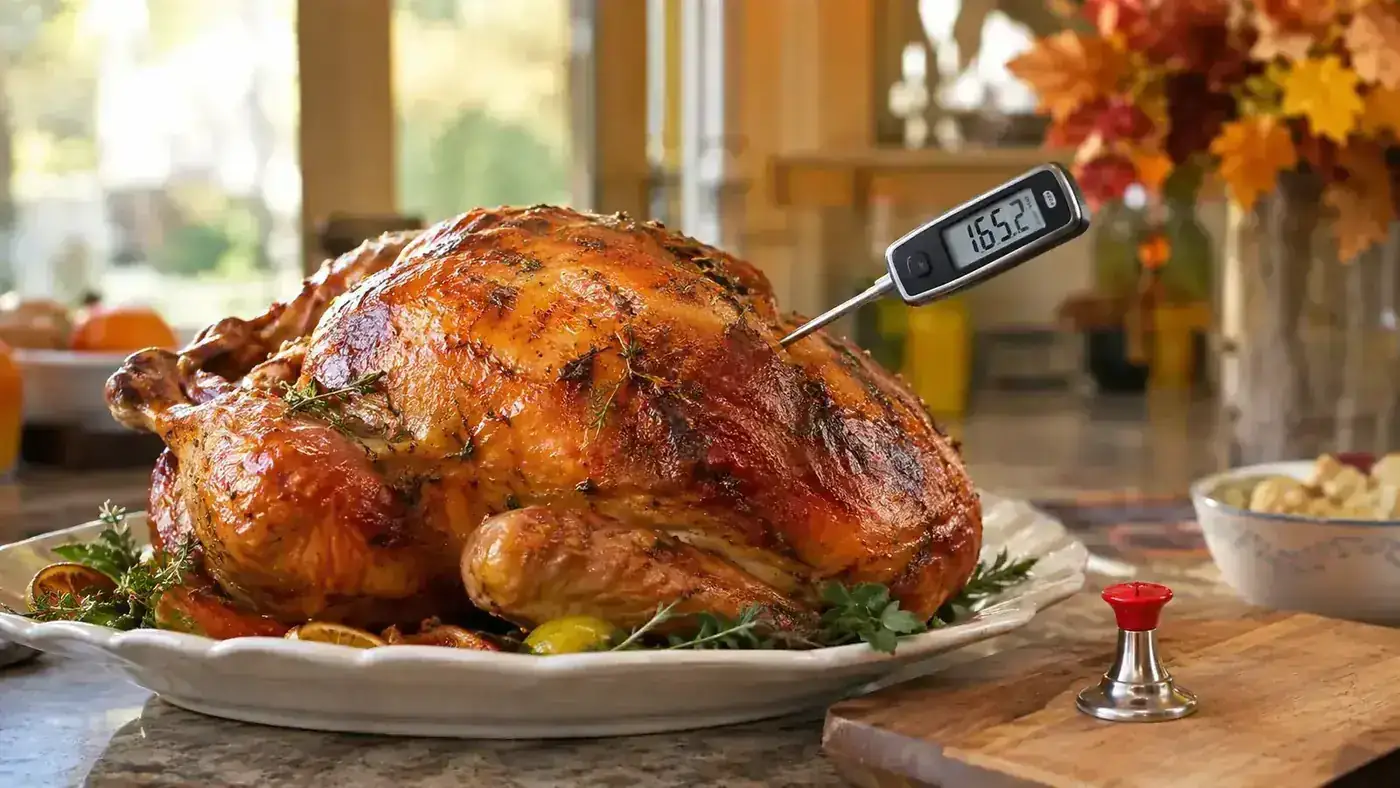
The first time I roasted a store-bought turkey with the little red pop-up timer already stuck in the breast, I did what most people do. I waited for the pop, pulled it out of the oven, and carved it. The meat right around the timer looked fine. The parts closer to the wing joint were pink enough that I second-guessed myself and shoved the whole platter back in the oven for another twenty minutes while my in-laws stood in the kitchen making small talk about traffic. That was the day I bought a TempPro TempSwift digital meat thermometer, an actual instant-read probe with a display, and it has replaced the pop-up timer in my house for every bird since.
So which one do you actually trust when a turkey or roasting chicken has both an unfamiliar oven timing suggestion and a factory pop-up timer staring back at you? The short answer is the TempPro thermometer, and it isn't especially close. A pop-up timer reads exactly one fixed spot at one fixed temperature, and it's built to pop safely late rather than risk popping too early, which means it routinely releases well past the point the breast meat already reached a safe temperature. An instant-read thermometer lets you check the breast, the thigh, and the area near the bone separately, and shows you the real number instead of a mechanical guess. That said, the pop-up timer isn't nothing, and I want to be honest about exactly where it still holds its own.
| TempPro Meat Thermometer | Pop-Up Timer | |
|---|---|---|
| Where it takes a reading | Insert it anywhere, the breast, near the bone, wherever you're unsure | Fixed to the one spot it was inserted at when the bird was packaged |
| What tells you it's done | A number on the display you compare against a safe minimum | A spring-loaded pin that pops once the surrounding meat hits a preset temperature |
| What it costs you | A one-time purchase you reuse on every roast, steak, and fry after this one | Comes preinserted in the bird you already bought, nothing new to buy |
| Batteries and upkeep | Runs on a battery that occasionally needs replacing | No battery, no charging, nothing to maintain or ever replace |
| Attention required while it cooks | Someone has to walk over, insert it, and read the number | Pops on its own, nothing to check on until it does |
| Checking more than one spot | Move it to the breast, then the thigh, then the thickest part of the drumstick | Stuck in one location for the whole cook, no way to check anywhere else |
| Works on food besides this one bird | Steaks, pork chops, burgers, frying oil, candy syrup, anything | Only exists inside the specific bird it shipped with, then it's gone |
| How closely the 'done' signal tracks a safe temperature | Reads the real number as it climbs, so you pull it right at the safe minimum | Often releases several degrees past the point the breast already reached safe temperature, while the thigh may still be behind |
Where the TempPro Wins
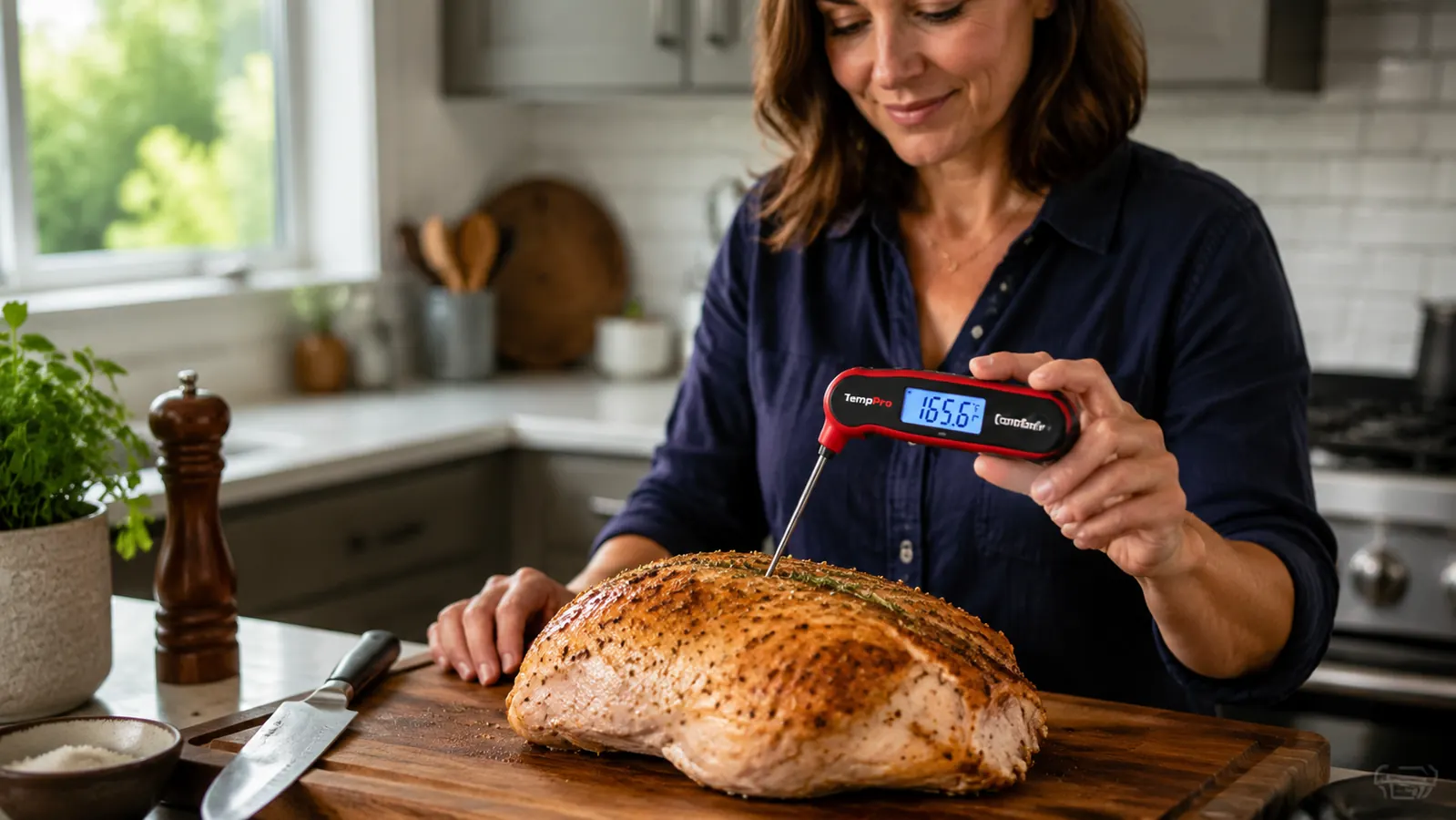
The single biggest problem with a pop-up timer is that it only ever measures one point, wherever the factory happened to insert it, which is almost always the thickest part of the breast. That's a reasonable spot to check, but it's not the only spot that matters. The thigh and the area near the leg joint cook slower than the breast and need to reach the same USDA-recommended minimum internal temperature for poultry, 165°F, before they're considered safe. A pop-up timer has no way to tell you what's happening in the thigh. With the TempSwift, I check the breast, then move the probe to the thickest part of the thigh without touching bone, and I don't carve until both spots clear 165°F on the display.
There's also the opposite problem, which is overcooking. A pop-up timer is a mechanical, one-time event. It has no memory of how fast your oven runs or how big your bird is this year compared to last year, so manufacturers build in a safety margin that tends to trigger later than the meat actually needs. I've pulled birds where the breast measured well past what's necessary by the time the pop-up finally released, which means dry, stringy meat on the parts of the breast closest to the surface. Watching the actual number climb on a display lets me pull the bird the moment it clears a safe minimum instead of overshooting by a wide margin while I wait on a spring-loaded pin.
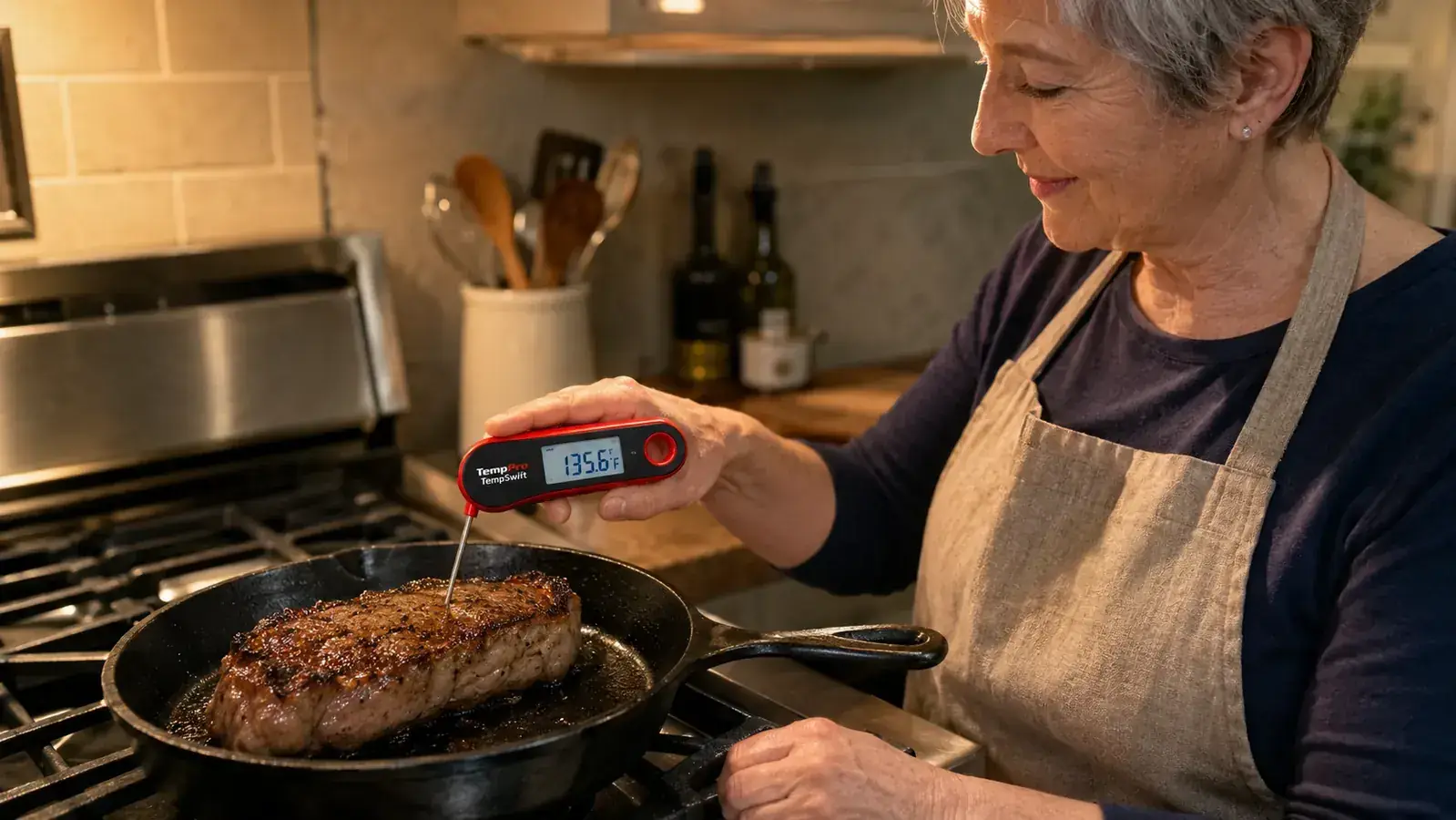
The other real advantage is that the TempPro thermometer doesn't retire itself along with the packaging. A pop-up timer only exists because the bird came with one, and it's gone the moment that bird is carved and the carcass goes in the trash. The TempSwift comes back out for the next roast, the steaks I sear a couple times a week, and a pork tenderloin on a Sunday. I wrote up exactly how I use it for steaks in this guide, and it's the same probe, same display, same routine every time.
Where the Pop-Up Timer Wins
I'd be lying if I said the pop-up timer has nothing going for it, so I'm not going to pretend otherwise. It requires zero setup and zero attention. You don't buy it, you don't charge it, you don't remember to grab it from a drawer, it's already sitting in the breast when the bird comes home from the store. For someone who roasts one turkey a year and doesn't want another gadget to think about, that's a genuinely fair reason to just let it do its thing.
It also never runs out of batteries mid-cook, which is a real failure mode with any electronic thermometer. I've had a probe thermometer's battery die on me exactly once, on a Thanksgiving morning, which meant a scramble to find fresh batteries while the bird sat there getting cold. A pop-up timer doesn't care about any of that. It's a simple mechanical part with one job, and simple mechanical parts with one job tend to just work, which is worth something even when that one job isn't especially precise.
A pop-up timer only checks one spot. Your thigh meat deserves the same attention your breast gets.
The TempPro TempSwift reads any part of the bird in seconds, not just the one location a factory pin happened to land in. Check today's price on Amazon.
Amazon Check Today's Price on Amazon →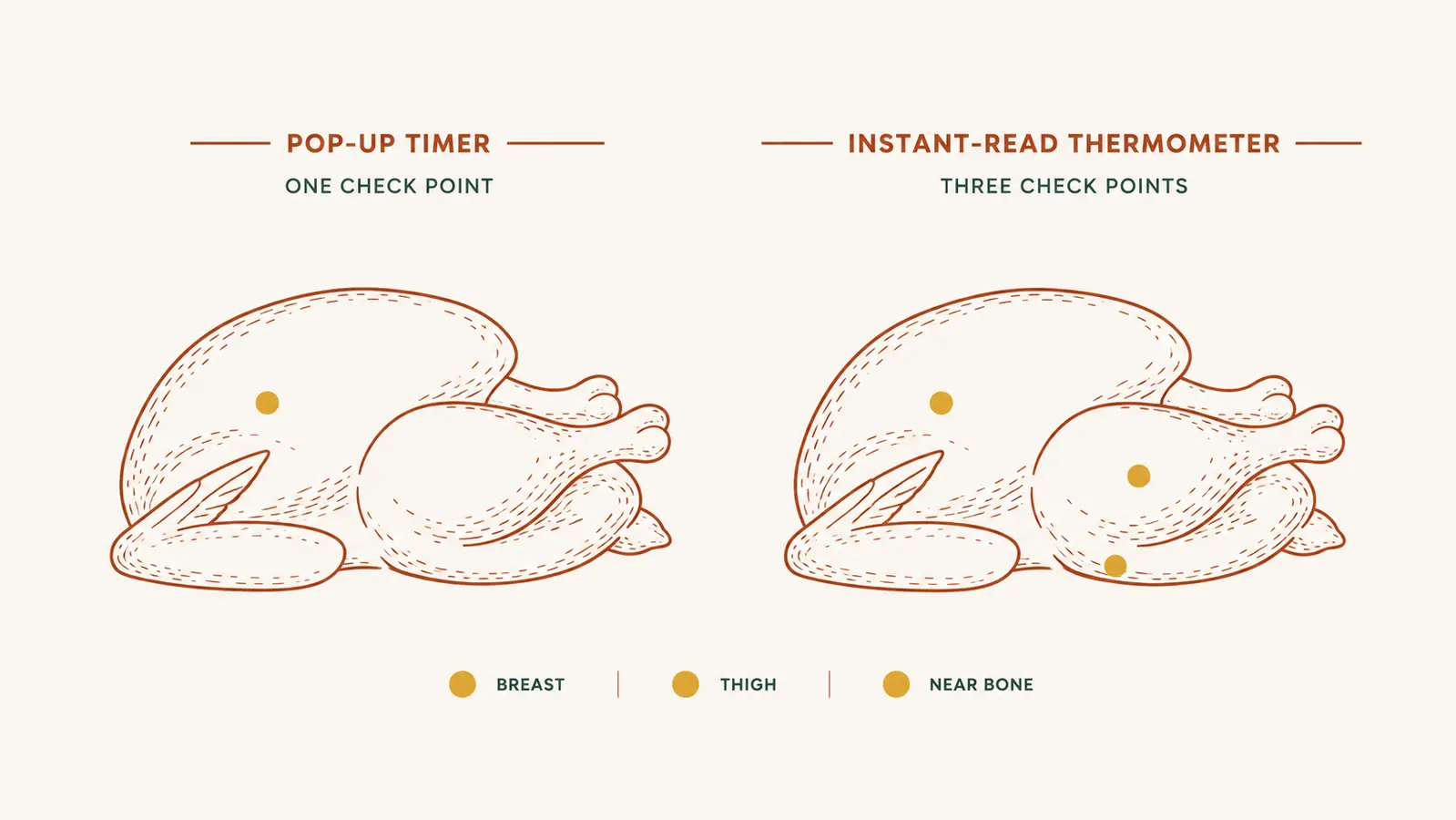
Why the Pop-Up Timer Misses So Often
Pop-up timers work off a small spring held in place by a pellet of metal alloy that melts at a set temperature, releasing the spring and pushing the pin up. Manufacturers calibrate that melting point with a safety cushion built in, because a timer that pops even a little too early, before the meat is actually safe, is a liability problem for them. That cushion protects the company more than it protects your dinner. USDA guidance puts safe poultry at 165°F measured at the thickest part, but by the time a pop-up timer actually releases, the meat right around it has often been sitting above that number for several extra minutes, which is time the breast spends drying out for no food safety benefit at all.
The bigger issue, though, is that pop-up timers only get placed in the breast because that's the part of the bird most people picture as done. The thigh, which sits closer to the cavity and cooks at a different rate, gets no representation at all. I've carved birds where the breast was fully cooked and the pop-up had already released, while the meat near the thigh joint was still faintly pink and clearly under 165°F. A pop-up timer can't tell you that. An instant-read thermometer, moved to the thigh for a few seconds, tells you immediately.
What I Actually Do With a Store-Bought Turkey Now
These days I still buy the same grocery store turkeys with the pop-up timer already inside, because there's nothing wrong with the bird itself and I'm not paying extra to avoid a plastic pin. I just stop relying on the timer alone. Starting around the time the pop-up is supposed to trigger based on the package instructions, I check the breast with the TempSwift, then check the thigh the same way. Once both spots clear 165°F, the bird comes out, whether or not the little red pin has popped yet.
I use the same habit for anything that isn't poultry. Ground meats need to reach 160°F according to USDA guidance, because grinding mixes any surface bacteria throughout the meat, not just the outside. Whole cuts of beef, pork, veal, and lamb only need to hit 145°F followed by a three minute rest before carving or eating. Fish is also 145°F. None of those numbers are things a pop-up timer, even if one existed for those cuts, could reliably track, and none of this is medical advice, just the standard USDA reference points I check against every time I cook.
A pop-up timer tells you when the manufacturer feels comfortable. A thermometer tells you what's actually happening inside your bird.
Who Should Buy Which
If you cook a turkey or roasting chicken more than once a year, or you've ever pulled a bird that looked done and then found pink meat near the thigh, get the TempPro thermometer. It's a small, one-time purchase that keeps working on steaks, pork chops, and fried foods long after the holiday bird is gone, and I go into more detail on how it's held up after months of regular use in this longer review. It removes the guesswork a pop-up timer was never built to solve in the first place.
If you roast exactly one turkey a year, aren't cooking anything else that needs a temperature check, and you're comfortable erring on the side of a slightly overcooked breast in exchange for zero setup, the pop-up timer already stuck in the bird will get you through the meal without much drama. Just don't assume it's checking the thigh, because it isn't, and if anyone at your table has a reason to be extra careful about undercooked poultry, it's worth the extra thirty seconds to double check with an actual probe before you carve.
One tool, every roast, every steak, every fry night, not just the one bird it shipped inside.
The TempSwift keeps working long after the pop-up timer goes in the trash with the carcass. Check today's price on Amazon.
Amazon Check Today's Price on Amazon →