
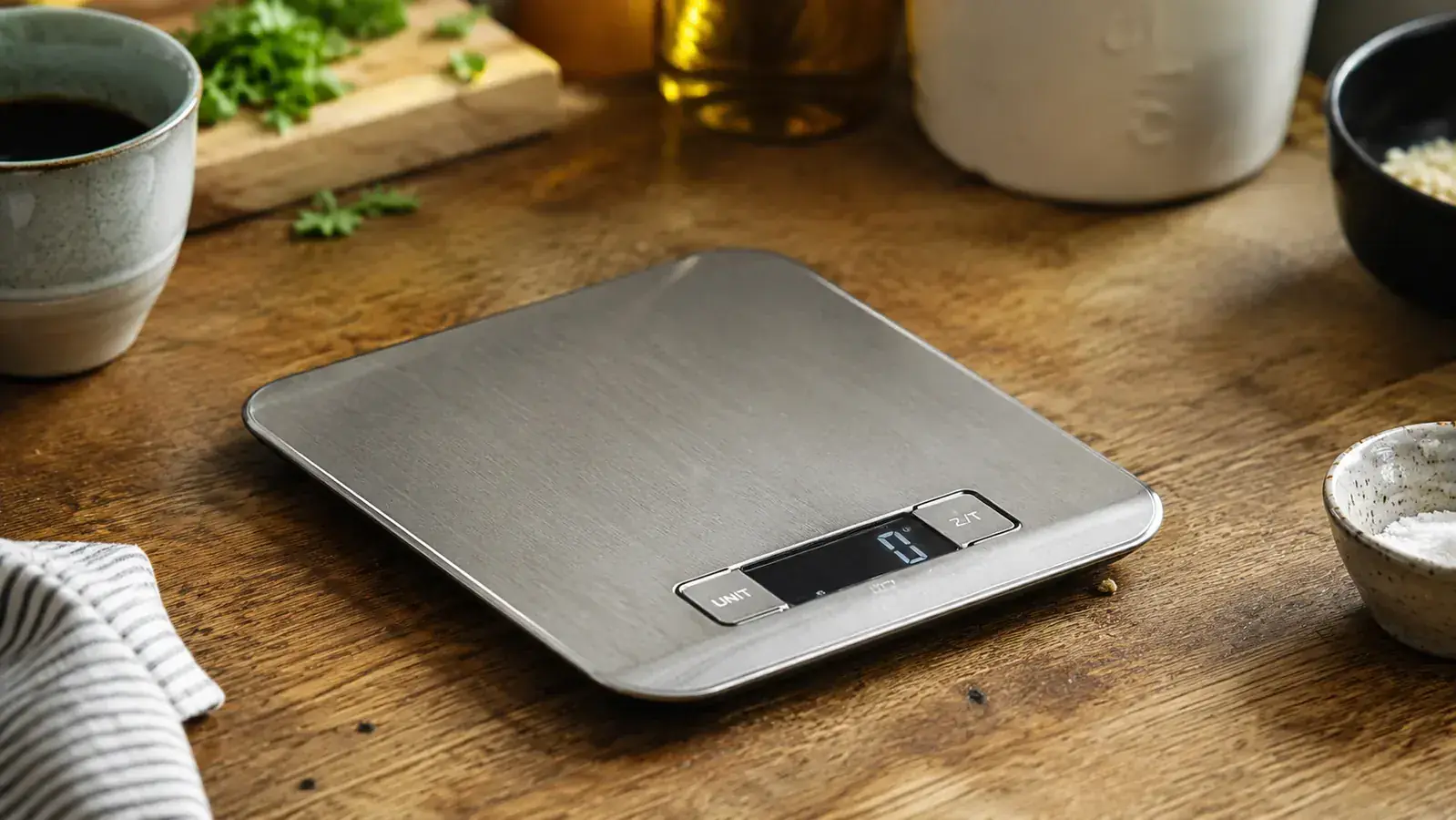
I'll say the quiet part first: I stopped using the phone app that comes with this Etekcity kitchen scale within about three weeks, the auto shutoff has cut off a reading mid recipe more times than I can count, and if you set a wide mixing bowl on it the display disappears almost completely under the bowl's edge. None of that is a secret to anyone who's actually lived with this thing daily instead of reviewing it after a weekend. So before I tell you why I still reach for it almost every day, I want to walk through the stuff that would have changed my expectations if I'd known it going in, the small annoyances that only show up once a gadget stops being new.
I bought mine after getting tired of guessing at pasta portions. The box said a serving was 56 grams and I had zero idea what that looked like scooped out by hand, and I was routinely cooking closer to double that without meaning to. A scale seemed like the obvious fix. It mostly was. But mostly is doing some work in that sentence, and this review is about the parts most write-ups skip past on the way to five stars, written after enough daily use that the honeymoon phase is long over.
The Quick Verdict
A genuinely useful stainless kitchen scale with a couple of real annoyances, auto shutoff timing and a platform that's easy to cover with a big bowl, worth knowing before you buy it, not after.
Amazon Check Today's Price →Guessing At Portions Is Costing You More Than You Think
A scale doesn't care how full a scoop looks. It just tells you the number. See today's price and current availability on Amazon.
Amazon Check Today's Price on Amazon →How I've Used It
This Etekcity scale has been on my counter for a little over four months now, not tucked away between uses. Mornings it weighs oats or granola, most evenings it's weighing pasta, rice, or a protein portion before it hits the pan, and on weekends it comes out for baking, marinades, and the odd batch of seasoning blend I mix up in bulk. It's not a special-occasion tool. It's closer to a spoon at this point, something I reach for without thinking about it.
I didn't set out to use it this often. I bought it specifically to fix portion sizes, expecting it would live mostly in a drawer between the occasional recipe that called for grams instead of cups. Instead it ended up handling a dozen small jobs I hadn't planned on, which is honestly the biggest compliment I can give a kitchen gadget, since most of what I've bought over the years does exactly the one thing on the box and nothing else.
That said, using something daily for four months is also how you find its rough edges, and this scale has a few worth knowing about before you decide whether it earns a spot on your counter too. None of them are severe, but they're specific, and specific is more useful than a general five-star impression written after a week.
The Auto Shutoff Catches You Off Guard More Than the Listing Lets On
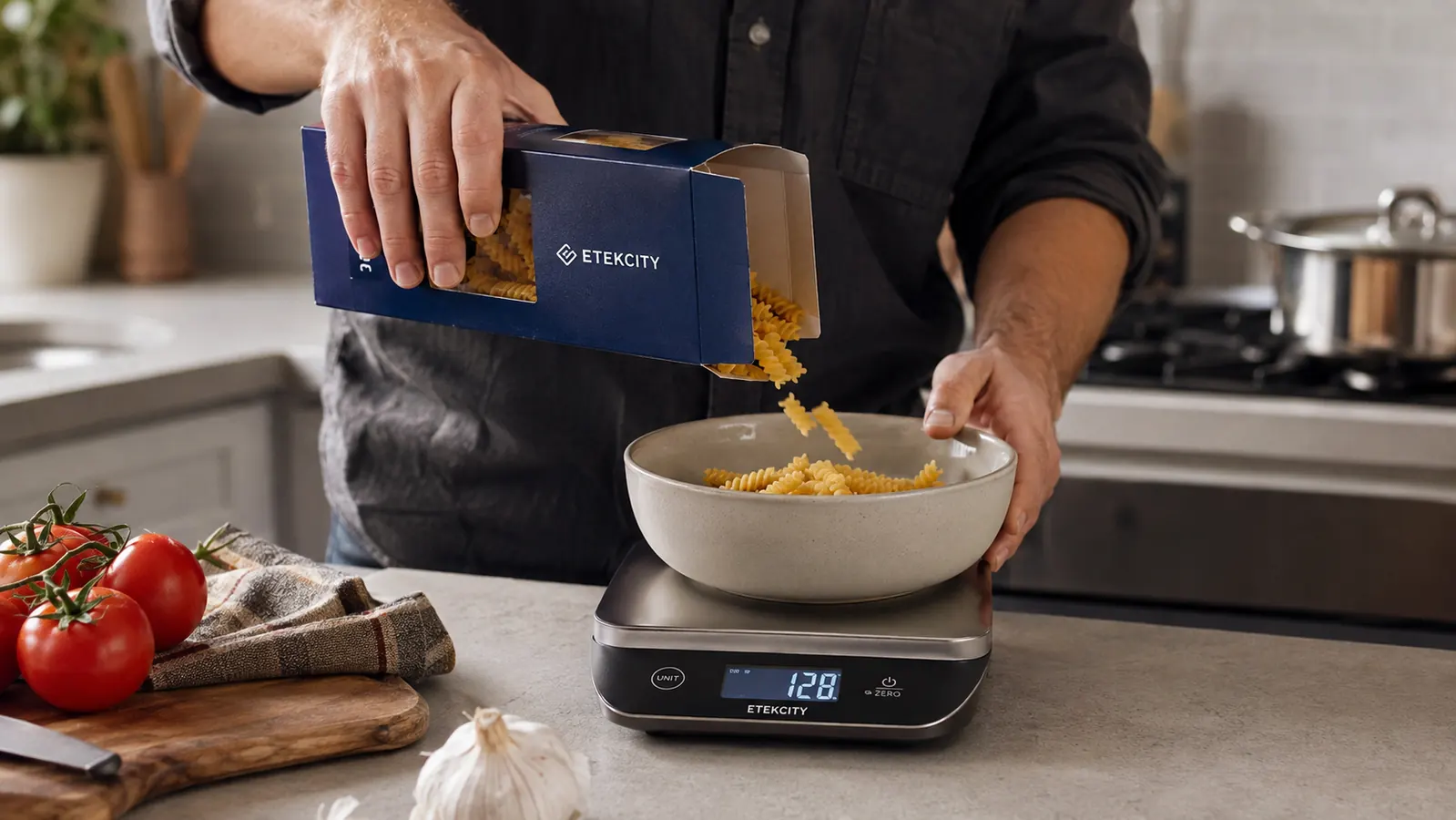
The Etekcity scale powers down after a stretch of no activity, which makes sense for battery life, but the window is shorter than I expected and it has cost me a step more than once. I'll set a bowl down, tare it to zero, then get distracted stirring something on the stove or answering the door, and come back to a blank display instead of the running total I left it at.
The fix is just re-taring and re-weighing whatever was already in the bowl, which isn't a big deal for something like flour where you can eyeball what's already there and correct for it. It's more annoying with something like a marinade where the ingredients are already mixed together and you've lost track of exactly how much of the second or third ingredient made it in before the display went dark.
I've adjusted by working in a tighter sequence, weighing one ingredient right after another instead of pausing between steps, and it hasn't been a dealbreaker. But it's the kind of thing that would have saved me some frustration in the first couple of weeks if a review had actually mentioned it instead of just praising the battery life in general terms.
The Bowl Covers Its Own Display, and No Product Photo Shows That
The platform is a reasonable size for normal mixing bowls, but anything wider than about nine or ten inches across sits low enough over the Etekcity scale that it blocks the digital display from a standing angle. I've caught myself leaning down and to the side more than once just to read the number while a bowl of soup or batter sat on top.
It's not a defect exactly, it's more a design tradeoff that most low-profile scales with an under-bowl display seem to run into, but it's worth knowing if you tend to cook in bigger cookware. Smaller bowls, mugs, and containers are no problem at all, you see the reading clearly the whole time. It's specifically the wide stockpot or big mixing bowl situation where you have to work around it a little.
My workaround now is mostly muscle memory: I tare with the empty bowl already in place, add ingredients in short bursts, and lift the bowl slightly to check the number rather than trying to read it while it's sitting flush on the platform. It works, but it took a few weeks of daily use before it stopped being annoying.
Battery Habits: What Six Weeks Between Changes Actually Looks Like
I was curious how long the included batteries would actually last under real daily use rather than occasional weekend baking, since that's the kind of detail most reviews either skip or guess at after a week of testing. Mine lasted a little over six weeks of near-daily use, sometimes multiple times a day, before the display started dimming and eventually needed fresh batteries.
Six weeks isn't bad for something used this often, but it's also not a set-it-and-forget-it situation the way some marketing around digital scales implies. I keep a spare set of batteries in the kitchen drawer now specifically because running out mid-recipe with flour already measured into a bowl is worse than just replacing them ahead of time.
This is a small thing on its own, but stacked with the auto shutoff, it's part of a pattern worth naming honestly: this is a battery-powered gadget that occasionally needs a little management, not a fully passive tool that just sits there and works forever without any input from you.
Checking the Accuracy With Things I Already Knew the Weight Of
Because I didn't just want to take accuracy on faith, I ran a few informal checks with items that had a printed weight already on the label. A can of beans marked at a specific net weight, a bag of rice with the weight printed on the front, a bar of butter with quarter-pound markings on the wrapper. In every case the Etekcity scale's reading matched the printed weight closely enough that I stopped double checking after the first month.
That kind of test isn't a lab-grade calibration check, and I'm not pretending it replaces one. But it's the same test most home cooks can run in their own kitchen with things already sitting in the pantry, and it's more useful to me than a spec sheet claiming a certain margin of error, because it's the actual scenario I care about: does the number on the display match what's actually in the bowl.
The one place I noticed any drift at all was right at the edge of the platform, weighing something small and off-center instead of centered on the plate. Centering whatever you're weighing fixes it completely, and once I got in the habit of setting things in the middle of the platform, I stopped seeing any inconsistency between repeated weighings of the same item.
The App I Downloaded Once and Basically Never Opened Again
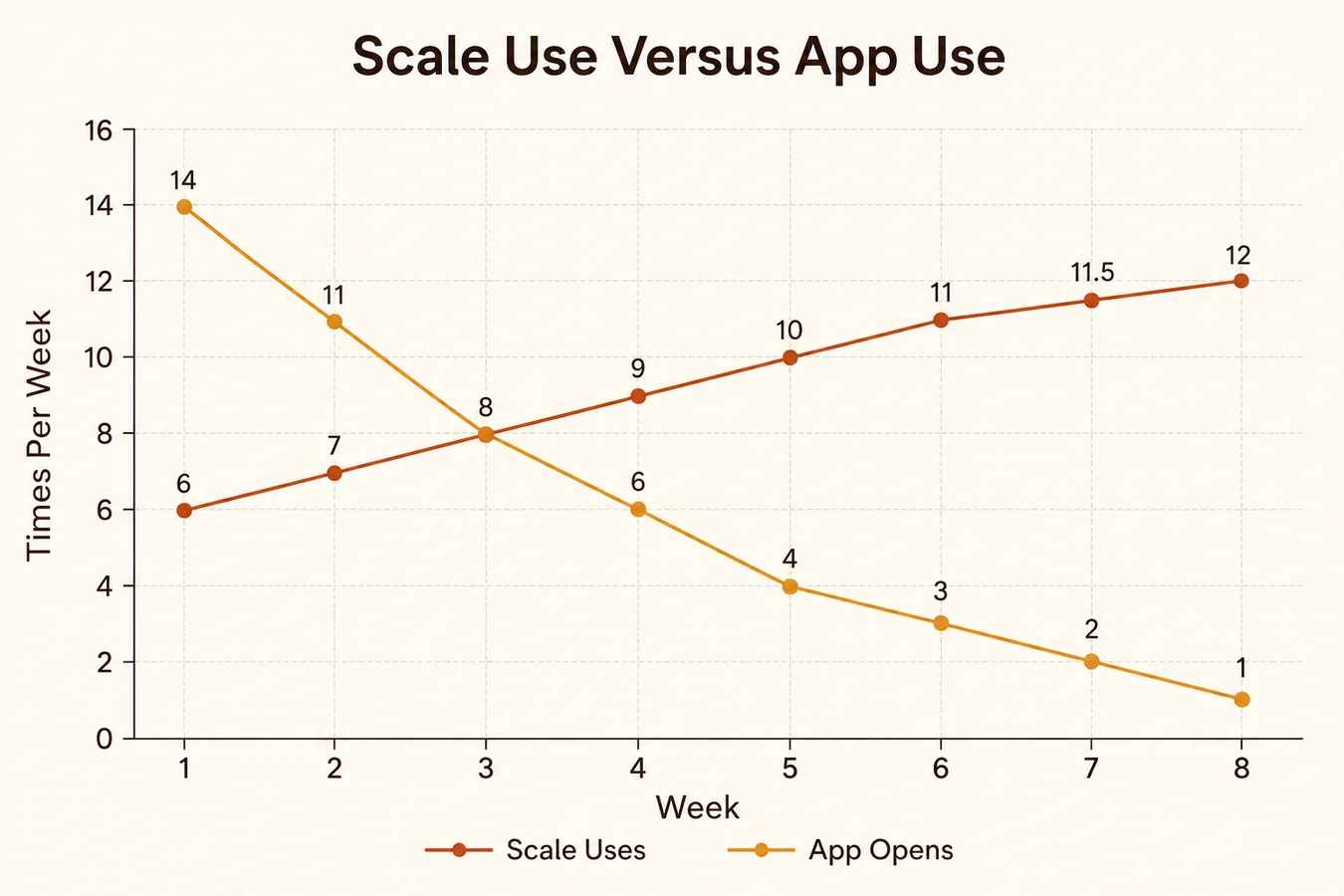
The scale is sold with a companion app that tracks nutrients and calculates calories and macros as you weigh ingredients, and I want to be straightforward about how little I actually used it rather than mention it once and move on. I opened it for about the first two weeks, mostly out of curiosity, logged a handful of meals, and then just stopped.
It wasn't broken or confusing, it just added a step that didn't fit how I actually cook. Standing at the counter with flour on my hands or a marinade dripping off a spoon isn't the moment I want to be unlocking my phone and tapping through a food log. The scale by itself, without the app anywhere in the picture, has been the part of this purchase that actually stuck.
If tracking nutrients is genuinely part of your routine already, the app is there and other people clearly get real use out of it. I just don't want anyone buying this specifically for the app to be surprised later that the habit doesn't build itself. I've gone into more detail on how the scale performs against plain measuring cups, app or no app, in this side-by-side comparison, since the honest answer depends a lot on what you're actually trying to fix.
Where It Actually Earns Its Keep
None of the above means I regret buying it. Once I got used to its quirks, the actual job it does, giving me an honest number instead of a guess, has changed more small habits than I expected. Pasta portions stopped creeping past what a box actually calls a serving. Marinades taste the same from one week to the next instead of varying based on how heavy-handed I was with the soy sauce that day.
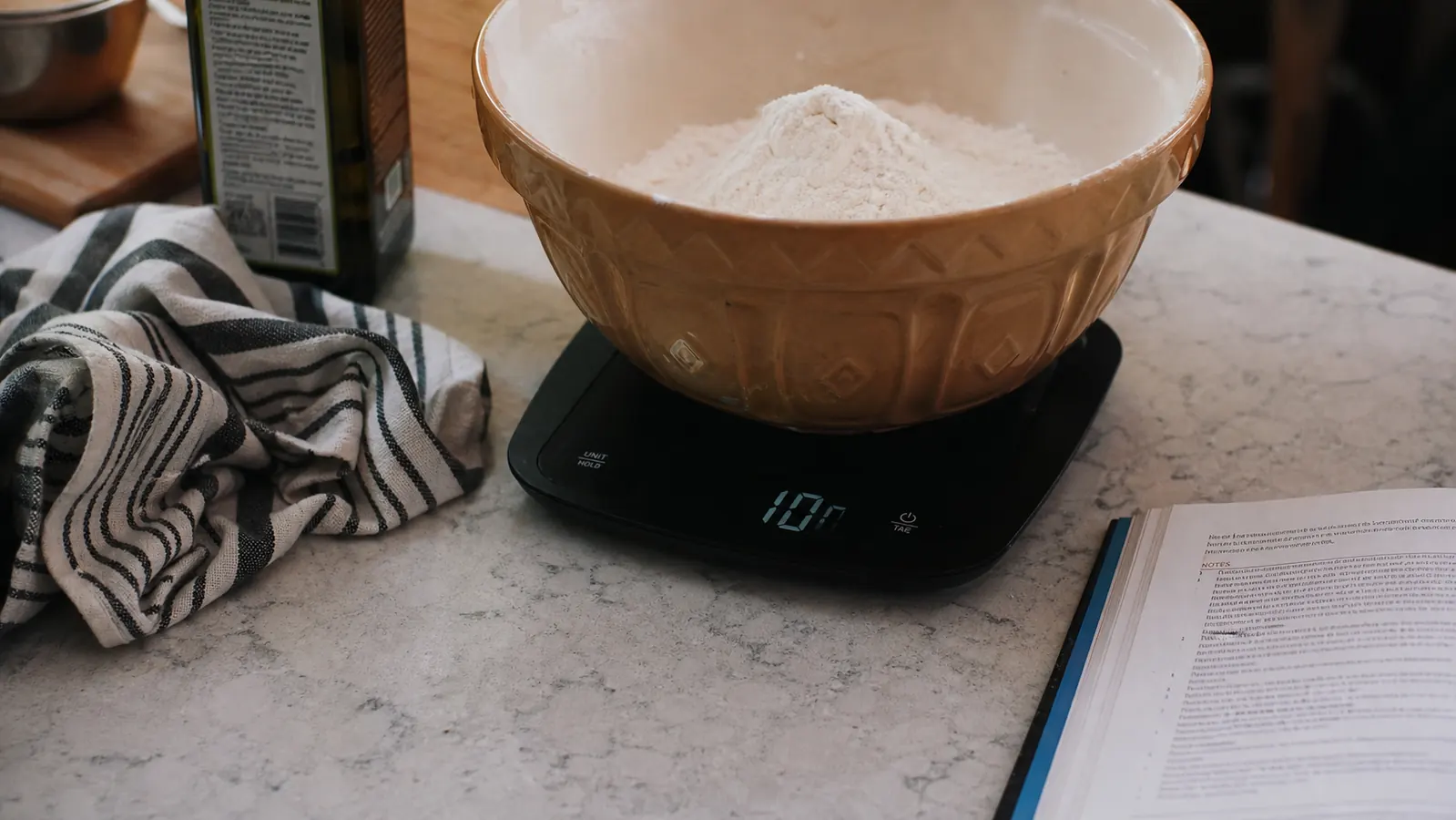
Baking has been the clearest win, the way it usually is with a scale. Weighing flour instead of scooping it took the guesswork out of a cake that used to come out dense some weekends and fine other weekends, and I never fully understood why until I started weighing and saw how much a packed cup differs from a loose one.
The stainless platform has also held up well through four months of flour, batter, and the occasional spill. It wipes down in seconds and hasn't stained, which matters when it's something you're touching multiple times a day rather than pulling out once a month for a special recipe.
The tare function is the other piece that quietly made the whole thing work. Setting a bowl down, zeroing it, adding one ingredient, zeroing again, adding the next, turned recipes that used to dirty three or four measuring cups into one bowl and one scale for the entire dish. It's a small thing on paper, but after four months it's the feature I'd miss the most if it disappeared.
What I Liked
- An honest number instead of a guess, which changed portioning and baking outcomes fast
- Stainless platform wipes clean and hasn't stained after four months of daily use
- Small enough footprint to leave out permanently on a normal counter
- Handles everything from spice blends to marinades to baking with one tool
- Accuracy checked out against printed weights on pantry items without needing a lab test
Where It Falls Short
- Auto shutoff kicks in sooner than expected and can interrupt mid-recipe
- Wide bowls can physically block the display, forcing an awkward angle to read it
- Batteries need replacing roughly every six weeks under daily use, not a rare event
- The companion nutrition app didn't become a habit and mostly went unused
The scale didn't need me to build a new habit. It just needed me to stop scooping and start setting things down on it.
Who This Is For
If you're someone who eats roughly the same handful of meals on repeat, pasta, rice, protein, the kind of person who'd genuinely benefit from knowing an actual serving size instead of eyeballing it, this earns its counter space quickly. It's also a solid fit for regular bakers, since flour weight is the single biggest reason cake and bread come out inconsistent from one attempt to the next, and for anyone in a smaller kitchen who wants one flat, stackable gadget doing several jobs instead of a drawer full of single-purpose tools. If you're the type who likes to verify a claim rather than just take a listing's word for it, the accuracy held up well enough in my own informal checks that I stopped worrying about it after the first few weeks. I go through more of the day to day upside, including how it's changed portioning over the long run, in this longer-term breakdown of daily use.
Who Should Skip It
If you rarely bake and your cooking is mostly quick, forgiving meals where a rough handful or a splash is close enough, the auto shutoff and battery upkeep might outweigh the benefit for how often you'd actually use it. And if the nutrition-tracking app is the main reason you're considering this, test whether logging meals on your phone is a habit you'll actually keep before you count on it, because for me, it wasn't. If your cookware runs mostly to wide stockpots and oversized mixing bowls, factor in the display coverage issue too, it's manageable but it is a real adjustment, not a hypothetical one.
Four Months In, the App Faded but the Scale Never Did
The parts that matter, an honest number and a platform that holds up to daily use, are still working exactly the way they did on day one. Check today's price on Amazon.
Amazon Check Today's Price on Amazon →