

For about two years, my banana bread was a coin flip. Some weeks it came out tall and moist with that nice split down the middle. Other weeks, same recipe, same oven, same brand of flour, it came out dense and slightly gummy in the center, like it needed another ten minutes it never got. I blamed my oven. I blamed the bananas. I blamed humidity, my mixer, the age of my baking soda, pretty much everything except the one thing that was actually different every time. The one thing that was actually different every time was how I measured flour, and what finally fixed it was an Etekcity kitchen scale.
That thing was how I was scooping flour. I'd dig my measuring cup into the bag, sometimes packing it down without meaning to, sometimes just skimming the top, and I never gave it a second thought because that's how I'd always measured flour. A cup of flour felt like a fixed amount to me. It isn't. Depending on how you scoop, a cup can be anywhere from a light dusting short to noticeably overpacked, and in a recipe with a small amount of leavening, that difference is the whole ballgame.
Cookies were even worse than the bread. Some batches spread thin and crisp across the pan, others stayed puffy and almost cakey, and I never changed a single ingredient between them on purpose. I started keeping a mental list of theories, warmer butter, colder butter, a different brand of chocolate chips, and none of them held up when I actually tested them. The batch would still come out different anyway.
A neighbor of mine bakes bread most weekends, actual crusty loaves, not the quick-bread kind I stick to, and she mentioned offhand one afternoon that she weighs everything now, flour included, because volume measuring never gave her consistent results either. I nodded politely and filed it away as the kind of thing serious bakers do, not something I needed for banana bread and chocolate chip cookies. I already had a drawer full of gadgets I barely used, and a scale felt like one more thing that would end up wedged behind the can opener.
What changed my mind was a specific bad Sunday. I'd made the same banana bread recipe I'd made probably sixty times, and it came out so dense in the middle that I ended up tossing half the loaf. I was annoyed enough to actually look into what my neighbor had said, and the more I read about volume measuring being inconsistent by design, not just when you're careless, the more it explained every unpredictable batch I'd ever baked. I ordered an Etekcity digital kitchen scale that night mostly to settle my own argument with myself.
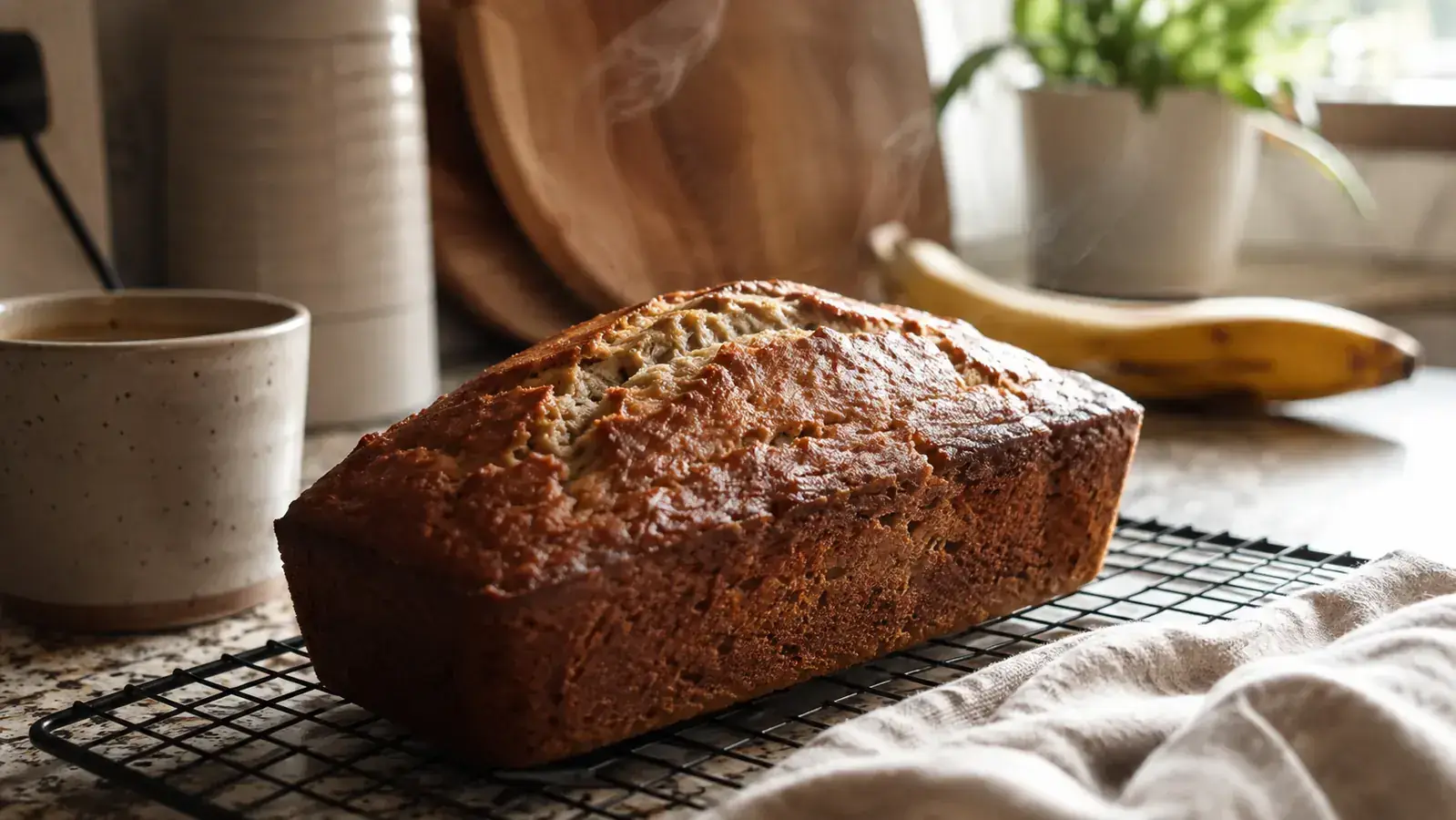
The first loaf I weighed instead of scooped came out exactly like the recipe photo, and I hadn't changed a single ingredient.
Tired of the same recipe turning out different every time?
The Etekcity digital kitchen scale takes the guesswork out of flour, sugar, and butter so your results stop depending on how hard you packed the cup.
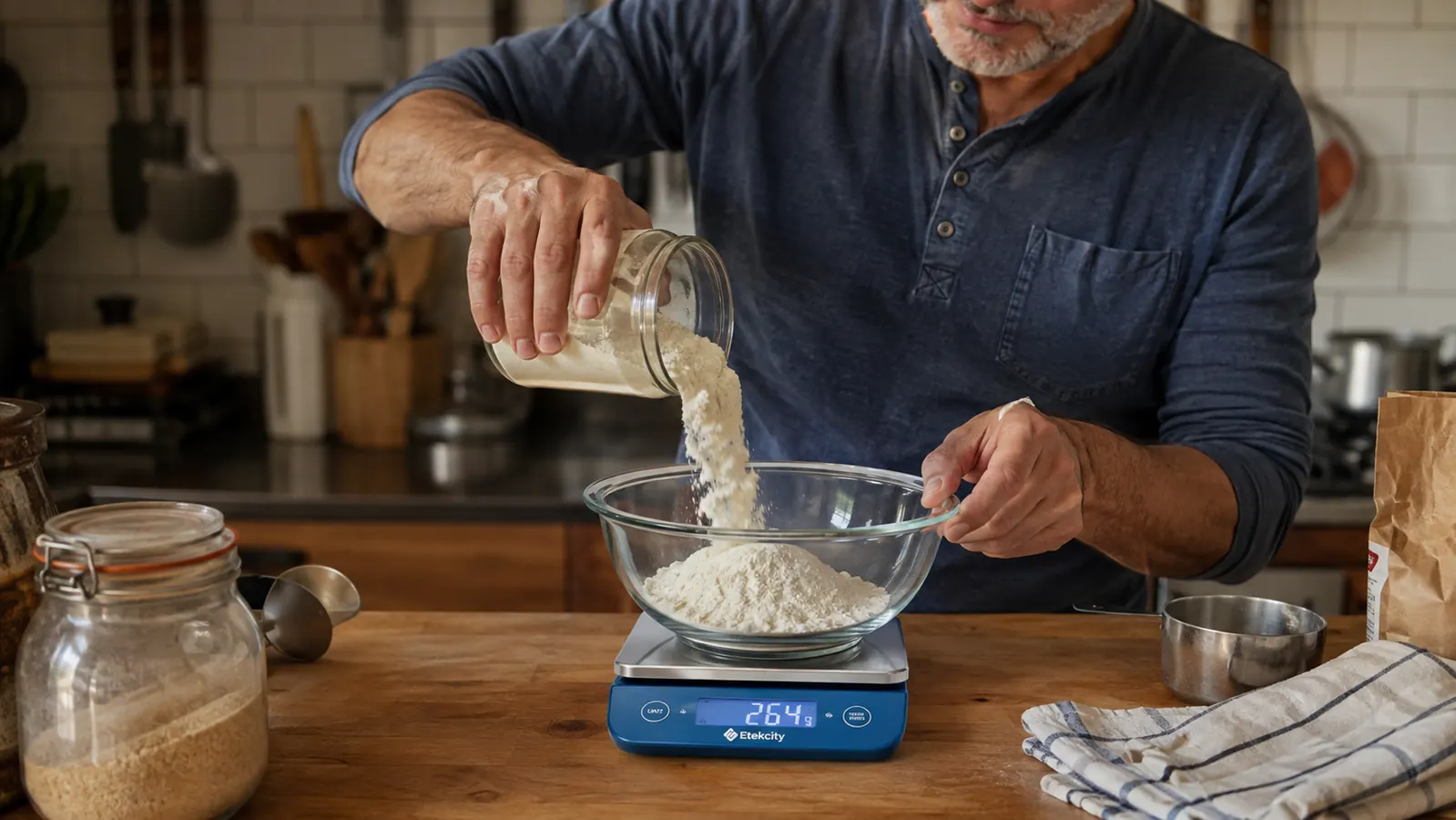
Amazon Check Today's Price on Amazon →I set the Etekcity scale on the counter, put my mixing bowl on top, hit the button to zero it out with the bowl already sitting there, and poured flour straight from the bag until the display hit the gram amount the recipe called for. No scooping, no leveling with a knife, no guessing whether I'd packed it too tight. It took maybe ten extra seconds compared to grabbing a measuring cup, and the loaf that came out of the oven that afternoon was the best banana bread I'd made in months.
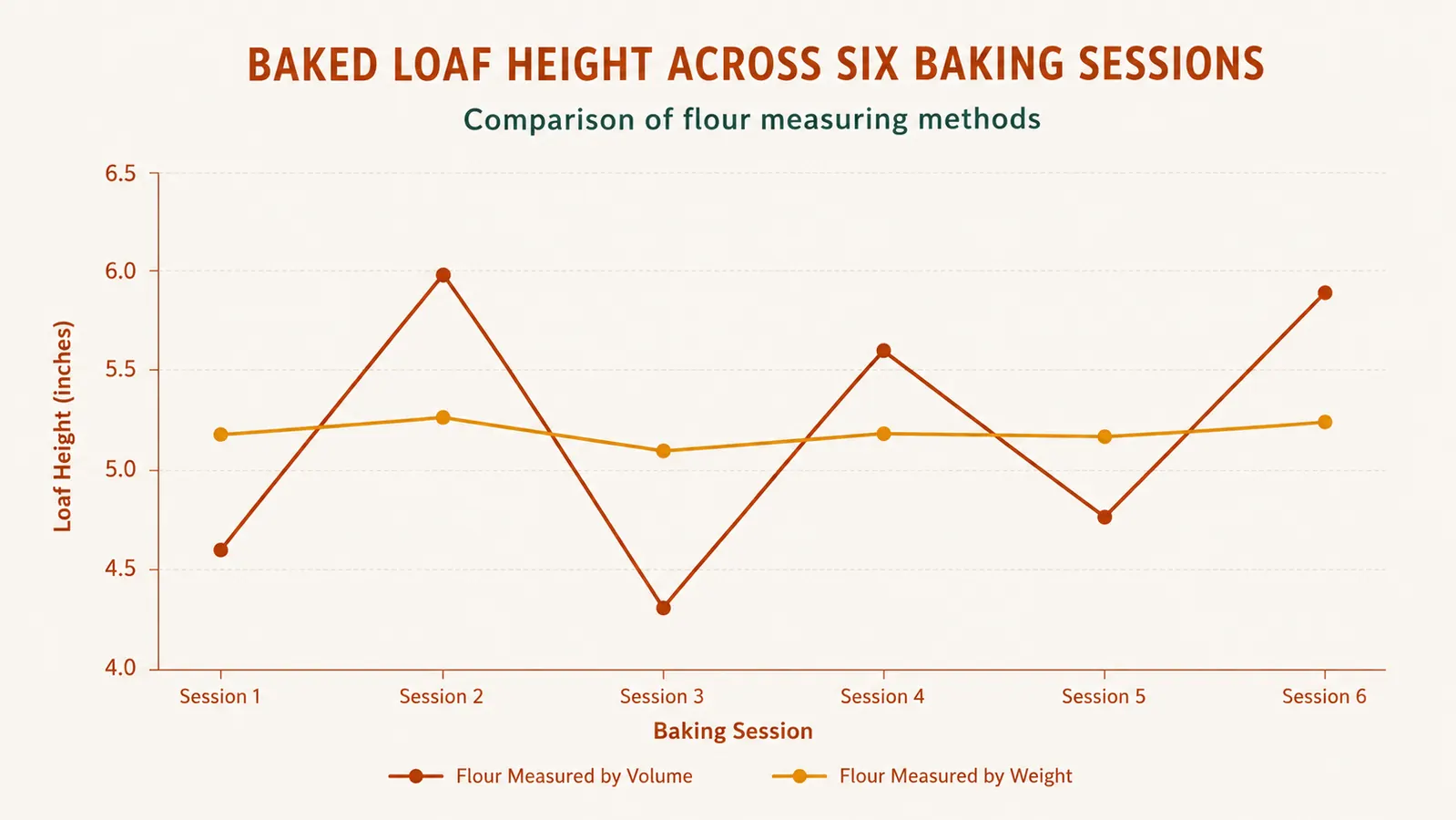
I kept testing it on purpose after that, partly out of stubbornness and partly because I wanted to be sure it wasn't a lucky bake. Four loaves in a row, all weighed, all came out the same height with the same texture. I wrote up the full comparison in the long-term review I put together after switching over completely, because I wanted a record of it somewhere other than my own memory, which had clearly been unreliable on this exact question for two years.
The cookies evened out too, once I started weighing the flour and the butter instead of eyeballing the butter by the wrapper markings, which I'd also never trusted as much as I should have. Switching to grams and ounces instead of cups changed almost nothing about how long baking took, but it took nearly all the mystery out of why a batch turned out the way it did. If something goes wrong now, it's an oven issue or a bad egg, not an invisible measuring inconsistency I can't see or fix.
It's not just for baking either, which surprised me. I use it to portion things out for meals during the week now too, and the built-in calorie and macro tracking has been useful on nights I'm trying to keep dinner roughly in line with what we ate the day before. I put together a longer list of the specific ways it's changed daily cooking, not just baking, in a separate piece on what a scale actually improves in an ordinary kitchen, if that side of it interests you more than the banana bread saga does.
What I'd Tell You If We Were Sitting at My Kitchen Table
If you asked me straight out whether it's worth the counter space, I'd tell you it depends on how much baking you actually do. If banana bread and cookies are an occasional weekend thing, you can probably live with the occasional dense loaf and never think twice about it. But if you bake regularly and you've ever wondered why the exact same recipe gives you different results week to week, weighing your flour instead of scooping it is the most likely answer, and it was for me. I still eyeball plenty of things in my kitchen, a splash of oil, a handful of herbs, none of that needs precision. But flour, sugar, and butter in baking are a different story, and I stopped guessing on those the day I started weighing them instead.
Stop guessing at flour and start getting the same loaf every time.
A simple stainless kitchen scale took the inconsistency out of my baking without adding a single extra step worth mentioning.
Amazon Check Today's Price on Amazon →